
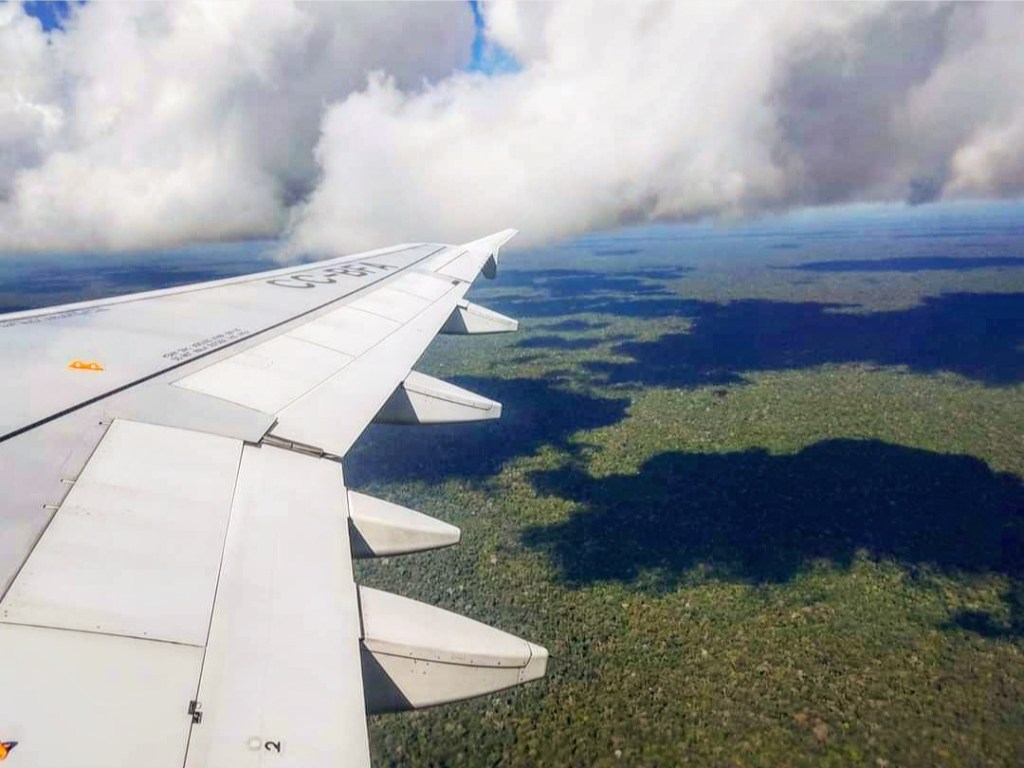
Many people like to ask me which trip has been my favorite, and the one that comes to my mind every time is my trip to the Amazon. Nothing compares! It’s about as far culturally as you can get from the United States making it the perfect place to visit if that’s what you’re looking for. I prefer remote locations to the more popular tourist spots too, so this was exactly what I had hoped for. I traveled with a mission group bringing medical care to the remote villages along the Amazon River, and I will try the best I can to explain in detail what that was like.
Day 1: Leticia-Tabatinga
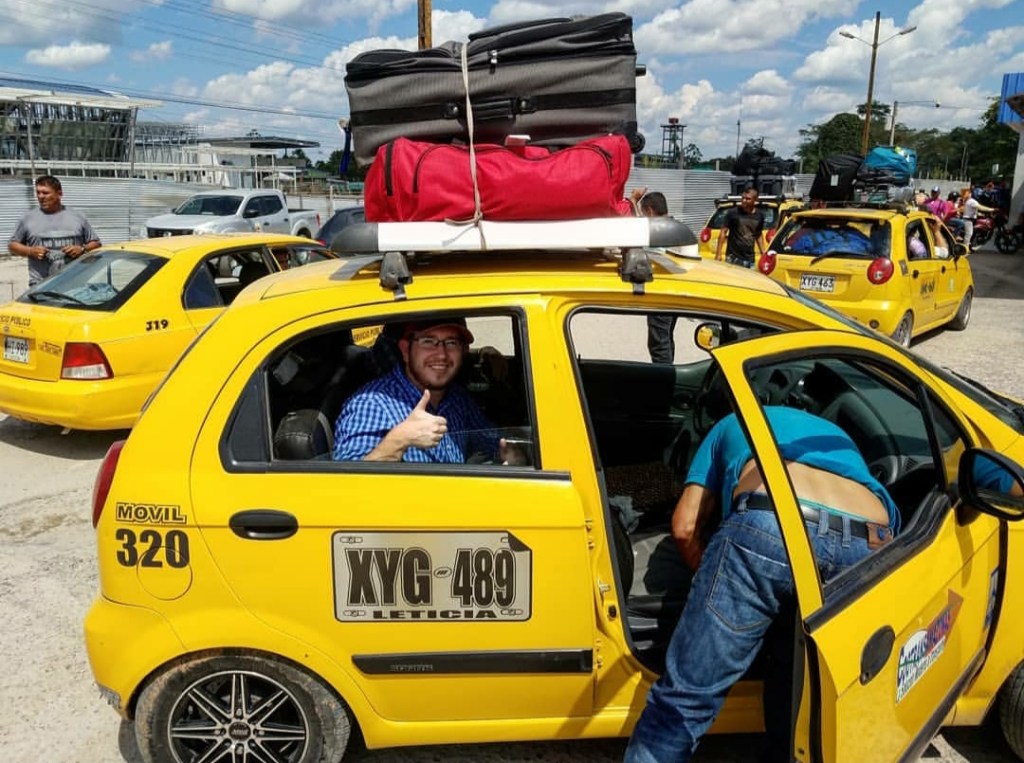
I flew into the city of Leticia, Colombia. It’s a small modern city completely surrounded by the Amazon Rainforest. While it is part of Colombia, it is not accessible from the rest of the country except by plane. Landing in Leticia, I climbed down the steps from the plane and walked into the small airport. It was one room with a conveyor belt where the luggage handlers put all the luggage. There was a police officer with a drug dog walking along the conveyor belt like it was a treadmill, climbing over and sniffing every piece of luggage that came by. I grabbed my suitcase and then walked out to where all the taxi drivers fight over you. I tied my suitcase to the top of a taxi and hopped in, and then we headed across the border into Tabatinga, Brazil.
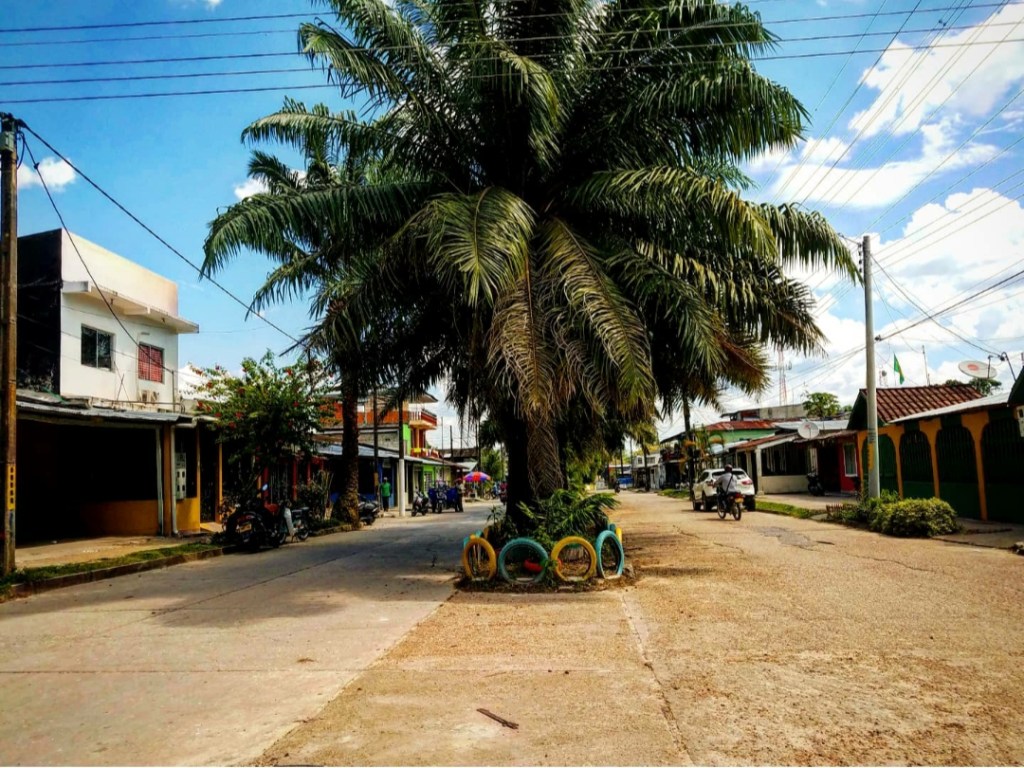
One thing that was very interesting about this border crossing is that you would have never known you crossed. There was no border patrol, no station, not even a sign. The only reason I realized I had crossed into Brazil was because the Spanish turned into Portuguese. This is the Tres Fronteras region where Colombia, Brazil, and Peru meet. It almost feels like one city while it’s actually three different countries coming together. Due to its access into three different countries and the fact that the Amazon River runs through it, this is where the majority of the drug smugglers pass through when bringing drugs into Colombia. I finally reached my hotel in Tabatinga and settled into my room. I was pleased to find that it had A/C, something I was about to go without for the next couple weeks. I met the group I would be traveling with; we sorted all our supplies; and then we planned out what each of our roles would be. I found out that I would be working in triage. After getting everything ready for the next couple weeks, we got dinner at a small restaurant in Tabatinga where I tried cow tongue and manioc, among other things.
Day 2: Tabatinga-Puerto Alegría
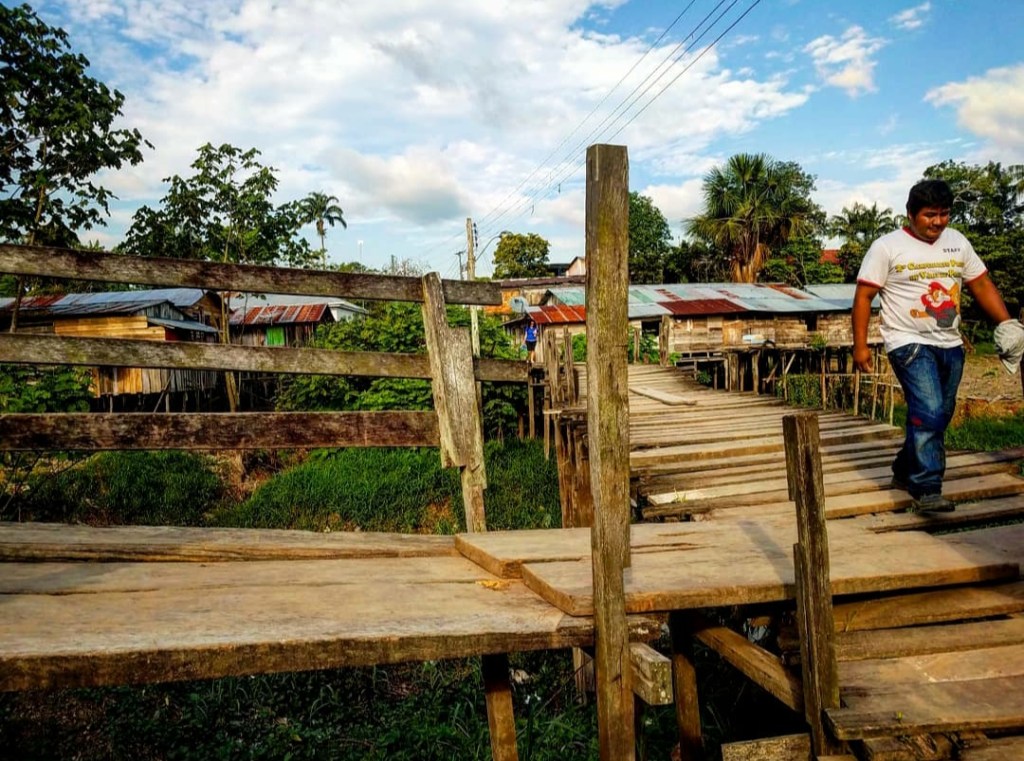
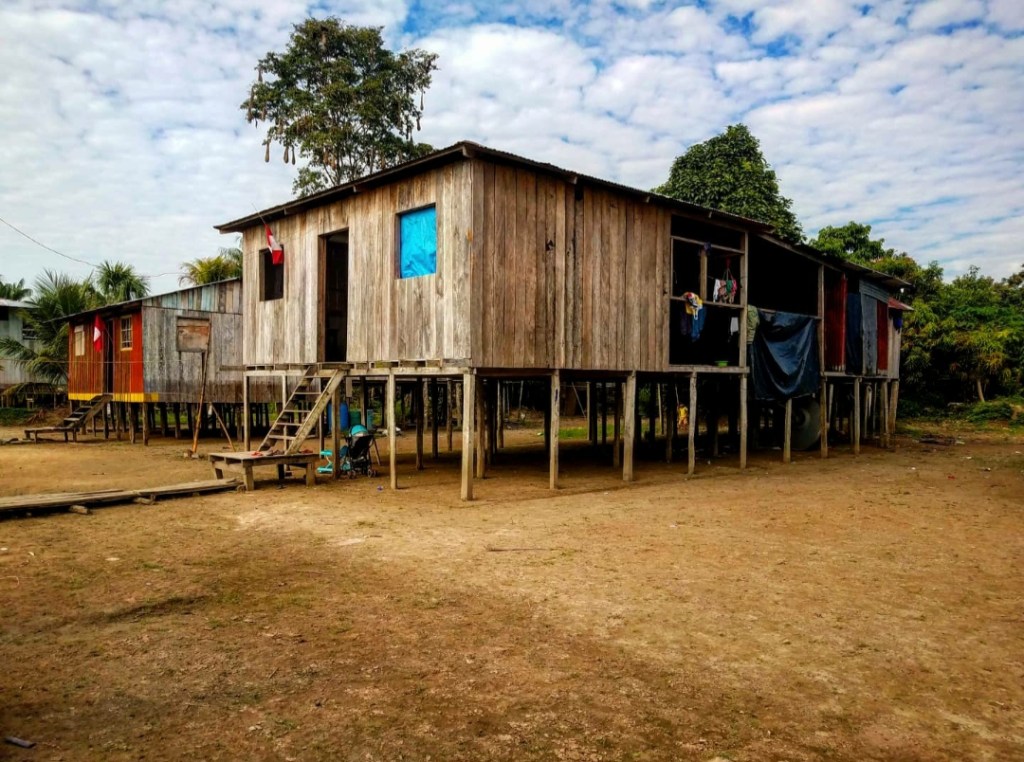
Before we left for the first village, we were told we could only take a backpack with us due to the challenging locations we would be visiting. I had to go through everything I brought with me and narrow it down to the essentials, then leave my suitcase in Tabatinga. We then climbed into the back of a truck that was packed as tightly as possible and then drove to a stilt village on the edge of the city. Here, each of us grabbed bins of medical equipment and made our way through the village. Now, I mentioned this village is on stilts, but there were sections of it that were very high off the ground. Falling would be fatal. And the bridge itself wasn’t the most trustworthy as there were large gaps in the wood that were big enough for someone to fall through. I couldn’t see my feet because of the heavy bin I was carrying, so I was having to be extra cautious where I stepped. Dogs and kids would go running past me as I slowly made my way through.
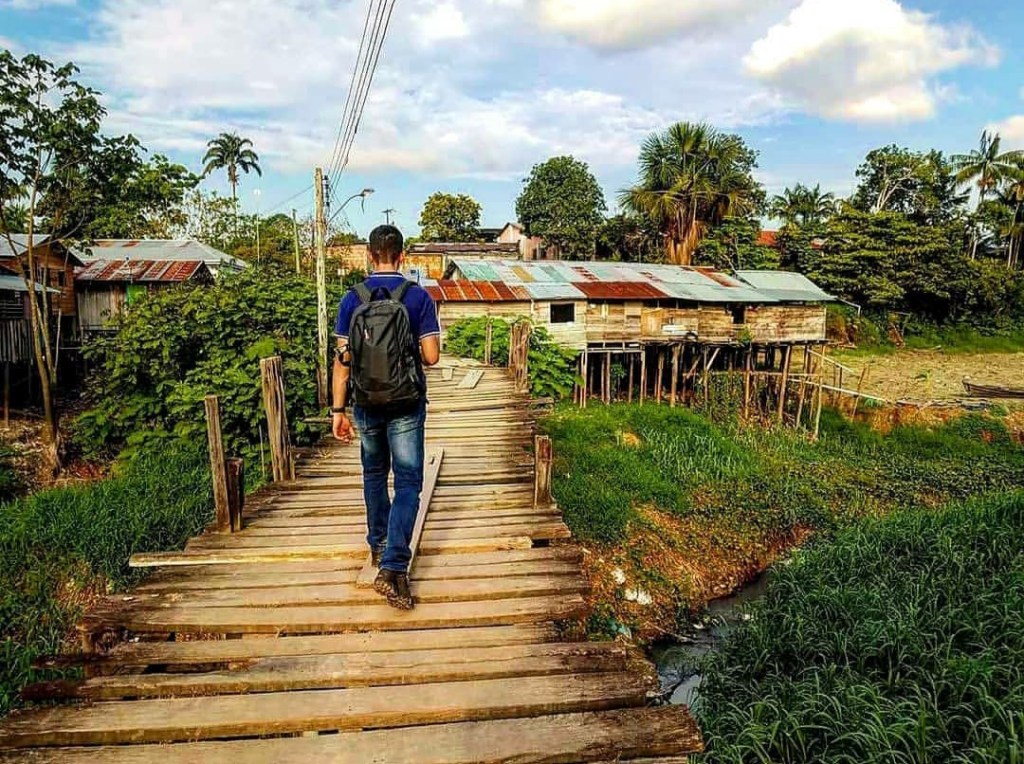
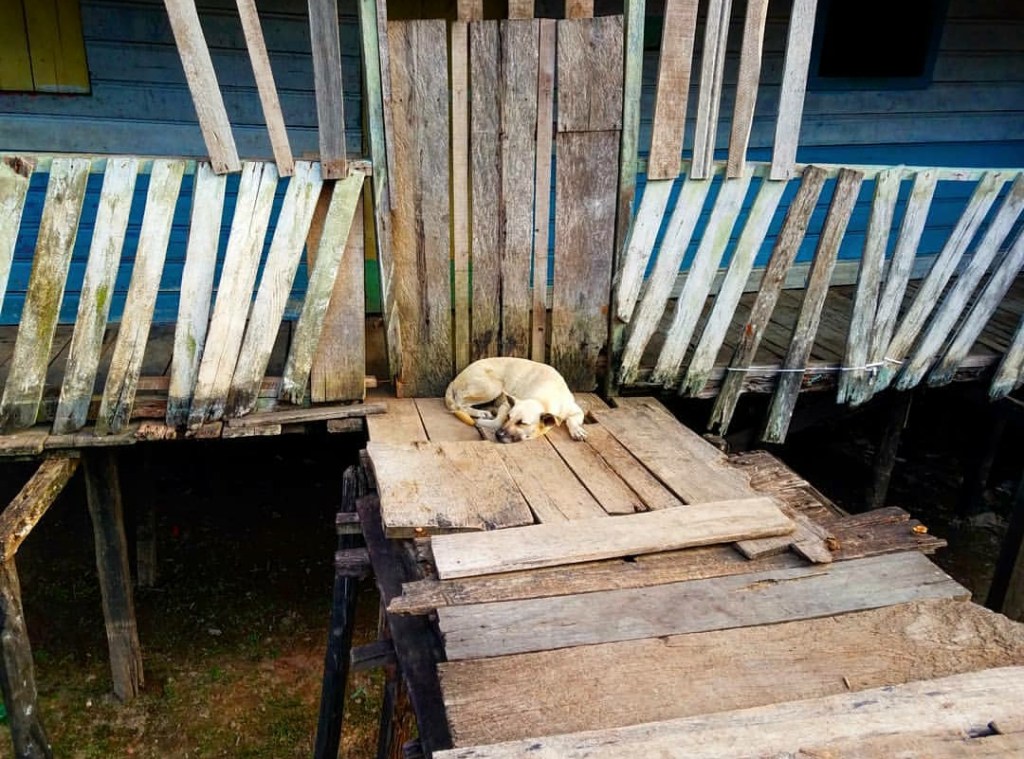
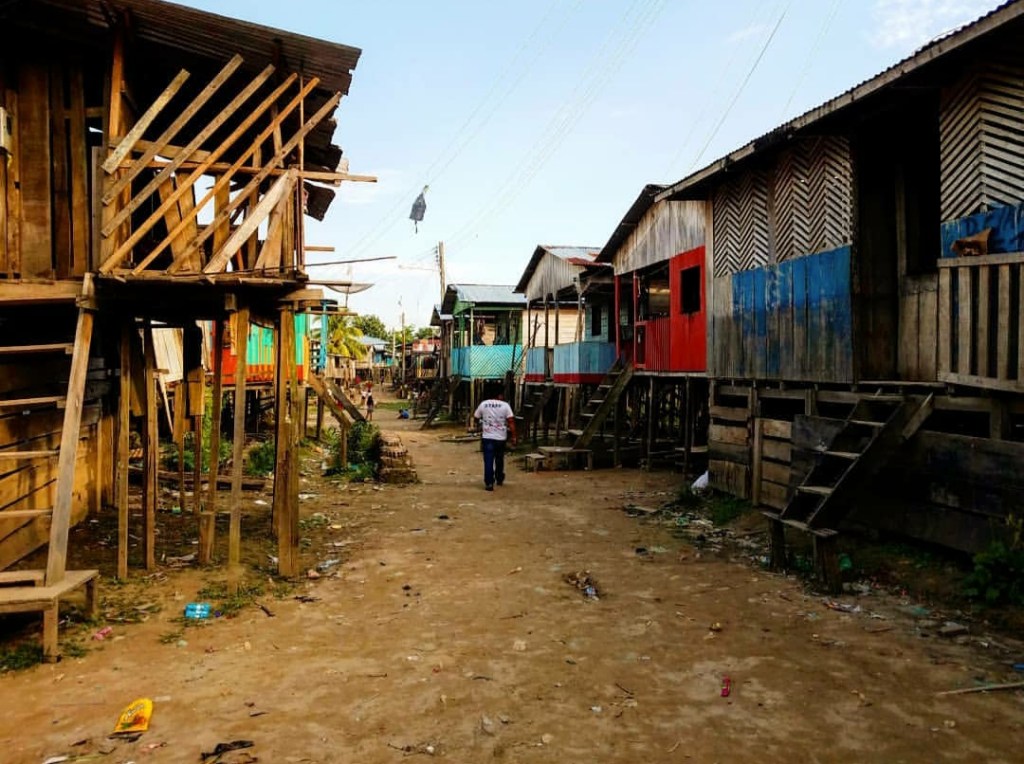
Once on the other side of the bridge, I walked along a dirt path through wooden houses on stilts that were towering over me. I watched as locals would burn piles of trash right under their house. This was completely opposite of the lifestyle I grew up knowing in America, and I loved it! I then had to walk for a while along a path the width of a single piece of wood along the muddy bottom of the dry Amazon riverbed until I reached the water. This was the dry season, so the river was much lower than it was during other times of the year. I quickly learned that if you step off the board, you sink to your knees in mud. (And I caught myself on the board- I might would’ve sunk lower if I didn’t). I went back through the entire village to grab some more supplies before we packed everything onto these small canoes with a motor on the back. Once everything was packed onto the boats, we filled in where we could find room, without tipping the boat over and took off up the river.
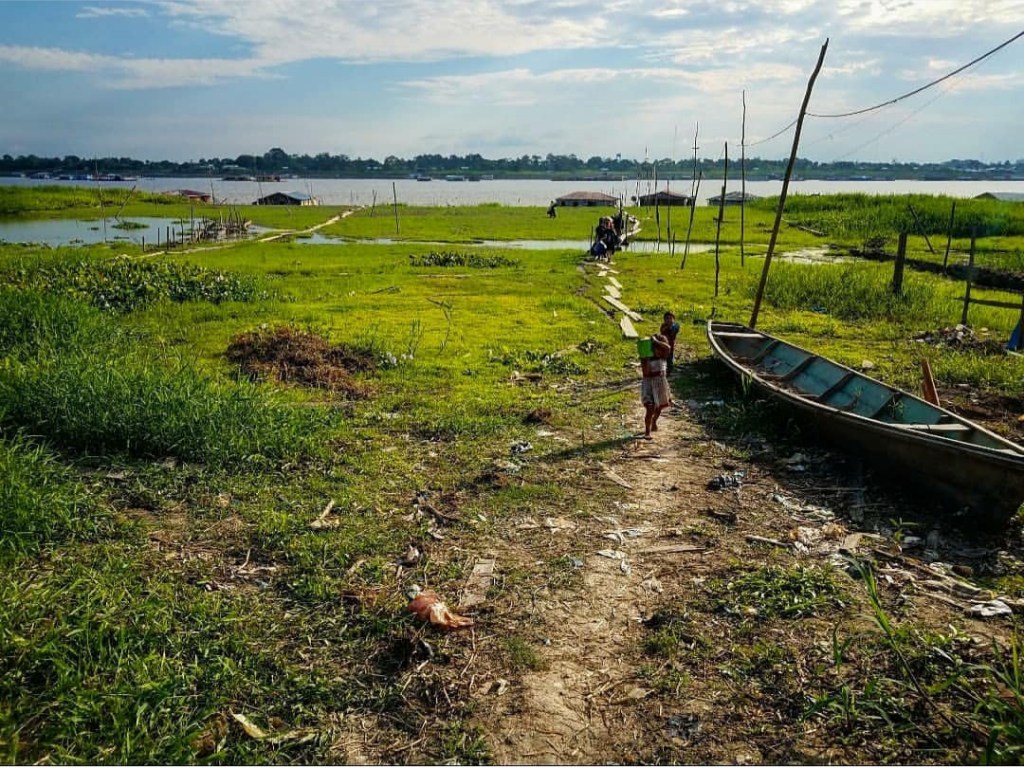
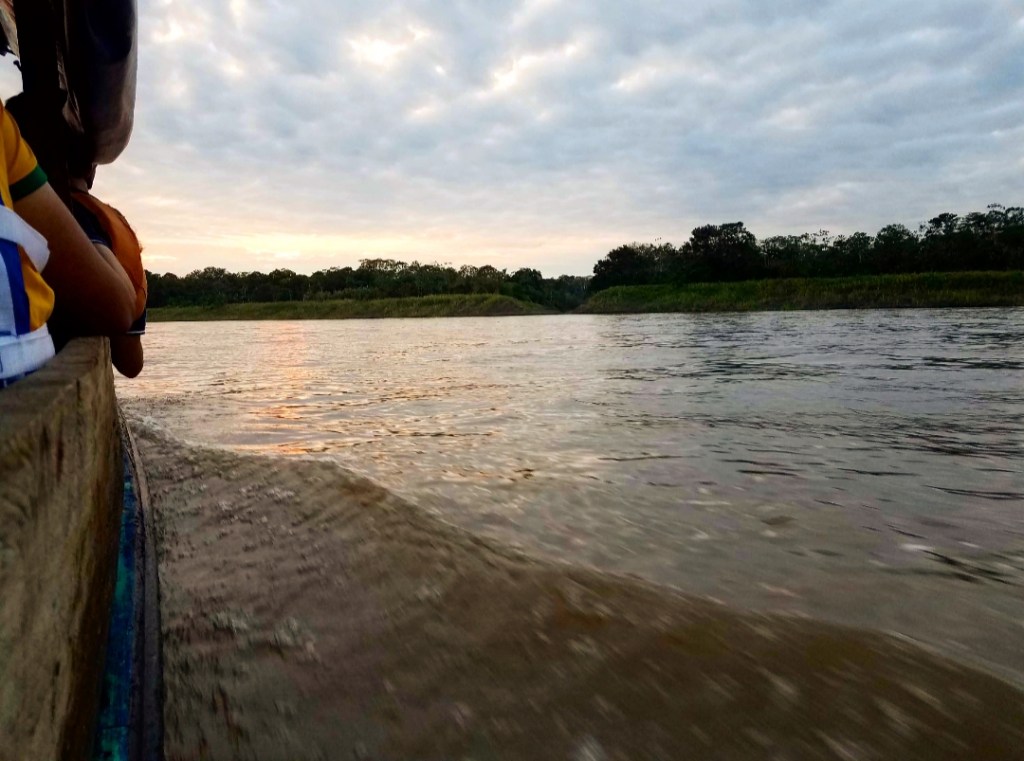
We traveled upriver for several hours with Colombia on our right and Peru on our left. Of course, even during the dry season, the width of the Amazon is unbelievable! It looked like the bay back home in Florida: you would never think it’s a river. I watched as small wooden boats zipped past us with entire families piled on top, traveling at unsafe speeds. I would stick my hand in the water just trying to wrap my mind around the fact that I was on the Amazon River that I had heard about my whole life: I wanted to take in every second. Usually when I travel, my eyes are glued to the window wanting to take in everything, but here, it didn’t matter where I looked because literally everything around me was new. A couple hours into the trip, my boat’s motor ran out of gas… Now remember it’s a couple miles to shore in either direction and I didn’t want to know how deep the river was at this point! Our driver waved down another boat which then came right up next to ours. The driver of that boat got up, literally jumped from his boat to ours with a full can a gas and filled up our motor before jumping back to his boat- all in the middle of the Amazon! Our plan was to arrive before dark, but that didn’t work out. We eventually watched the sunset from the boat and landed at Puerto Alegría, on the Peruvian side of the river at night. You have to be flexible when traveling through the Amazon because anything can happen. And the only way to travel between villages is by boat because there are no roads, so that adds even more complexity to each travel day.
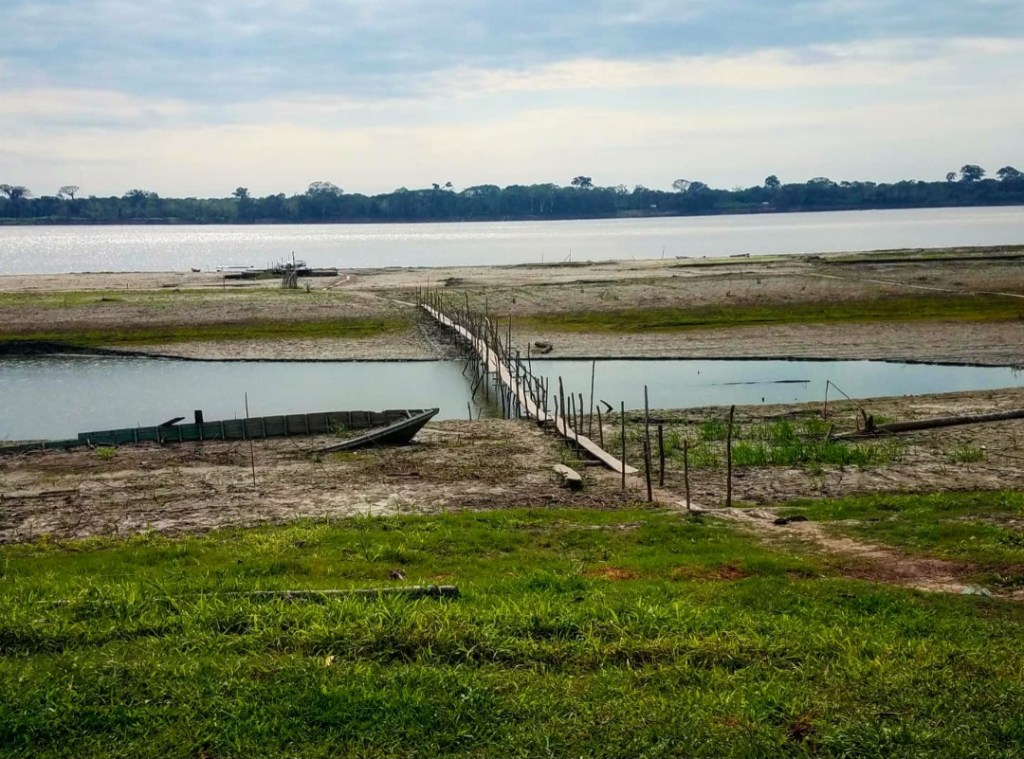
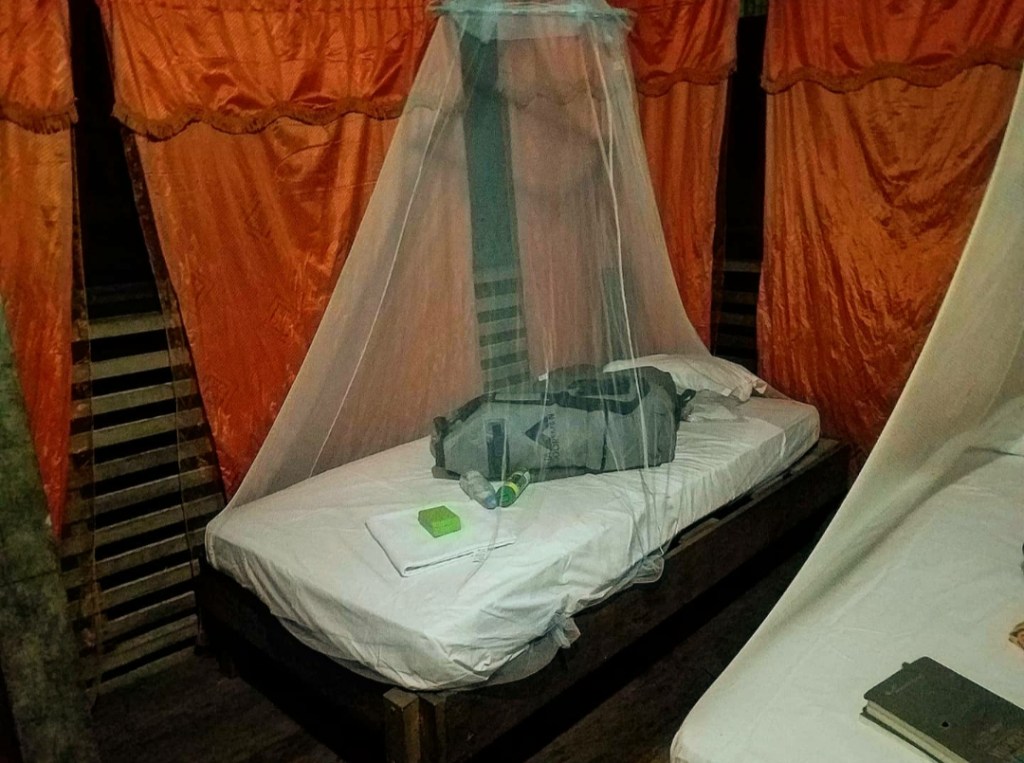
After arriving, we had to carry all of these bins of medical equipment up to the village. And this wasn’t easy at all! That path made out of a single board in Tabatinga? It was raised here. It was about a foot off the ground and even higher in areas making it even more difficult to balance as we carried these ridiculously heavy bins to the village. Add to that the fact that it was pitch black out there: they don’t have lights in these remote villages! And to make it even worse, it’s all uphill. Because of the dry season, we had to walk uphill to get to every village. I finally crossed the death trap of a path and climbed up to the top where I was finally in the village. We then had to walk across the entire village to reach our hotel. At this point, I was completely drenched in sweat, I was covered in mosquitoes, and I had no energy left in me. After reaching the hotel, I found a random hammock and passed out in it. I was completely exhausted unlike I’ve ever experienced before. But at the same time, I loved every bit of it. This is true travel and what I had been dreaming of for years. I finally made it to my room which was just a big room with about 10-12 beds in it, each with a mosquito net hanging over it. I chose my bed and then searched for the shower. This hotel had a community shower room which only has running water for a couple hours each night, and of course, it was cold. We cleaned up, got dinner, and then finally made it to bed. The sound of insects and animals right outside the hotel walls was louder than I could’ve ever imagined, but I loved the remoteness of it. There were also no outlets to charge my phone, so I set it on airplane mode and battery saving mode, hoping to keep a charge for the rest of the trip so I could take pictures. Even without A/C and with the loud insects screaming just on the other side of the wall I was next to, I’ve never slept that good.
Day 3: Puerto Alegría
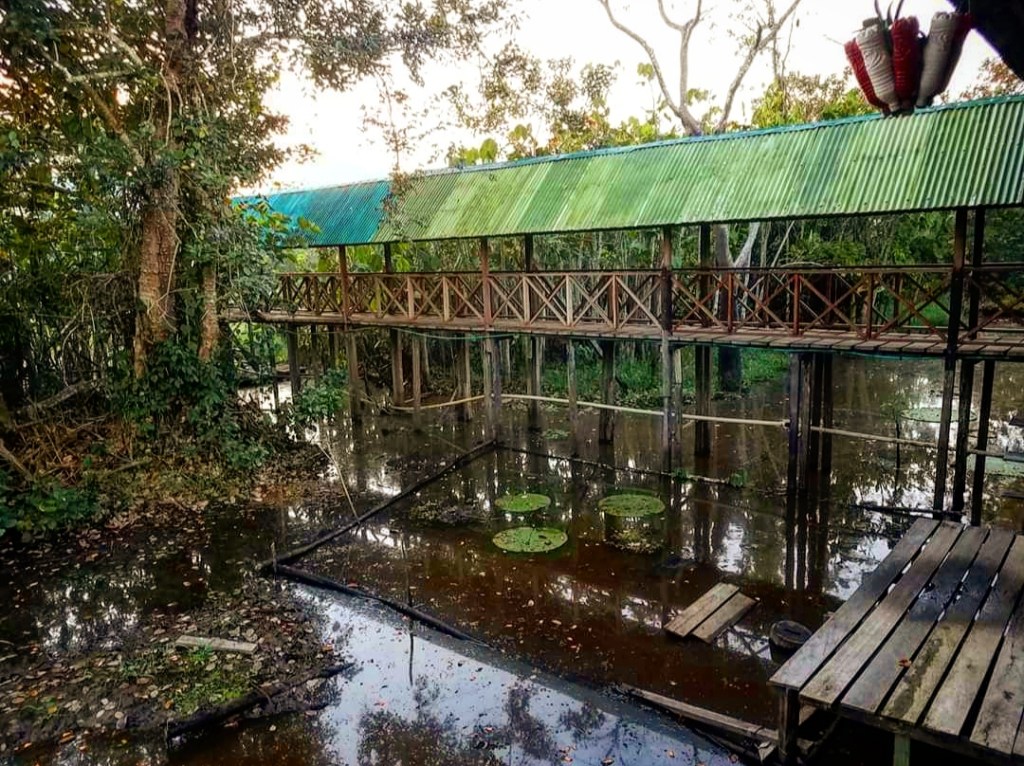
I woke up the next morning and walked around the hotel. Since the sun was out, I could finally see what the area looked like. The entire hotel was built on stilts over a swamp. I went to get some breakfast and saw one of the hotel workers feeding a wild manatee that swims up into the swamp every day to be fed. The manatee’s name was Hanica, and I was able to climb down to the water and pet it. After everyone had eaten breakfast, we headed to the church where we were holding our first medical clinic. The village was nice to walk around, and the people were friendly. I occasionally saw monkeys swinging from trees or a toucan fly by. There are no motorized vehicles in Puerto Alegría, so you have to walk everywhere. There’s a paved sidewalk that passes through some parts of the village, and the wooden houses on either side were all on stilts. The church was on the other side of the village, so we walked for a while to get there
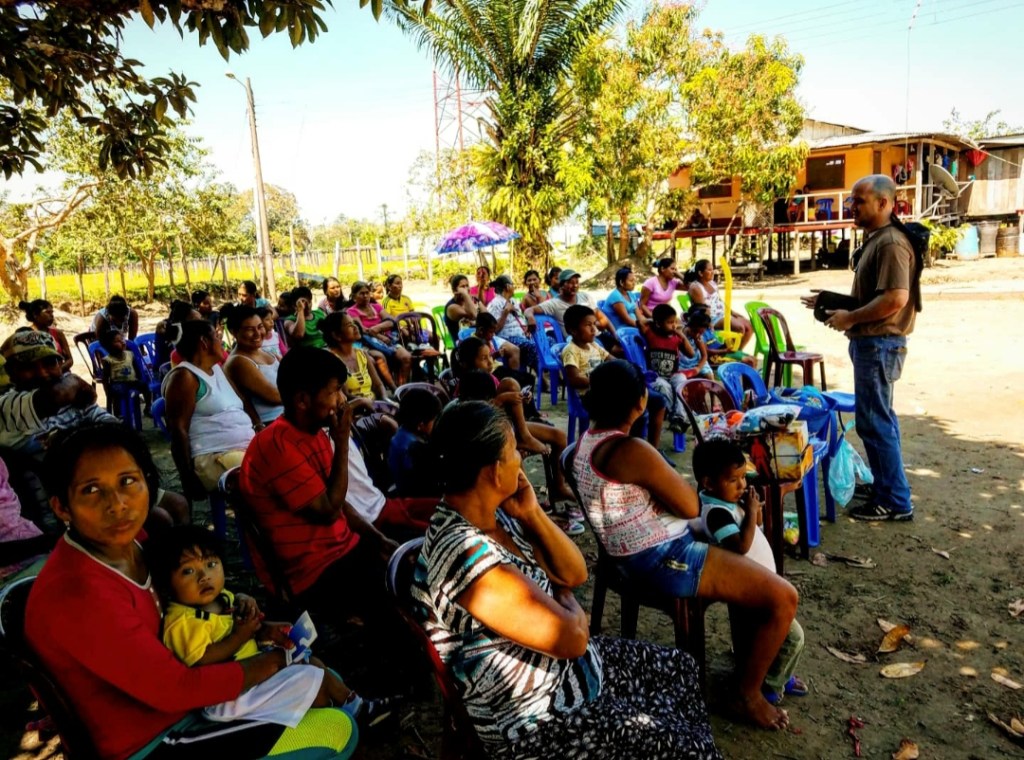
Once at the church, we set up our clinic and got ready to start our practice run. People started lining up outside, and we eventually had our first patient come through the door. They would come to us in triage first, and then those who needed additional help would head to the doctors, and after all that, they would go to the pharmacy section to pick up their prescription. While waiting for each station, they would hear a gospel presentation from the missionaries. The first run was… a little rough, or really a lot rough. We didn’t seem to have a good flow yet, but that’s why we called it a practice run. It was a full day standing up asking patients about their medical needs (through a translator), and sweating to death with no A/C. Staying hydrated was really important, so we filtered water from the river in order to have something to drink. But as hard as it was, being able to help each patient by giving them the medicine they need was very rewarding.
At the end of the day, we packed up all our equipment and started heading back to the hotel. On the way back, one guy saw me carrying the heavy bin through the village and offered to help. He grabbed a wheelbarrow and helped me bring it about halfway. Suddenly as we were walking along the sidewalk, a snake jumped out in front of us. Without hesitation, the guy helping me grabbed a giant stick and threw it at the snake to get it to go away. I finally made it back to the hotel and then got dinner. I decided to walk back to the church to experience their church service that night (in Spanish). I made it back to the hotel ready for a good night’s sleep only to find out the only way to make it to the next stop in a decent time would be to wake up at 4 am to take everything down to the river… Traveling around the Amazon is no joke, but it’s what I signed up for. Again, because the only way to reach other villages is by boat, we would have to get used to transporting these heavy bins to and from the river on a daily basis.
In order to keep these posts from being too long, I’ll continue this story in Part 2 next week. Thanks for reading!
 Tyler's Travels