
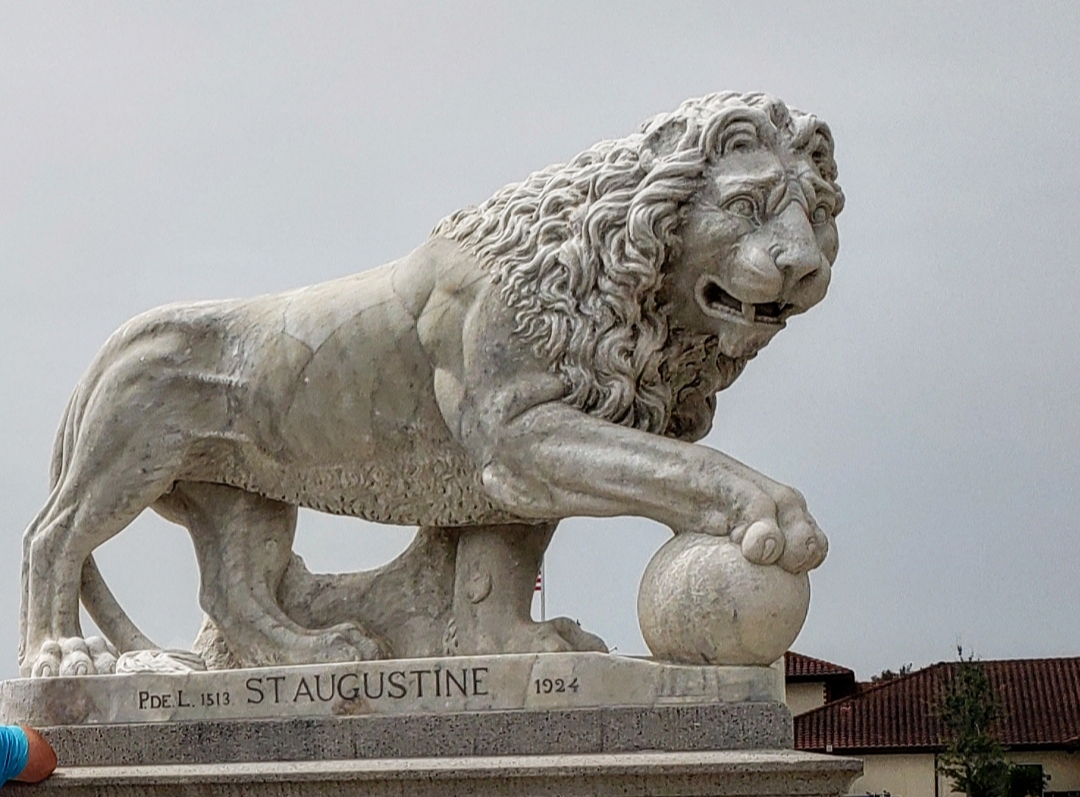
Obviously this year hasn’t been what anyone was expecting. Covid-19 has changed everything about our lives whether we wanted it to or not. One way it has affected me personally is the fact that international travel is no longer available like it used to be. And I had some big travel plans coming into the year. I’ve had five trips canceled, all to different countries, and as a result I’ve been in the Pensacola area since March, and I feel kinda stuck. With rumors of this second wave of coronavirus and potential shutdowns, I had to go somewhere while I still can. And with riots occurring in many cities I could drive to (Atlanta, New Orleans, Nashville, etc), my options were limited. So I eventually decided to visit St Augustine, a city I had never really been to before. (I went when I was like 3 months old, but I can’t count that since I don’t remember it). Really the only thing I knew about St Augustine is that it’s the oldest continually-inhabited city in the United States. A little-known fact that many people don’t know is that Pensacola is actually the oldest, but a hurricane wiped out the original settlement, so it hasn’t been continuously inhabited like St Augustine has. I invited my friend Joseph from college and took off right after work on Friday across the Florida panhandle. On Friday, the city of St Augustine announced a new rule that face masks would be mandatory starting on Saturday at midnight, right when we arrived in the city.
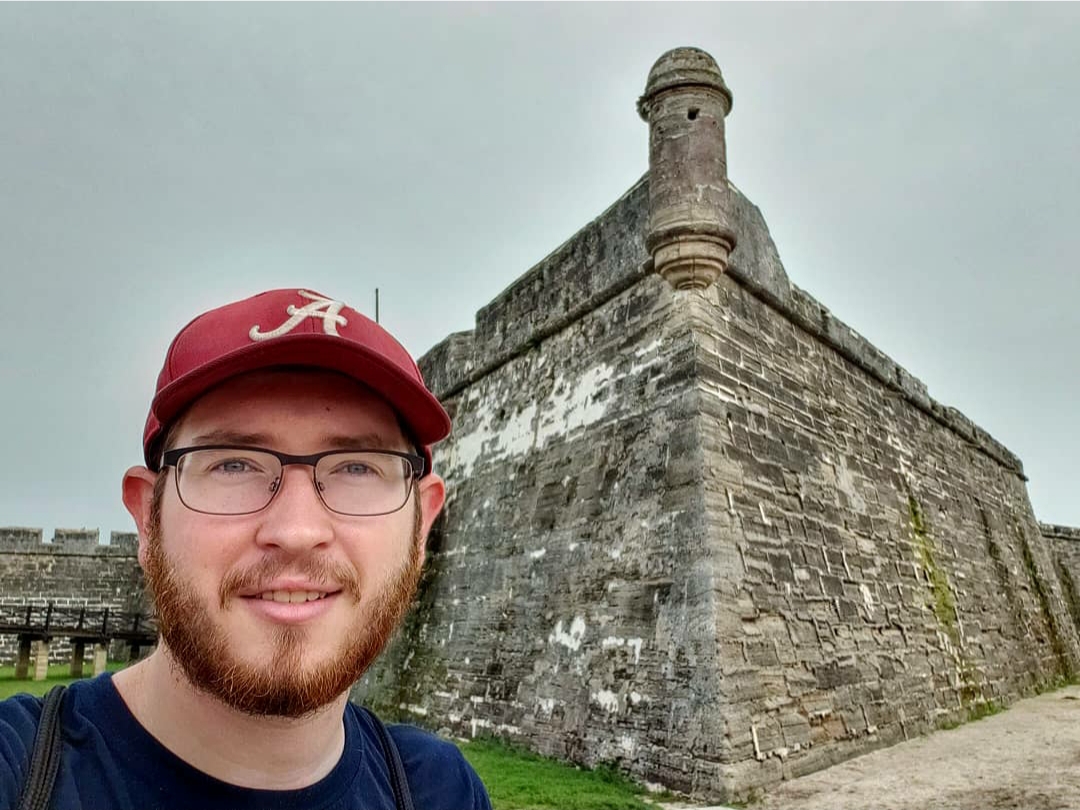
The next morning, we started early by driving to the old city where everything is within walking distance of each other. The sky was a strange milk-white color because of a Saharan dust plume that traveled across the Atlantic, and it also caused the humidity to be much worse than it had been already. Growing up in Florida, I’m used to humidity, but this was another level! I started the day at Castillo de San Marcos, the oldest fort in the United States. The fort, which is operated by the National Park Service, was closed due to Covid-19, but that didn’t stop us from seeing as much as we could from the outside. What’s interesting about it is that you can walk right up to the fort without ever paying for it. I was able to see a lot of the park- I just couldn’t go inside the fort.
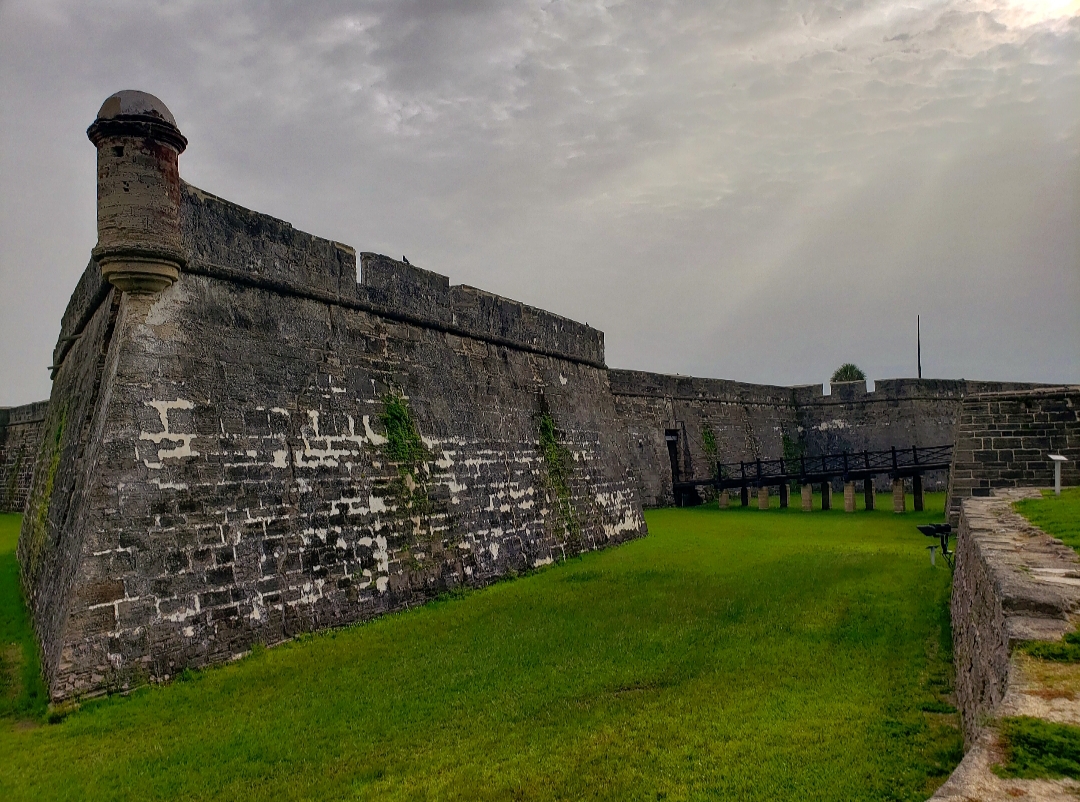
This fort was built in the 1600s under Spanish rule and is unique because it has never lost a battle. It was used to fight off pirates and protect the Spanish colonies and was eventually handed over to the British and then back to Spain before Florida joined the United States. There was a moat surrounding the fort adding another layer of protection. After exploring the Castillo from the outside, we headed to St George Street through the city gates. We had started the day really early, so many shops were not open yet, and the streets were empty. It felt like a ghost town, but it did end up getting really crowded when we returned later. We eventually walked all the way through St George Street to the historic Plaza de la Constitución, St Augustine’s central park.
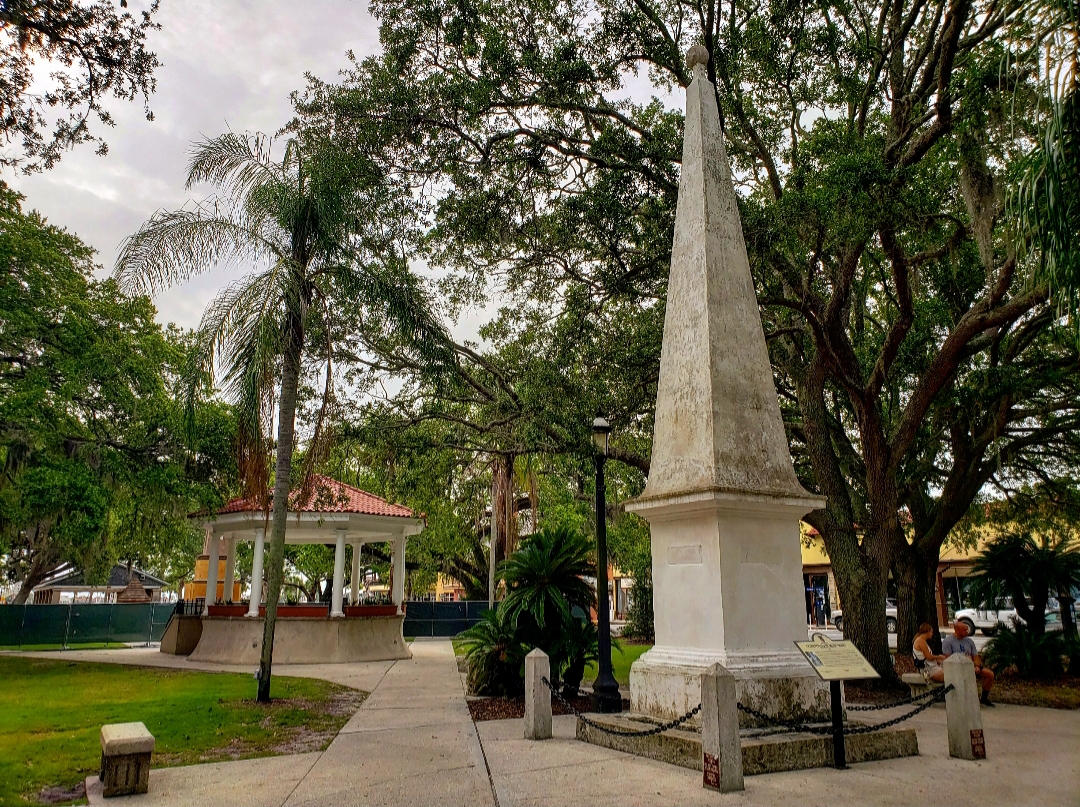
There’s a lot of historic significance to this plaza. The park was originally constructed by Spain in 1573, making it the oldest public space in the US. A market was built beside it that has been in use since the 1500s, but some historians believe that it was eventually used to sell slaves during British rule. (There is a lot of debate among historians over whether that is actually true). After the Spanish Constitution of 1812 was formed, an obelisk was constructed in the center of the park, celebrating its completion. It is now the only monument to the Spanish Constitution left anywhere in the world and is the reason for the park’s name.
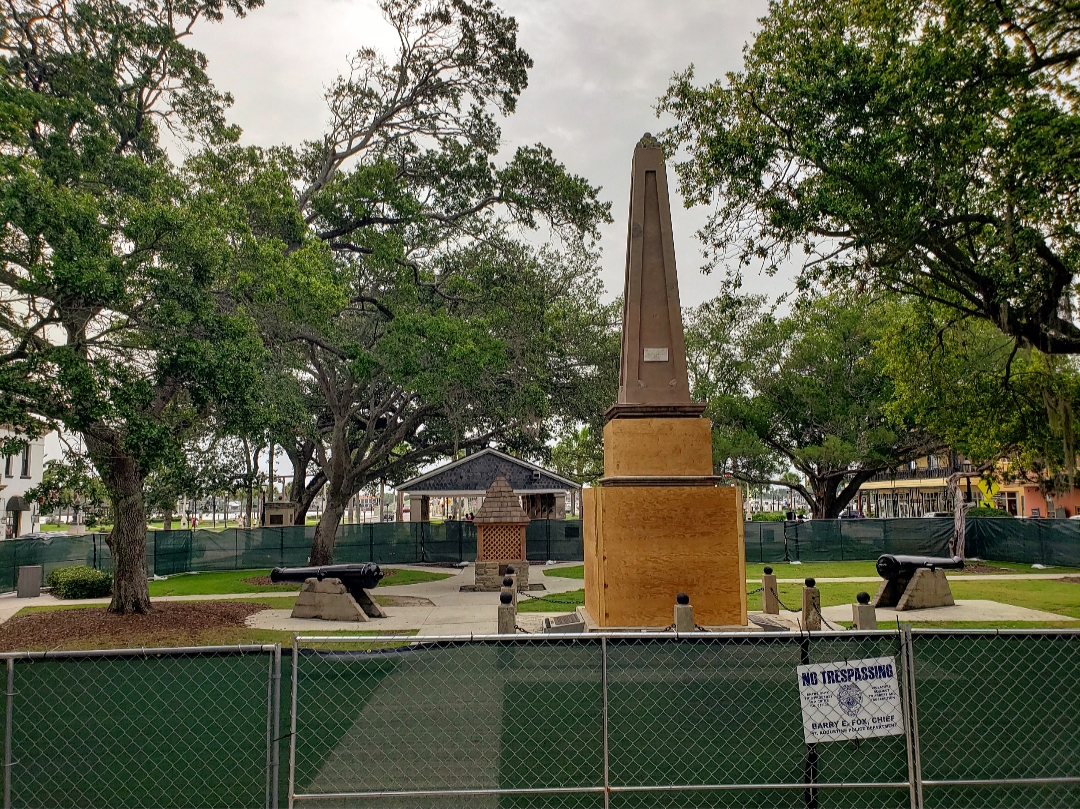
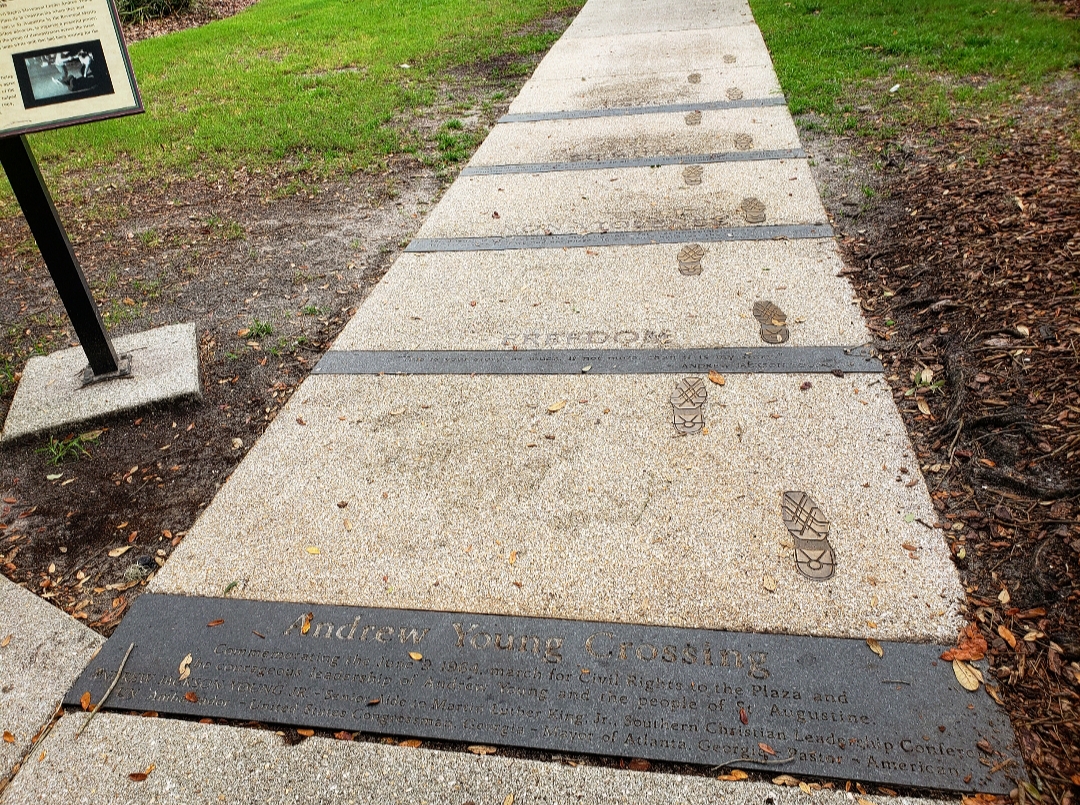
There is also a monument dedicated to Confederate soldiers from the St Augustine area that lost their lives in the Civil War, but following recent protests, the city has decided to remove the monument within three weeks, and the entire area was blocked off. This park was also a turning point in the Civil Rights movement in 1964. Martin Luther King, Jr sent his friend Andrew Young to St Augustine to organize a peaceful protest. When Young reached the park, a mob attacked and killed him, and this awful event led to the passing of the Civil Rights Act the same year. A memorial now marks the spot where Andrew Young took his last steps before he died.
Surrounding the park are other important buildings such as the old Government House and the Cathedral Basilica of St Augustine. Next we walked to Flagler College and the Lightner Museum. These were both built by Henry Flagler, who is considered the Father of Miami. He was good friends with John D Rockefeller, and together they ran Standard Oil, which became a monopoly in the oil industry across the entire US. After leaving Standard Oil, Flagler came to St Augustine with the dream of building the city into what it has become today. He invested a lot of money into Florida making him a very important figure for the state. His first hotel was the Ponce de Leon Hotel which has since been turned into Flagler College.
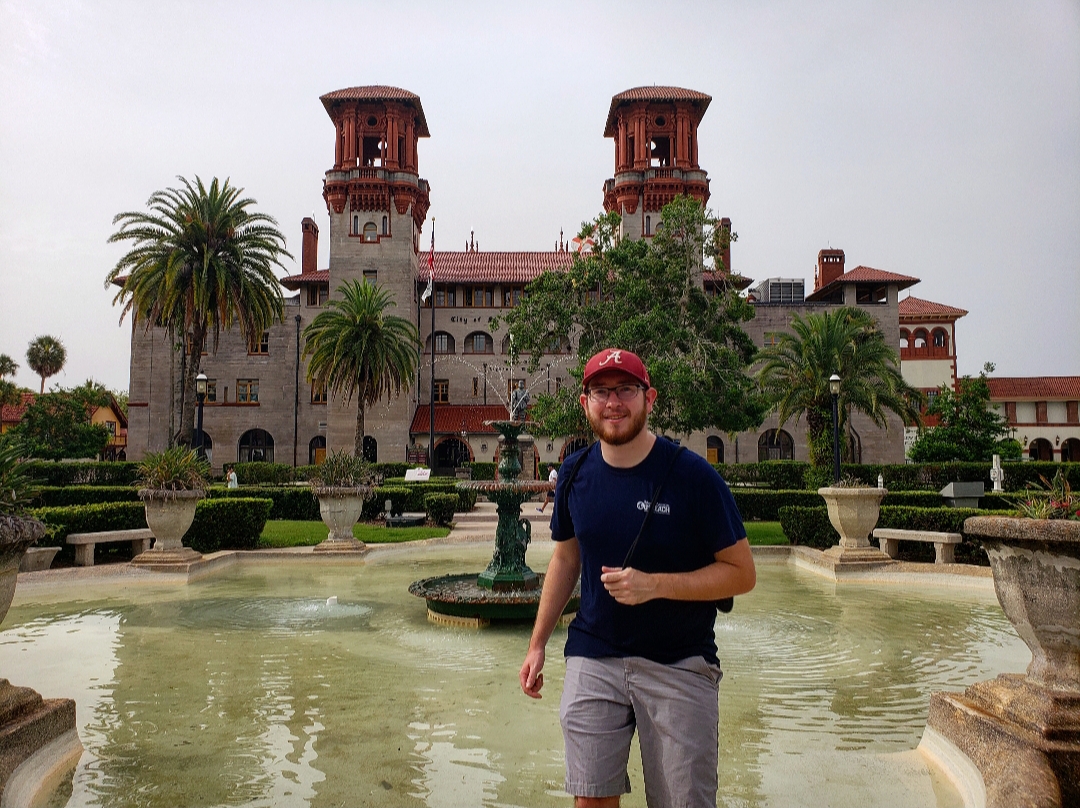
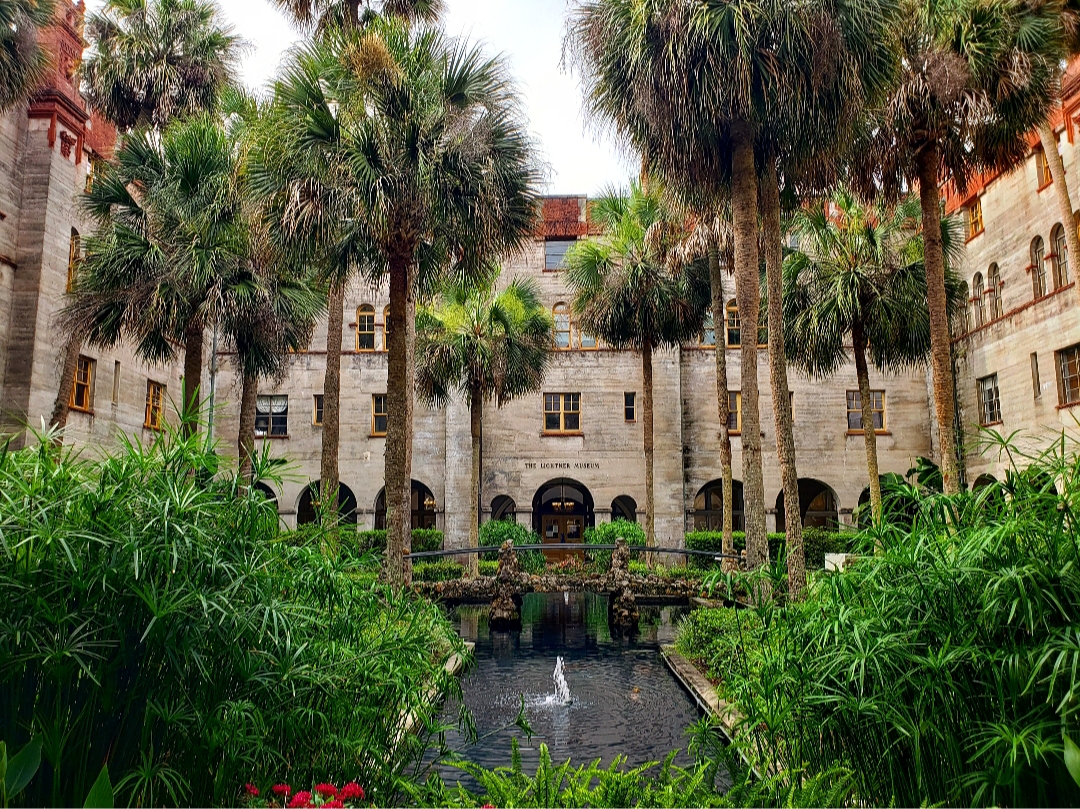
Then right across the street was the Alcazar Hotel which has become the Lightner Museum. Normally, the college allows for tours, but these tours have been suspended through October due to coronavirus. The Lightner Museum is a beautiful building with a courtyard and koi ponds, but we never actually went inside the museum. Next to that is the Villa Zorayda, a scaled model of the famous Alhambra in Spain. I would have gone inside, but the hours of operation listed on the website are not accurate due to coronavirus, and it had not opened yet. After walking through St George Street again, we decided to head down to St Augustine Beach which is found on Anastasia Island. The highlight of the beach for me was being able to drive my truck onto the beach. That is not allowed in Pensacola, so I had never experienced it before.
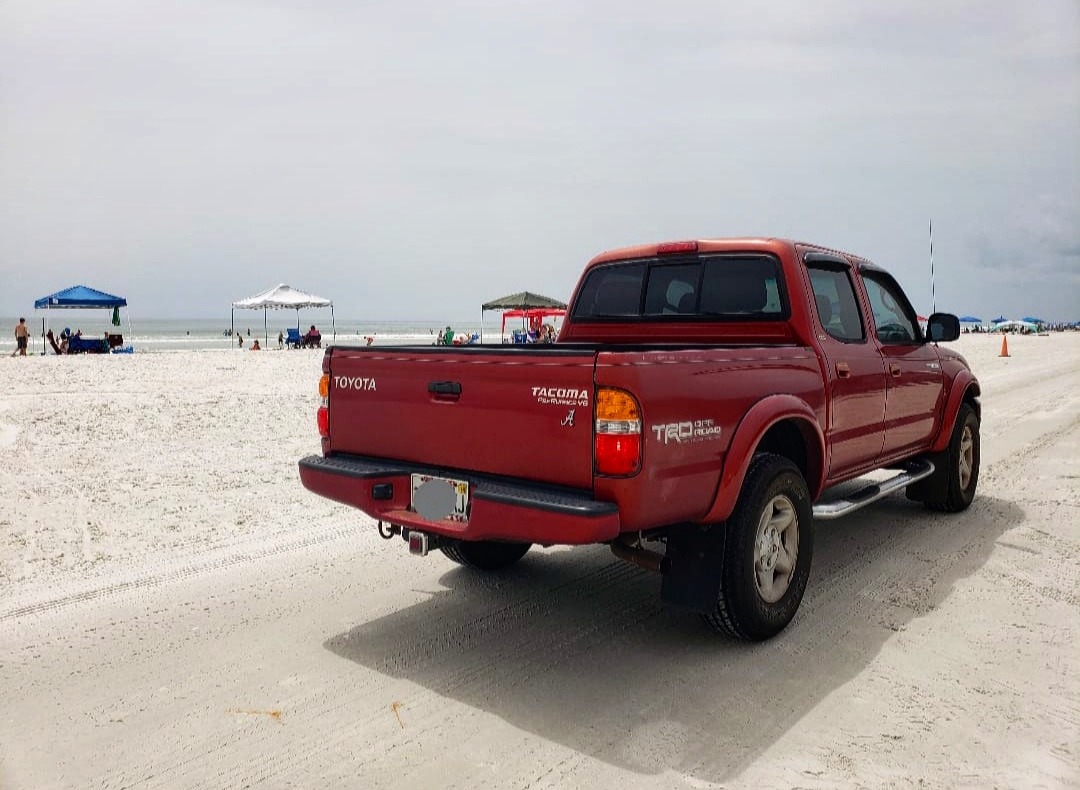
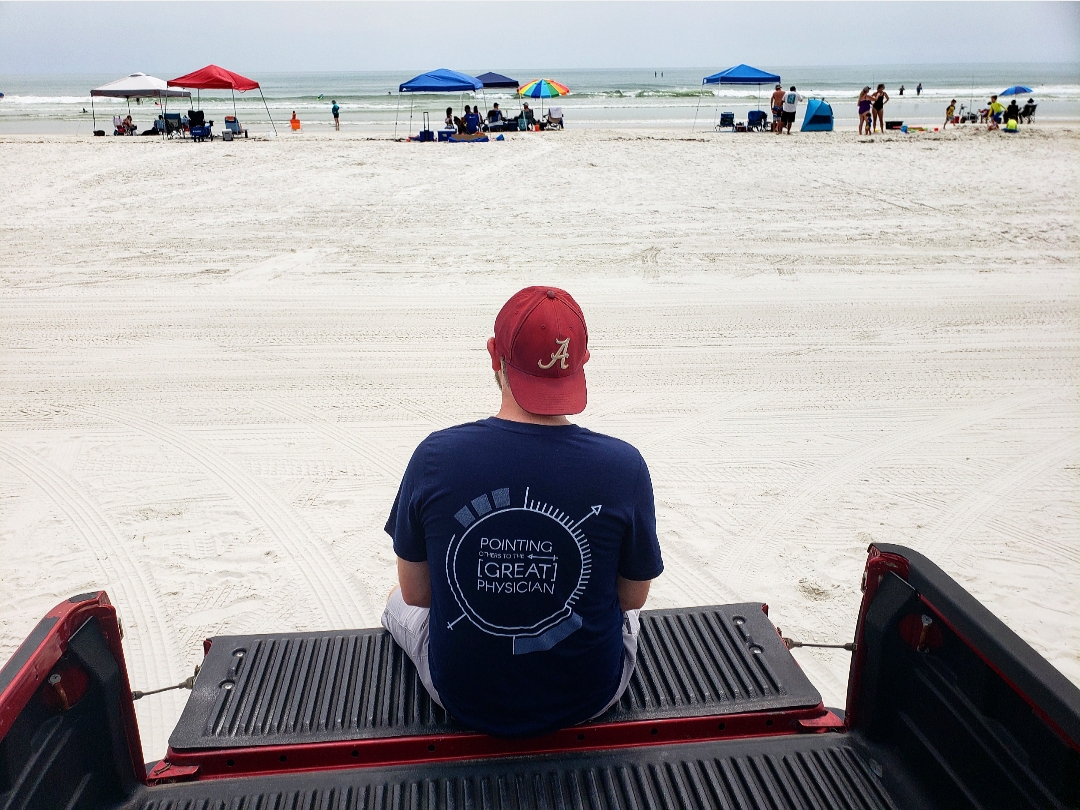
I drove around until I found a good place to park and then explored the beach. Even though travel has been restricted this year, I have now somehow managed to visit both the Pacific and Atlantic Oceans and made sure to walk out into the water. The beach was nice but extremely crowded. It’s hard to imagine that social distancing guidelines could be kept with crowds like that. After leaving the beach, we headed to Gas Full Service Restaurant, right next to the Bridge of Lions for lunch. Here, I ordered their famous Jalapeño Popper Burger which has been featured on the Food Network, and it was really good!
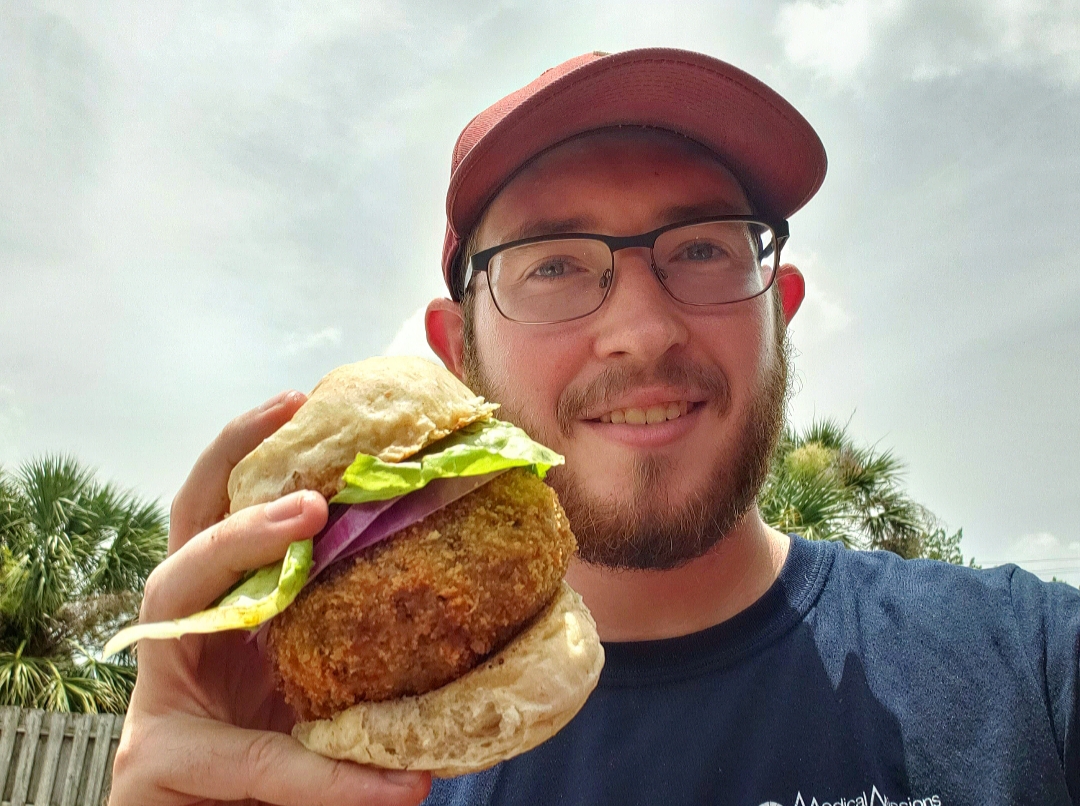
Basically they start out blending jalapeños, cream cheese, and cheddar together and roll it into balls, and that is put between two burger patties and then cooked to medium. They then bread it and fry it, and throw it on homemade buns. It’s not good for you, but it’s really good! After lunch, we headed to the world famous Fountain of Youth. The legend of Ponce de Leon discovering Florida in search of the fountain of youth may not be completely accurate, but he did discover Florida and settled the St Augustine area, and there were natural springs in the area that could supposedly preserve your youth when you drink from it. I drank directly from the Fountain of Youth and didn’t feel any younger.
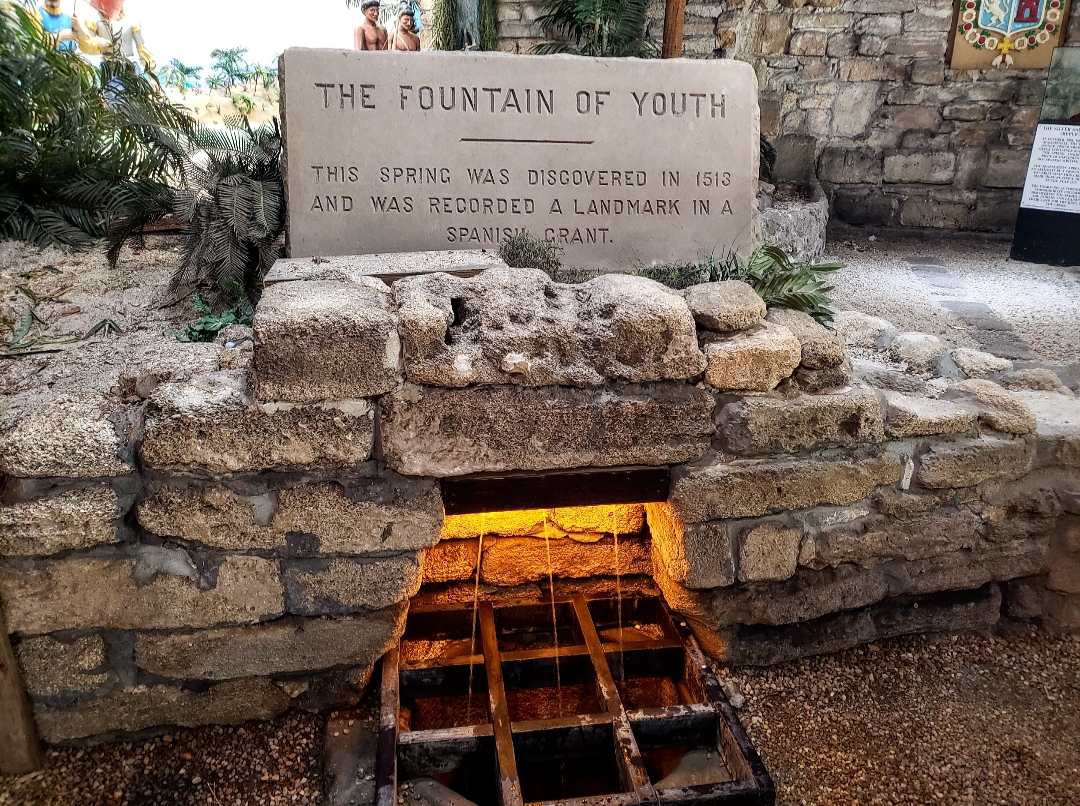
We walked around the archaeological park and determined it really wasn’t worth the price of admission, but kids would probably enjoy it, and the Fountain of Youth is iconic, so it is cool to say I’ve been there. We then went to Fort Mose. The history surrounding this area is very fascinating, but the park itself was a huge disappointment. During Spanish control, the king announced that if any slave could escape the British colonies and make the dangerous journey down to St Augustine, they could be free under Spain. This is considered the first “underground railroad” and Fort Mose became the first free black settlement in the United States. Escaped slaves would have to hike for weeks through thick swamps, dodging bounty hunters along the way to make it here, but it would be worth it in the end as they were granted freedom. Unfortunately, the actual site today is not what it should be. I mean, there’s nothing there! It’s a big field. There were no signs talking about the site’s history, no outline of where the fort once stood, nothing!
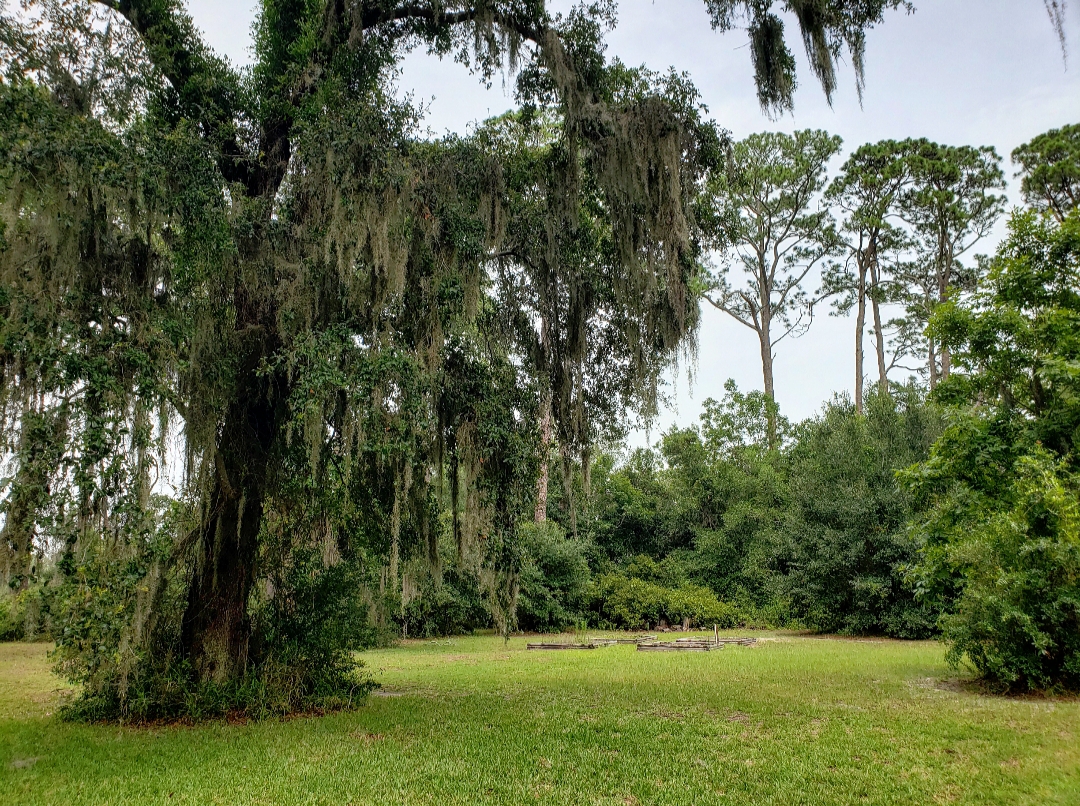
There is a visitor center, but it was closed. And there was a sign talking about future restoration plans, but that’s it. We were the only two people there, and it was kinda sad. After being exhausted from the day, we headed back to the hotel, and a huge storm swept in right as we arrived. It looked like a hurricane out there! The wind was so strong I could feel it blowing through the cracks along the door’s outline. We decided to rest for the remainder of the day and avoid going out into the storm.
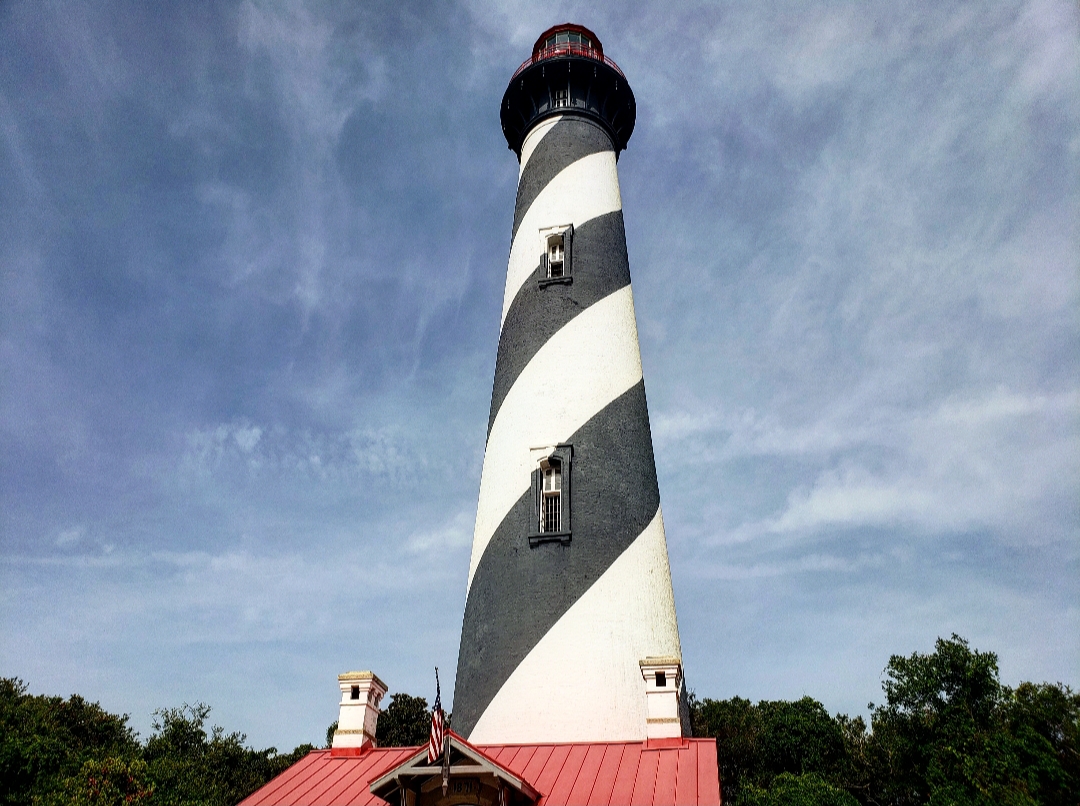
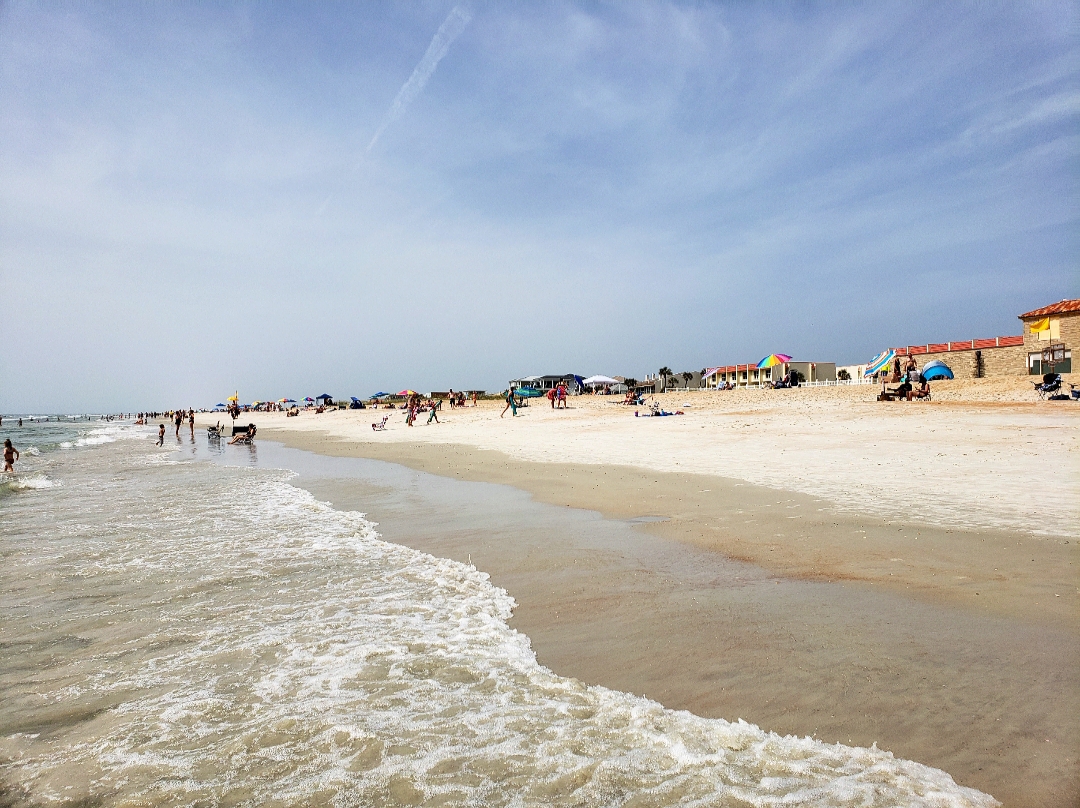
On Sunday morning, we headed down to the St Augustine Lighthouse. There are 219 steps, and there is a nice view from the top. Right after the lighthouse, we headed back to the beach but this time at the St Johns County Ocean Pier, and in my opinion this beach is nicer than the other one. While I enjoyed getting to drive on the other beach, this one was nicer and easier to get away from crowds. I walked along the beach for a while, and it was really relaxing. After that, it was a long drive back to Pensacola, but it was really nice being able to get out of town for the weekend. I miss being able to travel and hope that this pandemic can end quickly. I’ll be writing my guide on how to visit St Augustine this week and will probably share that on Sunday. Thanks for reading!
 Tyler's Travels