
For the past couple years, I have made it clear that I love visiting national parks. My dream is to visit all of them, but sometimes it can be difficult to determine which parks are official national parks. I’ll try to explain it quickly: the National Park Service (NPS) is a government agency that manages various different properties across the United States. There are 423 units of the National Park Service as of December 2020 (but I believe a new one was just added recently, so it may be 424 now). These individual units are given official designations such as national park, national monument, etc. There are many different designations, but the most iconic is the national park (not to be confused with national historical parks or national military parks). There are currently only 63 official “national parks,” and those who try to visit every national park are almost always referring to these official 63 parks. Converting any unit into a national park requires an act of Congress and has to be signed by the President, but we do occasionally see a new national park created, with the most recent one, New River Gorge, becoming official in December 2020.
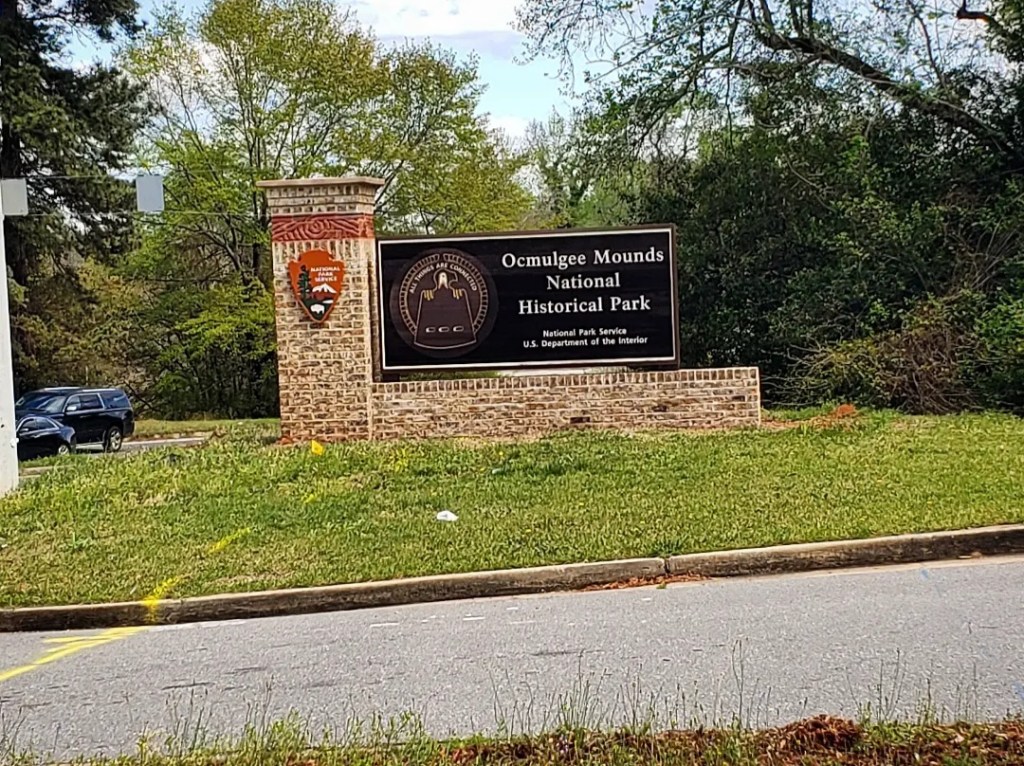
However, there is always a list of parks that are campaigning for official national park status. Sometimes these get approved when I disagree with the decision (Gateway Arch), while other times they fail to receive official status when I think they should get it (Delaware Water Gap). But there’s one that has been getting a lot of attention lately: Ocmulgee Mounds National Historical Park in Macon, Georgia. So, Ocmulgee Mounds is part of the national park system, but it’s not a national park. If this campaign is successful, it could potentially see national park status as early as this summer, and it would become Georgia’s first official national park. And because I was passing through the area I decided to check it out and see what I think about its potential inclusion.
To start, Ocmulgee Mounds was the largest archaeological dig in American history. (It’s not the largest archaeological site in the US: that is Cahokia Mounds in Illinois, which I visited last year). 800 men worked on the dig and discovered around 3 million artifacts. It’s a site that has many mounds that were built by Native Americans thousands of years ago. These mounds were used for a variety of reasons, including housing and religious ceremonies. They were built by hand out of clay, making them very impressive structures considering their size and the amount of time it would have taken to construct them. The park claims that there is evidence of over 17,000 years of human habitation in this park. As a Creationist, I don’t believe the earth has been around that long, but I do believe that for thousands of years people have been living on this site. Not that much is known about the people who dwelled here, but there is evidence that they hunted mammoths, and one of the oldest artifacts uncovered here was a spear that they would have used for that.
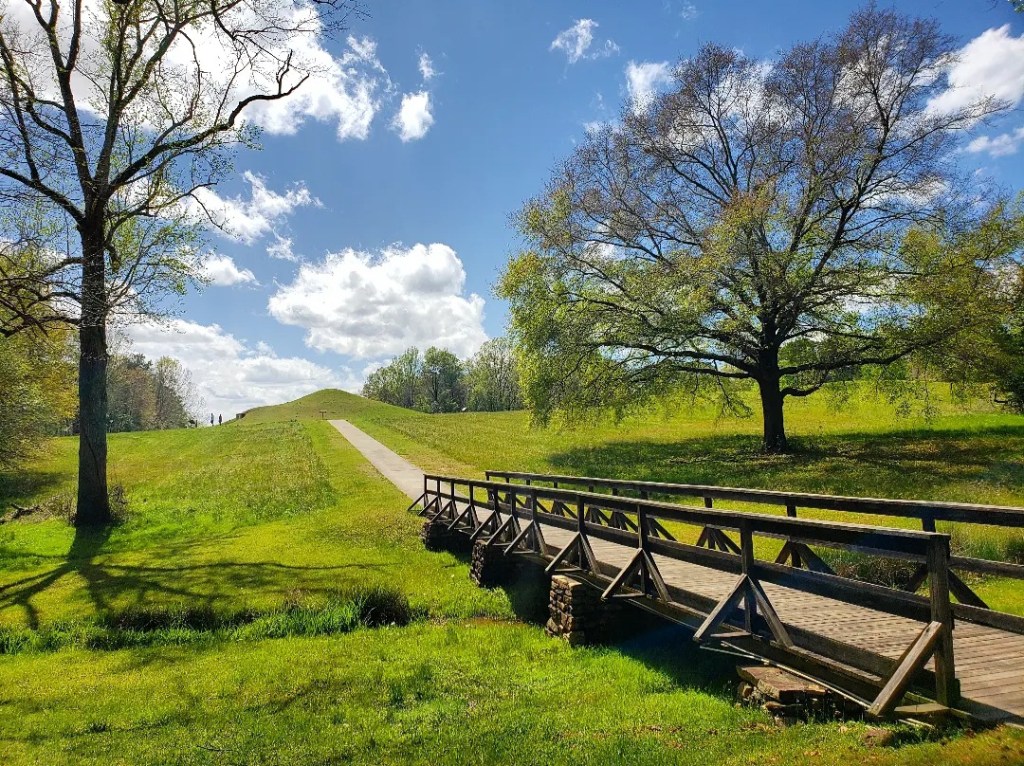
There are actually reasons to believe that there were connections between those that lived in Ocmulgee Mounds and the Mayans in Mexico. For one, some of the mounds look as if they were inspired by Mayan architecture. There is evidence that many different people groups have inhabited the area over the years as there were layers of skeltal remains unearthed from the burial mounds. But some of the skulls found in the lower layers had a flattened appearance to them, a characteristic of Mayan traditions. So while there is no proof that the Mayans had a connection to this area, many debate that this could have actually been the case due to the evidence I’ve pointed out.
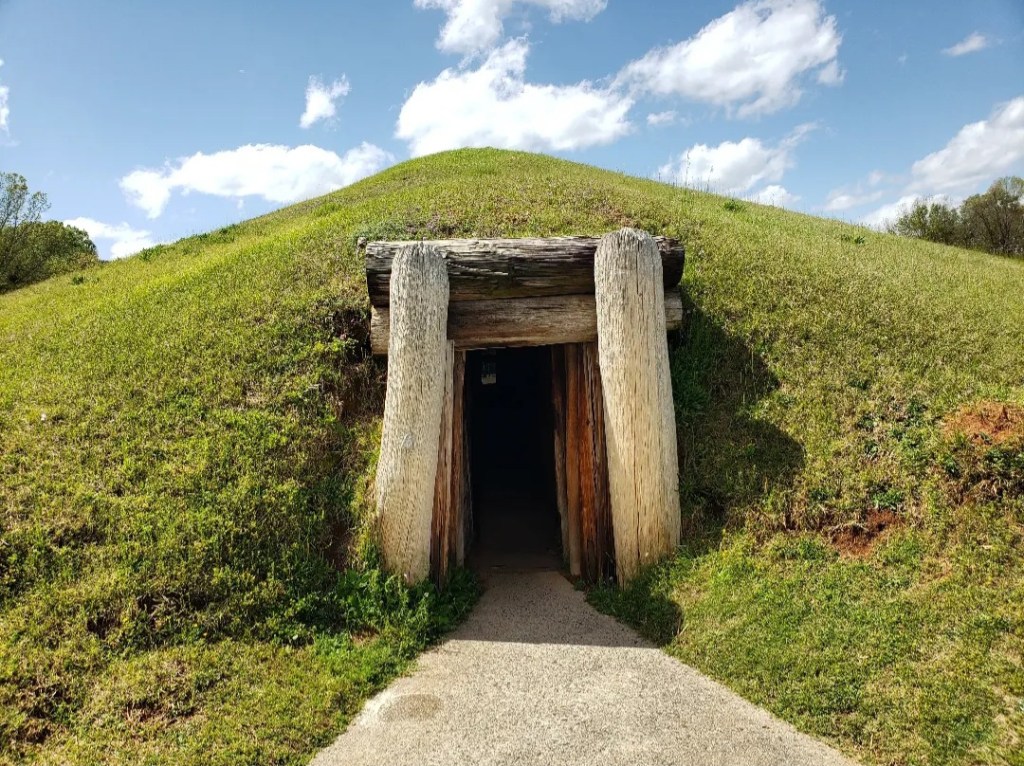
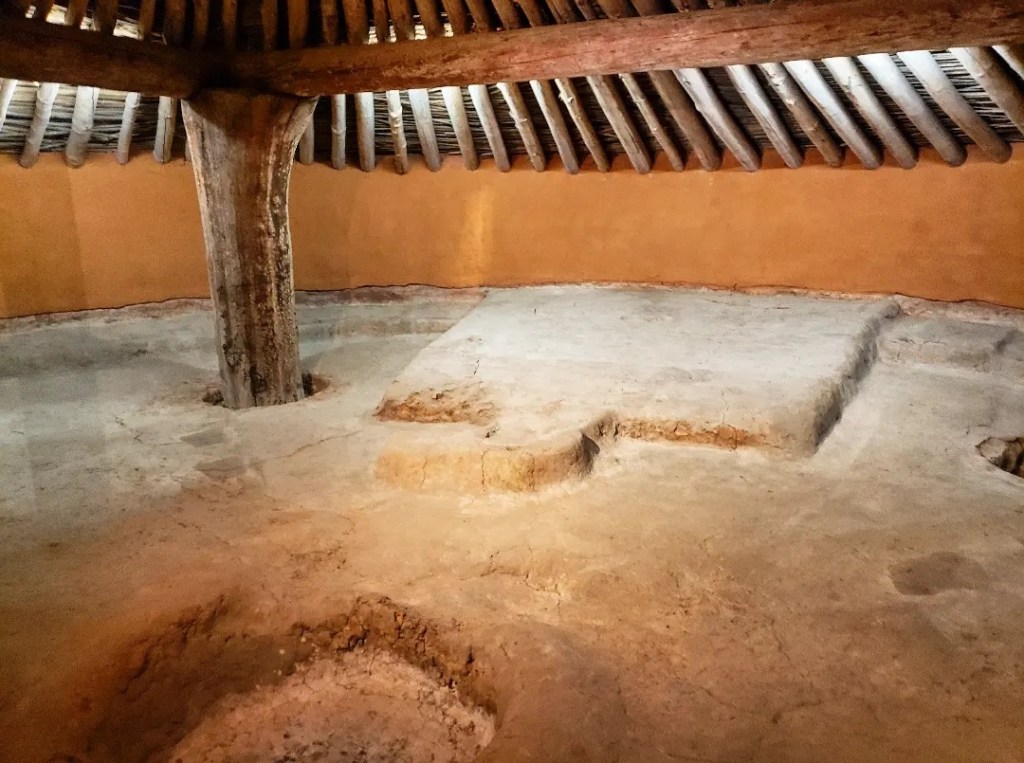
One of the two main sites within the park is the Earth Lodge, America’s oldest ceremonial lodge. It is believed that it was used for religious rituals. While the mound itself has been recreated, the floor on the inside is still the original floor of the mound. I was able to go inside, and there is a glass wall preventing you from actually stepping on the preserved floor. There’s an eagle carved into the floor and then seats around the perimeter where religious leaders would sit during these rituals. There’s a diagram of what historians believe these rituals would have looked like inside the museum/welcome center nearby.
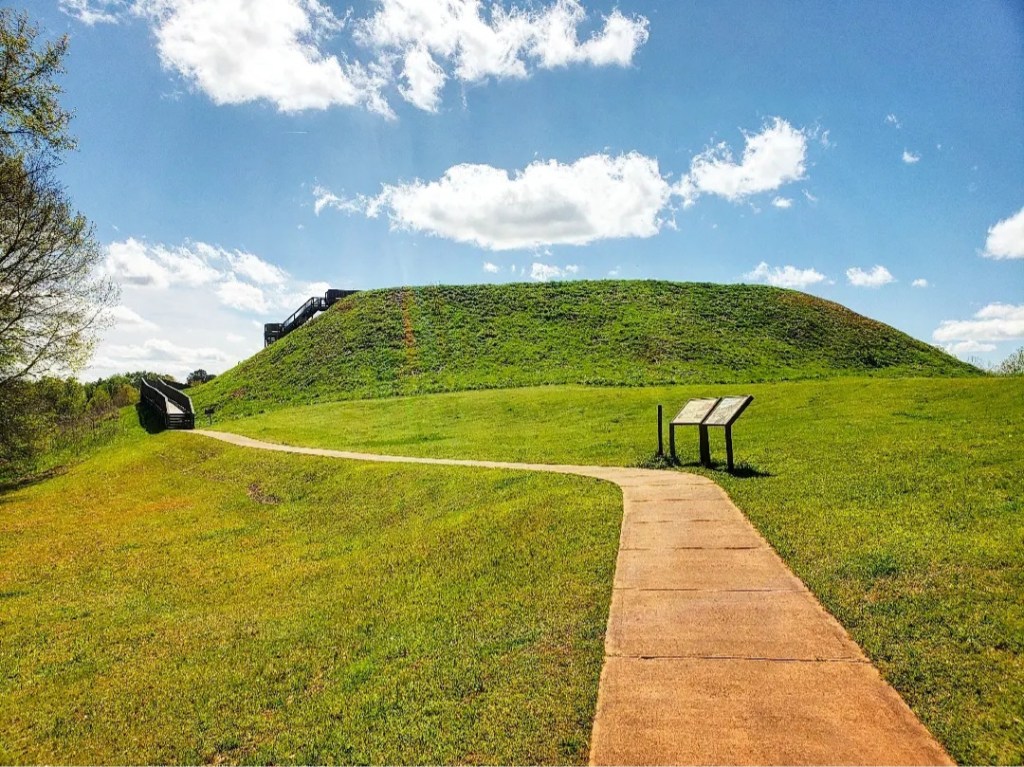
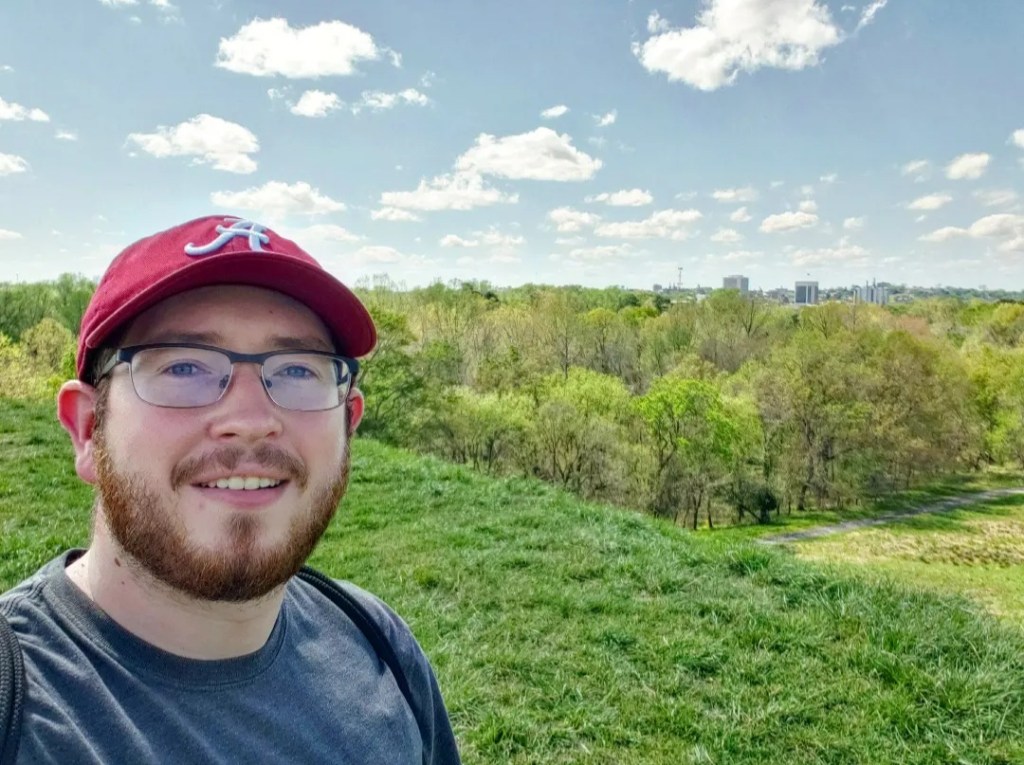
The other main attraction within the park is the Great Temple Mound. This is the largest mound in the park, standing 55 feet high, with a 300×270 ft base. This mound is really impressive, and pictures don’t really show how big it is. This would have been used as housing for tribal leaders, and unlike the Earth Lodge, you’re allowed to climb up to the top of it. There are several layers of mound to climb, but to reach the top layer of it, there are some stairs. Once I reached the top, there were great views of the surrounding area, with Macon visible in the distance.
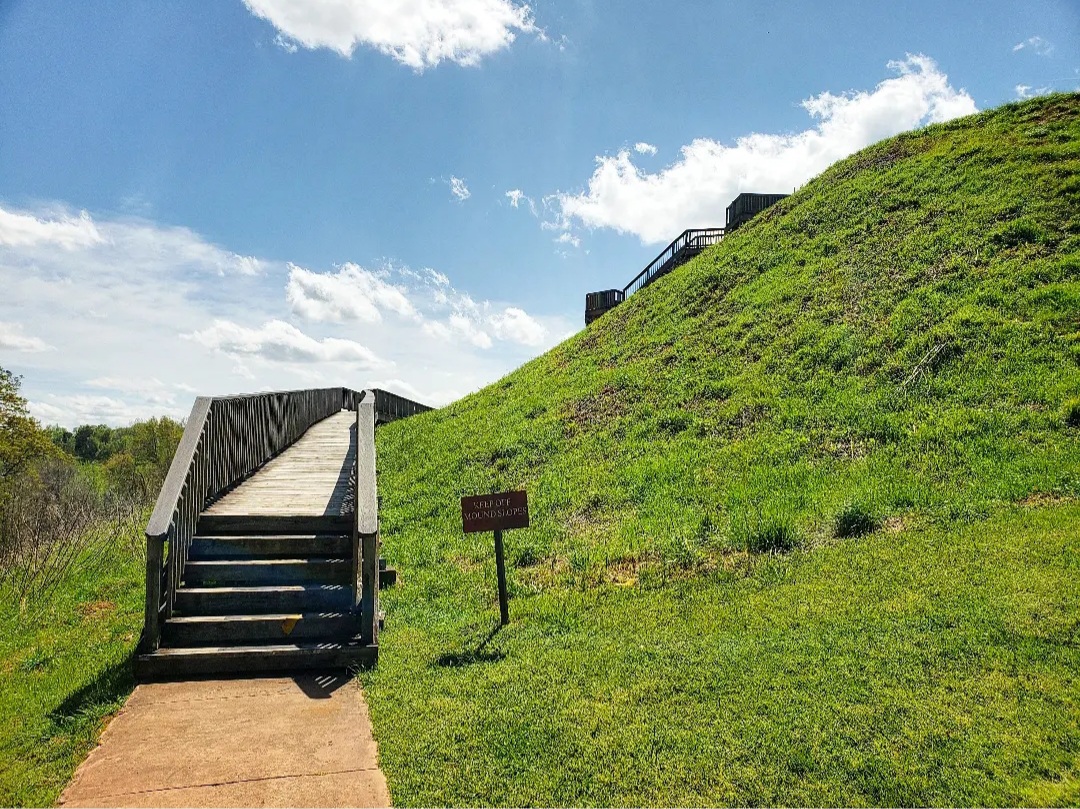
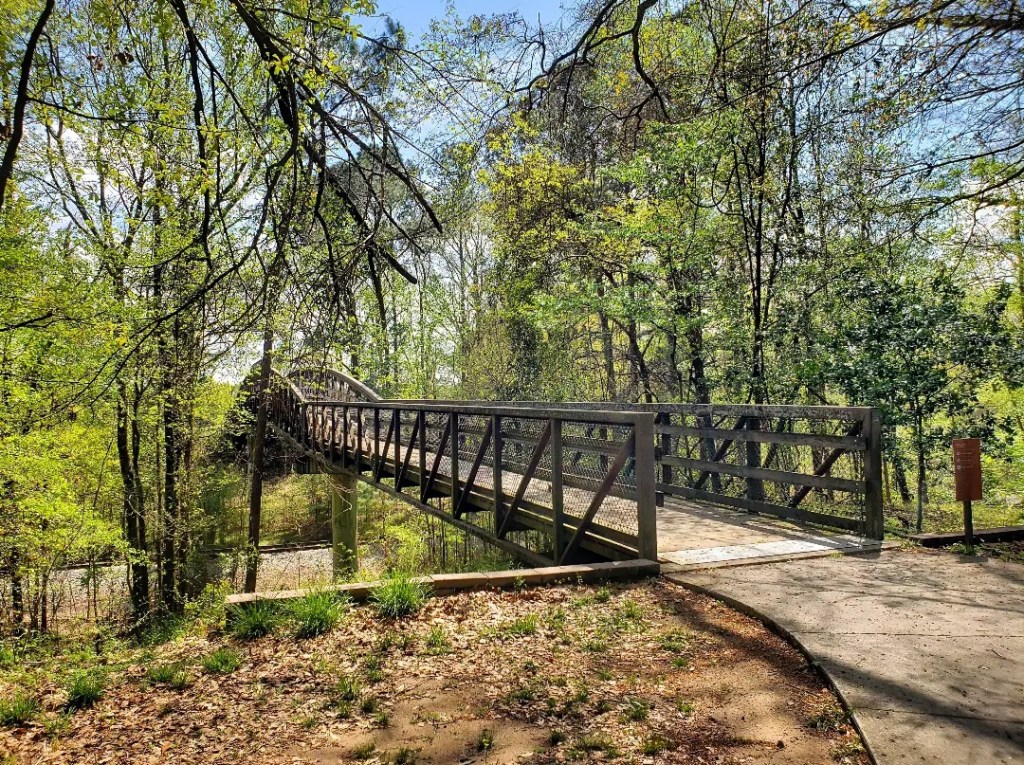
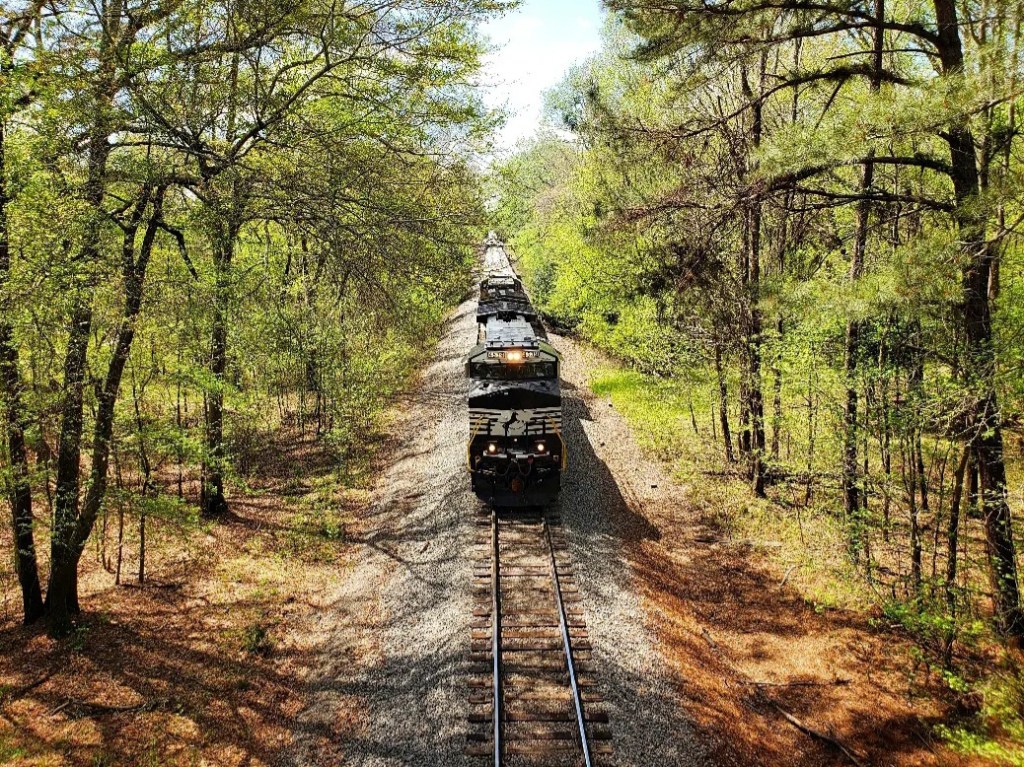
The rest of the park includes a lot of grass and some swampy areas along the Ocmulgee River. There are other mounds as well, but I didn’t have time to tour those. There’s also a railroad that passes through the park which is historic. The railroad first appeared in 1876, and it ruined some of the funeral mounds in the area, so it’s not really something they’re proud of. This park is a beautiful area to just walk around, and there are plenty of trails, though they’re not the typical trails you’d be used to hiking. It’s definitely an important historic location that we still don’t know much about, so I do support its inclusion as a NPS unit. But what do I think about its potentially becoming a national park?
While I do think it’s worth visiting, I don’t think it should get the upgrade to national park. When I think of national parks, my mind goes to places like the Grand Canyon and Zion: places that take your breath away when you see them for the first time. This designation should be reserved for the best of the best when it comes to natural locations within the United States. A few years ago Gateway Arch was upgraded, and I’ve been against it ever since its announcement because it’s just not what a national park should be. According to Britannica, a national park is an area set aside by a national government for the preservation of the natural environment. This park isn’t really preserving the natural environment but instead is preserving a historical site- which is also very important. I think it should remain a national historical park which is its current designation. That’s not because I dislike the park- just because it doesn’t capture that feeling that you’re supposed to get when visiting America’s national parks. National parks are supposed to be all about the nature. I’d still recommend visiting and enjoyed my time there! Just don’t ask the park rangers about its national park status because they don’t seem to react well to that question.
 Tyler's Travels
One thought on “The Next National Park?”