

On June 10 this year, the US finally lifted the testing requirement for re-entry into the United States. This was the biggest obstacle that had kept me from planning international trips the past couple years: I didn’t want to have to stress about finding a testing center in a country where I don’t know the language and then worry about the results coming in before my flight. Then if I happened to test positive, I’d be required to quarantine for two weeks in that country before leaving. So when the announcement was made back in June, I knew my excuses were gone, so I decided I wanted to take a trip to my 16th country. After comparing flight prices from Atlanta, Ecuador seemed to be the best option, so I booked it. Here’s my story of my first international solo travel experience (other than the time I was stuck in Moldova alone for 24 hours).

As I arrived in Guayaquil, I was kinda nervous. My flight landed late at night, and if you have read anything about Guayaquil, you’d know that you’re not supposed to be out at night. It has the unfortunate reputation as the most dangerous city in Ecuador, but if you study the crime statistics a little more, the most dangerous areas are in the southern half of the city while the northern half is generally considered safe, at least during the day. I was aware of this, and I definitely didn’t have the best first impression seeing the city at night. To make it worse, the international plan I had on my phone was not working at all, so I had no form of communication or internet access. I was able to order an Uber while logged onto the airport wifi, but I couldn’t do much more than that. I got checked into the hotel, was able to briefly update my family with the very-spotty hotel wifi, and went to sleep.

The next morning, Dad was on the phone with Verizon, trying to figure out why my phone had no service, and it turns out there was some setting on Verizon’s end that had to be changed, even though I had asked them before leaving if everything was good. They finally fixed it, and I felt so much better knowing I could communicate with others again. It was then time to explore the city. I walked out of my hotel down to Malecón 2000. This is the main tourist strip through the city. It’s an urban park that follows the Guayas River, and even though there weren’t many people out yet, I felt safe because of the many police officers stationed along it. This is a beautiful area of the city and is kept very clean. I saw men sweeping and pressure washing all across the malecón and throughout the city streets as well. It’s clear that the city wants to change its reputation and rebuild its tourism industry. There are plenty of fountains and monuments dedicated to important people and dates of Ecuador’s history. As I got closer to the end of the malecón, there was a neighborhood on a hill in the distance that started to become a more prominent feature of the city’s backdrop. This is Cerro Santa Ana.

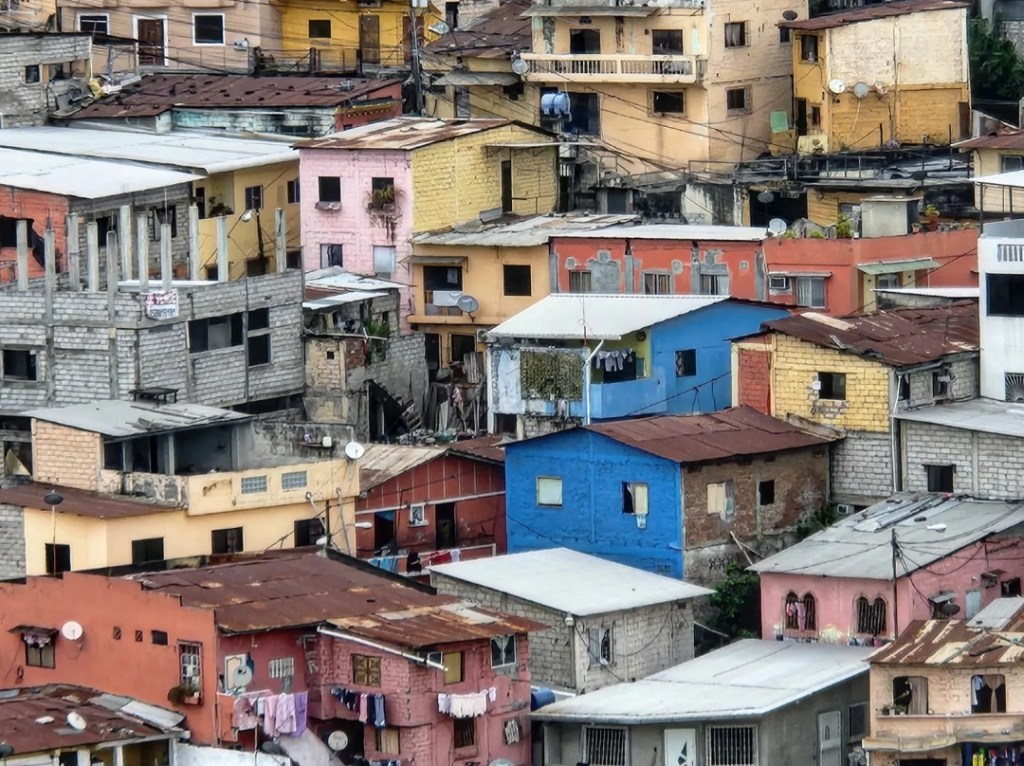
Cerro Santa Ana is a colorful historic neighborhood on a hill with a lighthouse (known as El Faro de Guayaquil) on the top. I definitely wanted to visit this place as it looks really cool. The “roads” of this neighborhood are actually a giant staircase with 444 steps to reach the top. Each one is numbered so you always know how much farther you have to go to reach the top. Along either side of these steps are restaurants, shops, and bars on the ground floors with locals’ residences on the upper floors. Though it’s a popular tourist spot in the city, it doesn’t really get moving until the afternoon. I started climbing the steps toward the top, dodging the pressure washers making sure the steps look good for visitors. Once I finally reached the top, I was blown away by the view. I could see for miles in every direction! Of course I also had to head up to the top of the lighthouse for an even better view.
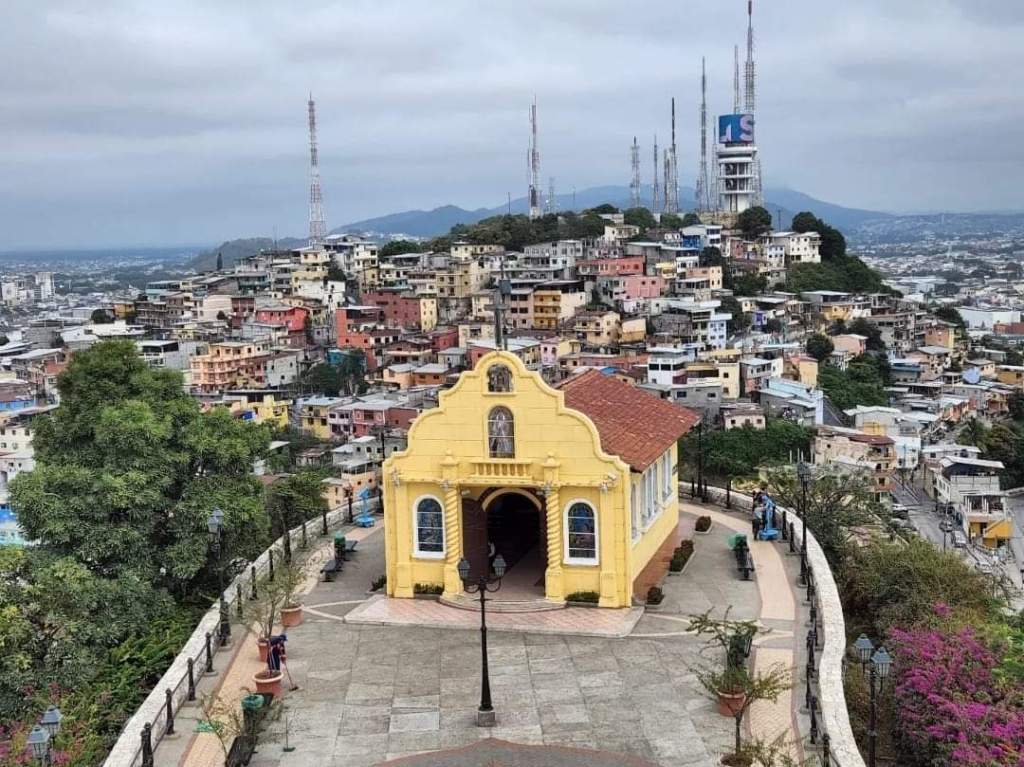
There’s a small church next to the lighthouse which I also visited. A security guard sat on the bench in the back of the church, and a cat jumped up next to him. I walked around the area, soaking in the views, before heading back down to the malecón. The next stop I wanted to make before finishing my first day of exploring Ecuador was Parque Seminario, also known as Parque de las Iguanas. This park is located right in front of a cathedral and was originally meant to honor Simón Bolívar, who led many South American nations to victory over Spain. However, the park has since become known for its inhabitants rather than its history. The park is filled with many iguanas who hang out here because the locals like to feed them. It’s actually estimated that there are around 350 iguanas in this small park! This was a really cool stop, and the iguanas were fun to follow around and take pictures of. Some would even react to people talking to them.

It was getting close to the time I needed to head to the airport, so I started walking back toward my hotel. But then a sign caught my eye, advertising ceviche at a local restaurant. I had to try it, so I stepped in real quick and ordered the ceviche con camaron. Ceviche uses raw seafood that has been “cooked” in citrus juices. Basically the citrus kills bacteria making it safe to eat. Ceviche is popular throughout South America but varies depending on which region you’re in. Here in Ecuador, it’s more of a soup consistency, but it’s very good! After that meal, I went back to the hotel to grab my backpack and then booked an Uber to the airport. I then flew up to Quito, and upon landing, I was shocked to learn that I had literally just missed a 6.0 magnitude earthquake in Guayaquil while in the air. These are common in Ecuador; in fact, natural disasters such as earthquakes and volcanos are partly responsible for Ecuador’s travel warnings.

From there I flew down to Cuenca. Cuenca is said to be the safest and most beautiful city in all of Ecuador, and I can agree with the second part. I’m not completely sure I agree with the safety part though. Again, I arrived at night, which isn’t the best time to be out in the city. And unlike Guayaquil, Cuenca does not have Uber, so I had to get a taxi. The taxi driver took me to my hotel, Hotel Norte, and as we arrived, he looked at me and told me to be careful. (He didn’t speak any English, but I could tell by the look in his eyes that he was concerned). I looked at him and asked “Es peligroso?” (“Is it dangerous?”), and as his eyes widened he replied, “MUCHO!” He then proceeded to explain that this is the drug center and red light district of the city at night. My gut told me not to get out of that car, so sitting there in the taxi, I quickly pulled up Google and made a reservation at a different hotel.

I got checked into my new hotel and went to sleep. The next morning, I felt a little uneasy following the previous night’s events. Cuenca is statistically the safest city in Ecuador, but I was suddenly feeling more nervous here than in the most dangerous city. Fortunately, as with Guayaquil, the city is much better during the day, so when I got out to walk around, I started to feel much better about it. Cuenca is just a beautiful city. The buildings are all so colorful, and if you’re not careful, you could end up thinking you’re somewhere in Europe! Guayaquil burned to the ground in the 1800s and had to be rebuilt, making it a more modern city, but Cuenca still has the old Spanish architecture from when Spain ruled over Ecuador. Cuenca’s full name is “Santa Ana de los Cuatro Ríos de Cuenca” because it is located in a basin where four rivers meet. It’s also located right in the middle of the Andes Mountains at a higher elevation, and the Andes could be seen in every direction.

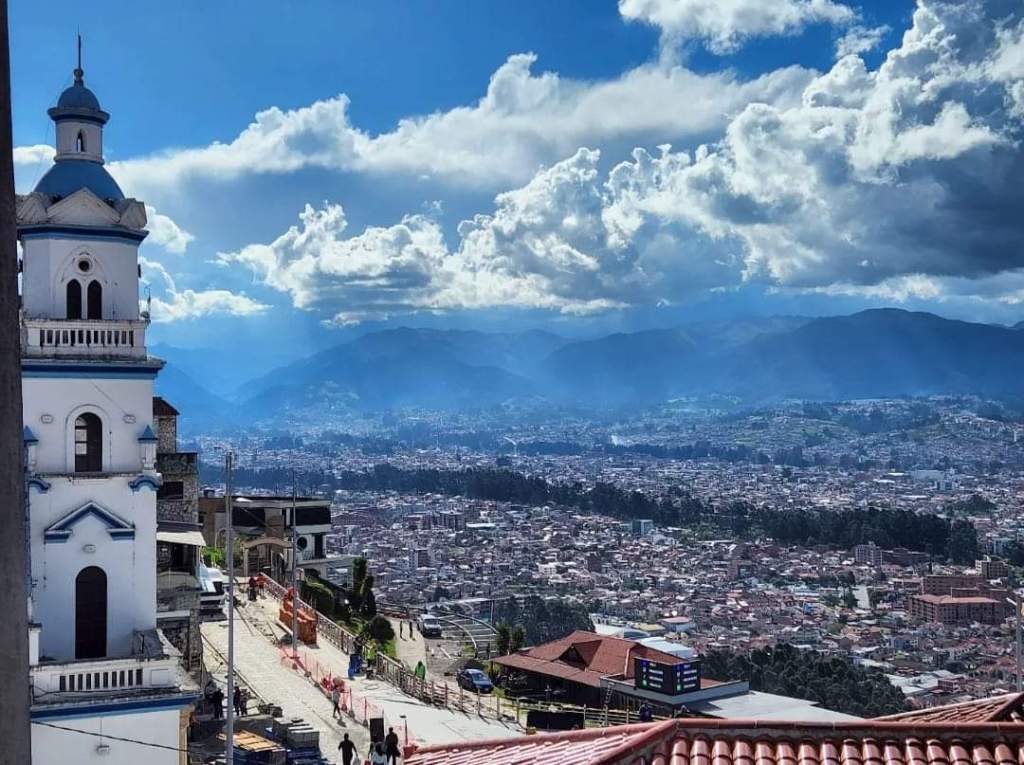
I first wandered into Mercado 9 de Octubre and explored the market. There were many fruit stands and merchants selling hornado (whole pigs). Here, I sampled the hornado and tried mote pillo, a popular Andes breakfast dish consisting of corn and eggs. From there, I walked down to Catedral Nuevo, the most iconic site and symbol of the city. The cathedral’s 3 blue domes can be seen from miles away throughout the city, so it’s not hard to figure out how to get there. The cathedral is massive! There’s no way to capture it all in a picture without a drone. Before going inside the cathedral, I wanted to go to the roof. So I headed down to the entrance on the side of the building, which leads to a spiral staircase straight to the top. Once at the top, I had amazing views of the city and the blue domes.

After taking a lot of pictures and enjoying the view, I headed back down to the street to see the inside of the cathedral. And of course the inside was just incredible. Its high ceilings and ornate design make this one of the most impressive and beautiful cathedrals I’ve ever visited. Construction on the cathedral started in 1885 and was not completed until 1975, almost a century later!

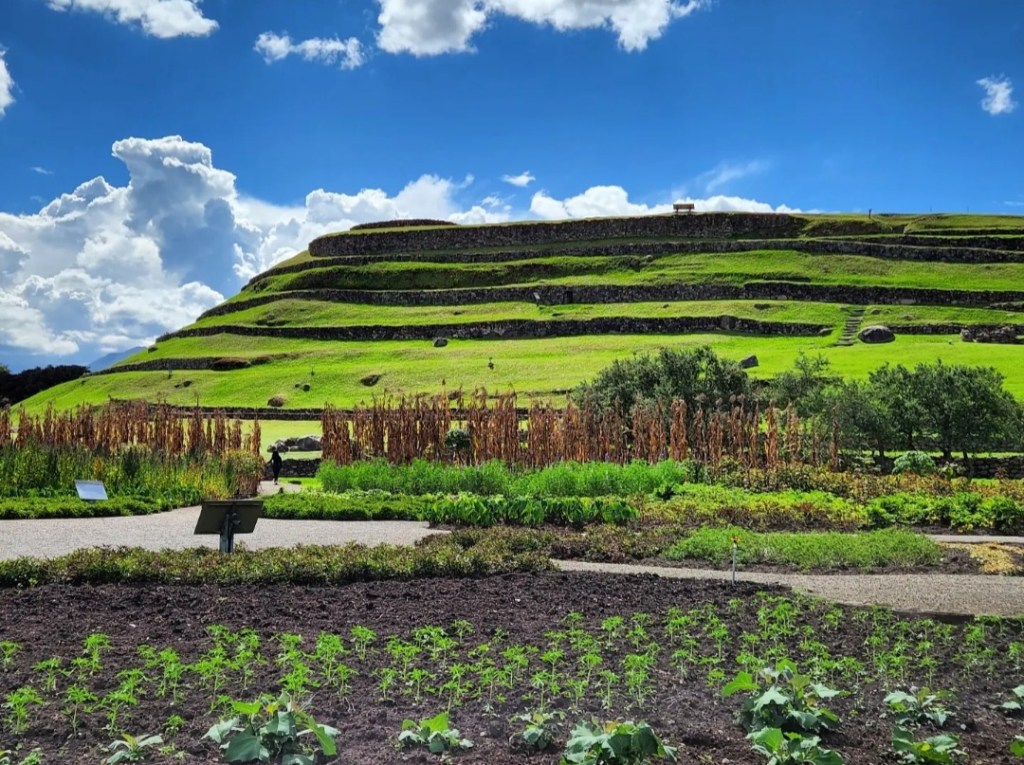
After leaving the cathedral, I walked around the nearby plazas and found some great places to get pictures of the domes before heading over to Plaza de San Francisco. This plaza is very big and includes many shops set up selling souvenirs. It’s also where the “CUENCA” sign is found with the cathedral in the background, making it a popular place for photos. After exploring some of the shops along the square, I walked down to Mercado 10 de Agosto, another market. While at this market, I saw vendors selling “cuy,” or guinea pig, but I decided not to try it. It was then time to get a taxi to go visit Museo Pumapungo. This museum protects the ruins of an old Incan city. At first, I wasn’t too impressed with the ruins, but then my opinion changed when I reached the other side and realized how big it actually is. It’s actually an impressive structure considering it’s right behind a museum.
I then called another taxi to head over to Mirador de Turi, which is located high up in the Andes Mountains. The taxi driver took me to an empty parking lot nearby and told me how to walk to it. I could see where I needed to be in the distance and started heading that way. I didn’t know why he didn’t just drive me to the lookout, but it would make sense later. I started walking down, and suddenly I had an amazing view over the city. It was definitely breathtaking, seeing the city from the surrounding Andes. I continued to walk down the steps heading toward a small tourist area with shops and restaurants. After taking in all the views, I walked into one of the shops to ask if they could call a taxi for me as it was time to head to the airport to catch my flight back to Guayaquil. But after asking for a taxi, the cashier looked at me and explained that taxis can’t get to this area due to road closures. There was no way for them to even reach this area. (And it finally made sense why that taxi driver didn’t bring me here like I had asked). She told me which direction to start walking, so I started walking that way.
I eventually came across another shop and walked inside to ask for a taxi. The girl in there told me the same thing: “I could call a taxi, but they wouldn’t be able to come pick you up out here!” As I turned around to leave the shop, I noticed a tour bus sitting there waiting on those that had paid for a city tour to return from the gift shops. So I walked up to them and asked if I could hop on for their drive back into town. They explained that they were on their last stop of the tour and were about to go back to the cathedral and told me I could hop on for $3. Of course, that was an easy decision, so I handed them the money and climbed in. The tourists eventually all returned, and we took off back into town. The drive took us through residential areas and farms which were really cool to see. We finally got back into Cuenca where I was able to find a taxi and head to the airport.

While at the airport, I started to get concerned when I realized it was time to be boarding the plane, but there was no plane to board. I asked the airline employees who told me that the flight coming in from Guayaquil had to turn around and return to Guayaquil for some reason. My flight had been delayed a couple hours as a result. So I sat and waited somewhat-patiently for the next couple hours. After another delay, they eventually announced that the flight had been canceled. This is Friday night, and I needed to get back to Guayaquil to catch my flight home on Saturday night. But when looking up flights online, the next flight to Guayaquil wasn’t until Sunday, after my flight home would’ve already left. This was a problem!
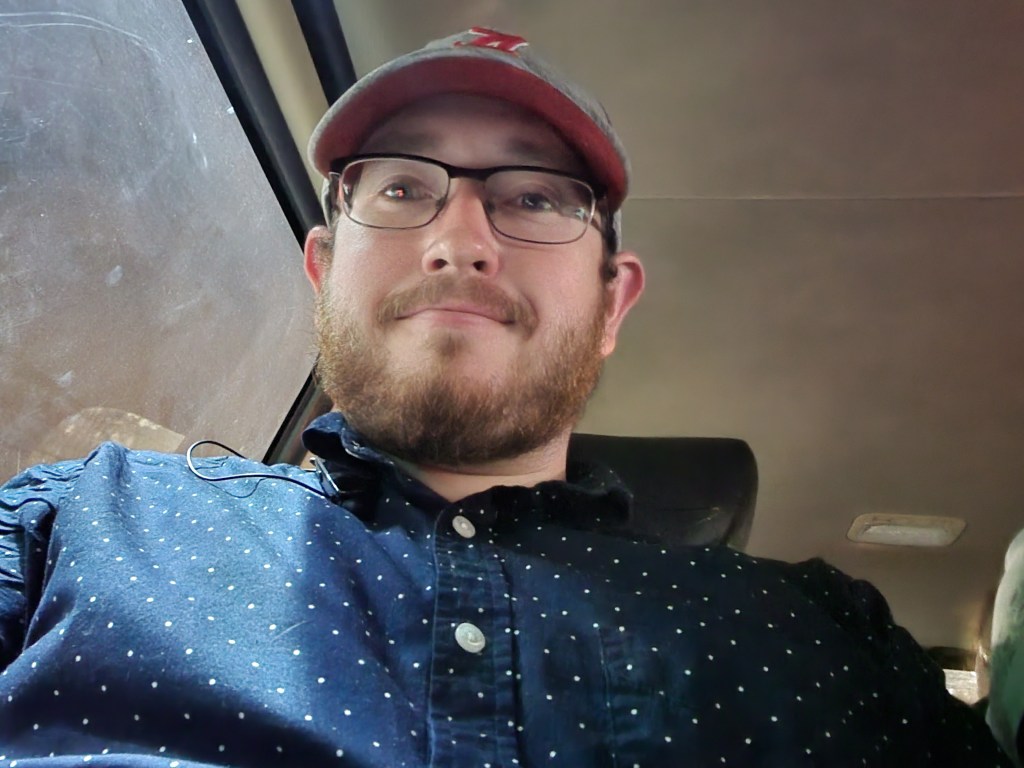
As I was in a long line of people trying to get their flights rebooked, I started hearing rumors of this group organizing a van to take them to Guayaquil that night. I knew that there were tour operators that take visitors between Cuenca and Guayaquil, but setting this up last minute would be difficult. So I asked around and found the people setting it up. I asked if I could join, and they told me I could for $15. I found out it was one of those official tour operators that make this trip all the time, so I was comfortable joining them. Next thing I know, the van pulls up, and I’m hopping in with a bunch of other people, most of whom I couldn’t fluently communicate with, to drive 3.5 hours through the Andes Mountains in the middle of the night. There was no other choice unless I wanted to be stuck in Ecuador for another day or two. During the drive, I couldn’t see much since it was dark outside, but I could see the outline of the Andes Mountains. It looked like this would be a beautiful drive during the day. We eventually made it to the Guayaquil airport, and I took an Uber to my hotel, arriving at 2 AM.

The next morning, I rested for a while after staying up all night in a crowded van. Around 11 AM, I finally left the hotel to walk around Guayaquil again. I walked back along the Malecón 2000 and eventually reached the end where Aerovía is found. Aerovía is a unique transportation system (basically a gondola lift) that takes riders between the cities of Guayaquil and Durán by crossing above the Guayas River by cable. This is the fastest means of transportation between the two cities, so many locals use it to travel to and from work in the mornings. I had to try it, so I bought a card and loaded it with enough money to make the trip there and back ($1.50 each way). I then hopped on and started traveling across the river. The views were awesome, and there’s a nice breeze coming up through the holes in the bottom of it so you don’t sweat to death. Once I reached Durán, I considered walking around a bit, but I decided to head back to Guayaquil since I didn’t really get the best vibe from this side of the river.

Once back in Guayaquil, I rode La Perla, the ferris wheel right on the river, before heading back to Cerro Santa Ana. I climbed back up the 444 steps of Cerro Santa Ana, and it’s much more lively on weekends than during the week. The shops were all open this time, and there were a lot of people out. This really is my favorite area of Guayaquil because it’s just so picturesque! I love all the colorful buildings, and having steps as a road makes it even more unique. Once at the top, the views are incredible. It’s just an awesome place to visit in the city. If you ever come to Guayaquil, Cerro Santa Ana is my biggest recommendation.

I really enjoyed my time in Ecuador. It’s not the easiest country to travel around as a solo traveler, but I’m glad I came. If you do decide to visit Ecuador, I have a few tips that I learned from my time here:
1. A little Spanish goes a long way. You don’t have to be fluent, but if you know a few basic words and phrases, it will help you tremendously. English is not widely spoken here, so mixing a little Spanish with hand gestures is the way to go.
2. Cash is king. Most places don’t accept card. When they did, I took advantage of it because I underestimated how much cash I would need to bring with me. If you come, bring more cash than you think you’ll need.

3. Hold onto your loose change. More often than not, the change you get back during transactions will be coins. The official currency of Ecuador is the USD, but you will get both US and Ecuadorian coins back as they are interchangeable here. Those dollar and half dollar coins add up quickly, and you will have entire transactions using nothing but coins.
4. Be aware of your surroundings. Crime is unfortunately a big problem in Ecuador, especially since the pandemic, but using common sense and watching who’s around you will help prevent most of these incidents from occurring.
5. Don’t walk around at night. Most crime happens at night, so it’s best to just avoid it altogether. If you have to be out at night for any reason, take an Uber or taxi, even if it’s just a short distance. Even in Cuenca, which is the safest city in Ecuador, you don’t want to be seen alone on the streets at night.
6. Be careful with taxis. Uber is very reliable and is by far the best option for transportation, but it’s only available in Quito and Guayaquil. Anywhere else in Ecuador, you will have to use taxis, and taxi scams are popular throughout the country. Make sure you’re using a legitimate taxi, and if you’re unsure what to look for, you can always walk into your hotel or a nearby business and ask someone to call one for you. That’s what I did every time I needed a taxi- I never waved one down on the street.
I loved exploring these two cities in Ecuador and hope you enjoyed hearing about them. I’m looking forward to visiting more new countries soon. Thanks for reading!

 Tyler's Travels