

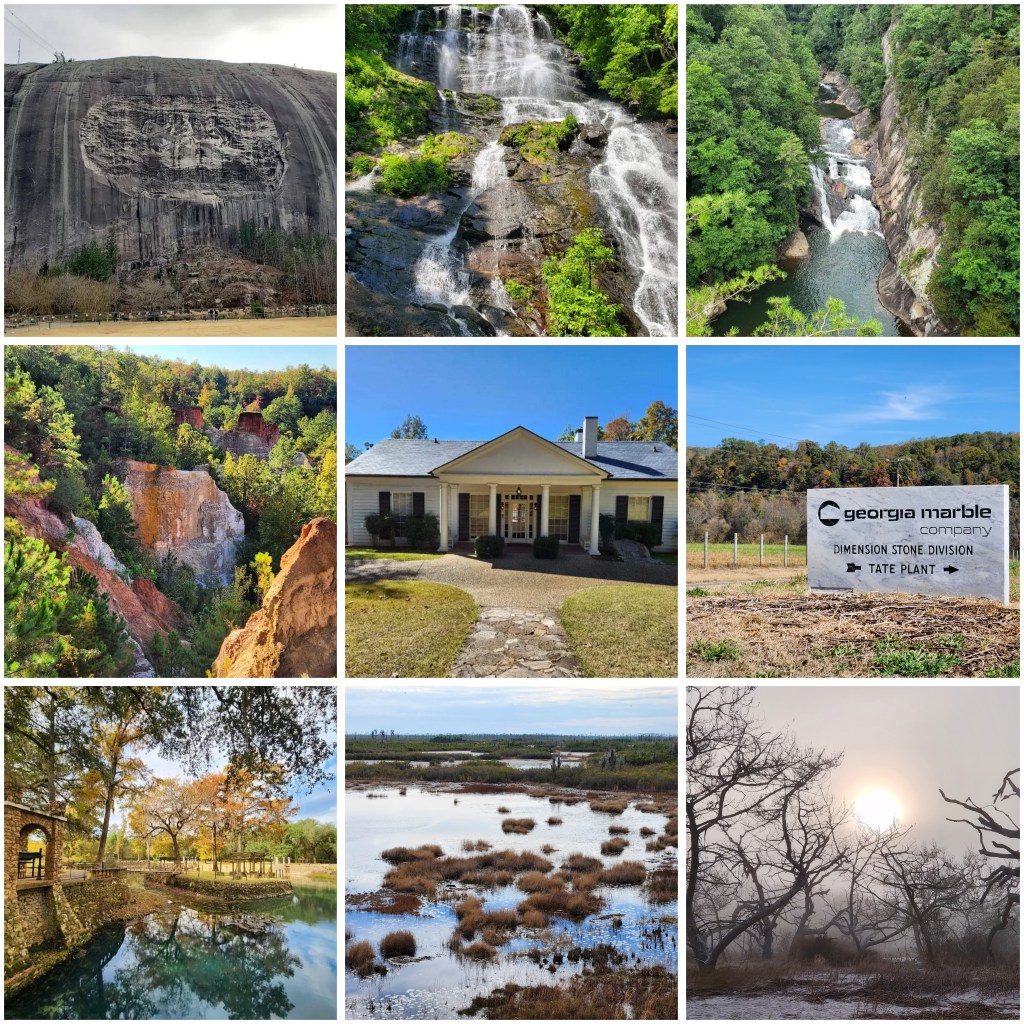
The Seven Wonders of the World is an iconic checklist of the most impressive locations around the globe. Many travelers dream of seeing them all and plan trips around each of them. But what many don’t realize is that Georgia has its own list of seven wonders. This list was first created in 1926 by a state librarian, highlighting what she believed to be the seven most impressive sites across the state. This list included Amicalola Falls, Jekyll Island Forest, the Marble Vein in Longswamp Valley, Okefenokee Swamp, Stone Mountain, Tallulah Gorge, and Warm Springs. This was the accepted list until 1997 when a couple changes were made. The Marble Vein in Longswamp Valley and Jekyll Island Forest were both removed due to the fact that they no longer existed as they did when initially included on the list. As a result, two new locations were added: Providence Canyon and Radium Springs. After moving to Georgia last year, I was determined to visit all seven of these sites, plus the two from the old list that had been removed. And as of December 30, 2022, I finally completed this goal by visiting my final spot on both the new list and the old list. Below, I’ll share my experiences at each:
1. Stone Mountain
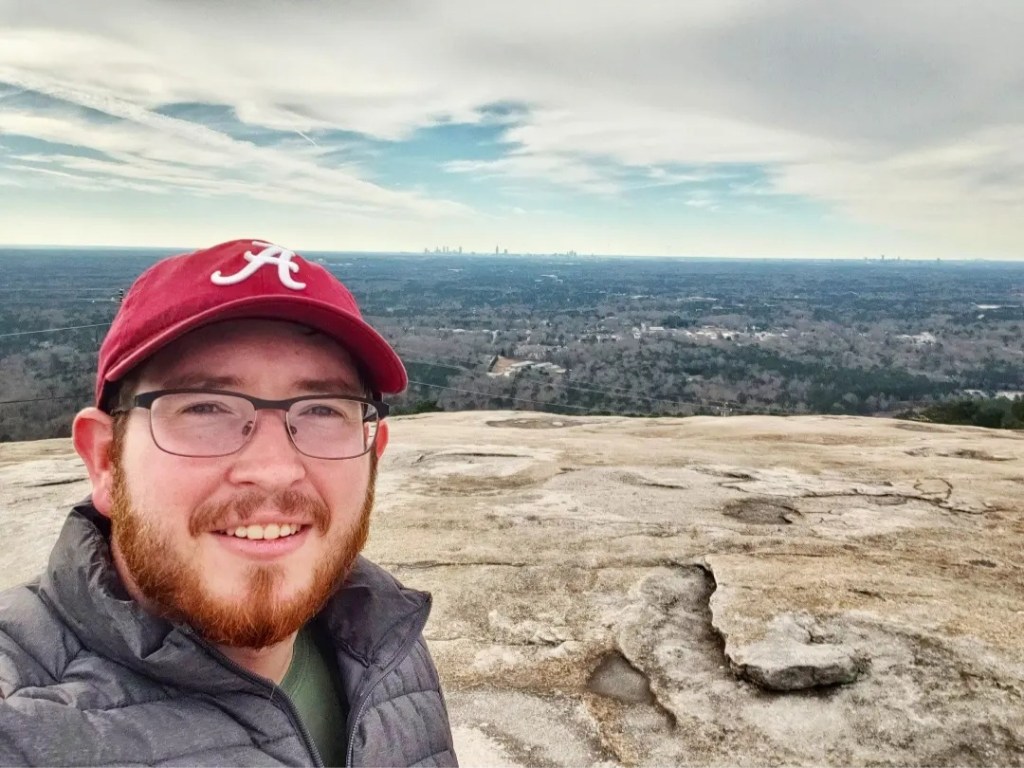
Back in February 2022, I was in the Atlanta area for my initial visit with Medical Missions Outreach. After spending several hours with the staff and learning about my eventual position, I had some time to kill, so I drove up to Stone Mountain. At the time, I hadn’t heard of the Seven Wonders of Georgia yet, but I had visited Stone Mountain as a kid and wanted to return. What most people know about Stone Mountain is that it has a giant carving of 3 Confederate leaders on the side of it, making it a very controversial location. But what most people don’t realize is that this carving is actually the largest rock relief sculpture in the entire world. In fact, the carving is 90×190 feet long. While the size of the carving is impressive, that’s not really enough for Stone Mountain to be a wonder of Georgia. The reason it stands out so much (literally) is because there’s not really anything else around it. It’s a large quartz dome monadnock that stands 825 feet above the very flat surrounding area. Due to its close proximity to Atlanta, it has also become the most visited site in the entire state. Climbing to the top of Stone Mountain is seen as a rite of passage for those moving to Georgia. Though the climb is steep at points, it’s not too strenuous, but it’s definitely not handicap accessible. And the views from the top are incredible! I could see for miles in every direction, including the Atlanta skyline in the distance. There is also a cable car that takes visitors to the top, but I preferred to hike up.
2. Amicalola Falls
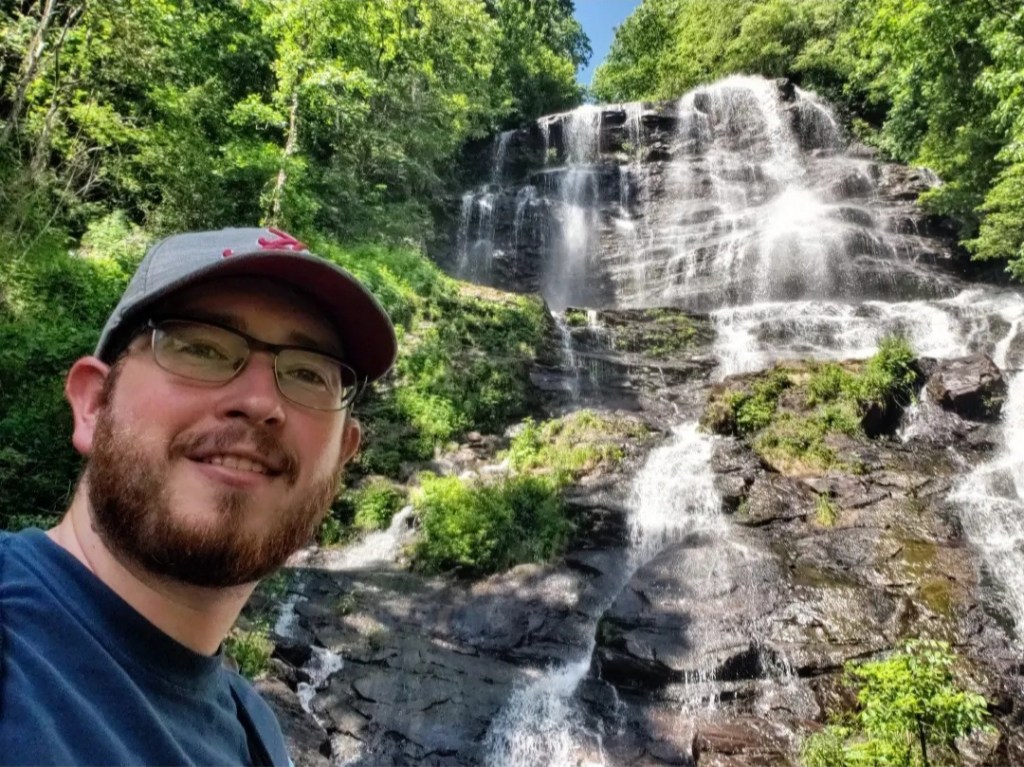
After moving to Georgia, I wanted to take a trip up to the mountains in the northern part of the state. As I was researching what to do, I came across the list of the Seven Wonders of Georgia and saw Amicalola Falls on it. I didn’t really pay too much attention to the list overall, but I thought that Amicalola Falls would be a cool stop to make, especially if it was considered a wonder of Georgia. I first drove up to Helen and then Dahlonega before driving over to Amicalola Falls. Once I arrived in the park, I wasn’t completely sure where to go because the directions weren’t clear. I was confused because there are many different trailheads, with none of them advertising leading to the falls. After asking for more information, I found out that each of these trailheads is part of the same trail leading to the falls. If you don’t want to hike the entire way, you can literally park at any parking lot along the trail to get closer to the falls. I had had a long day, so I went to the parking lot that was about a mile from the falls. As I approached the falls, I was blown away by its size. Amicalola Falls is the tallest waterfall in Georgia, and at 729 feet, it’s over twice the height of Niagara! There’s a bridge that passes right in front of the falls, allowing for visitors to get up close to it. You can’t capture the entire waterfall in a picture, partly because of how close that bridge is, but I still think the bridge is a cool addition. I could’ve stayed on the bridge watching the falls for hours if it were not for the mob of people crowded onto the small bridge, shoving each other to try to get the perfect selfies. But it was definitely one of the most impressive waterfalls I’ve ever visited.
3. Tallulah Gorge
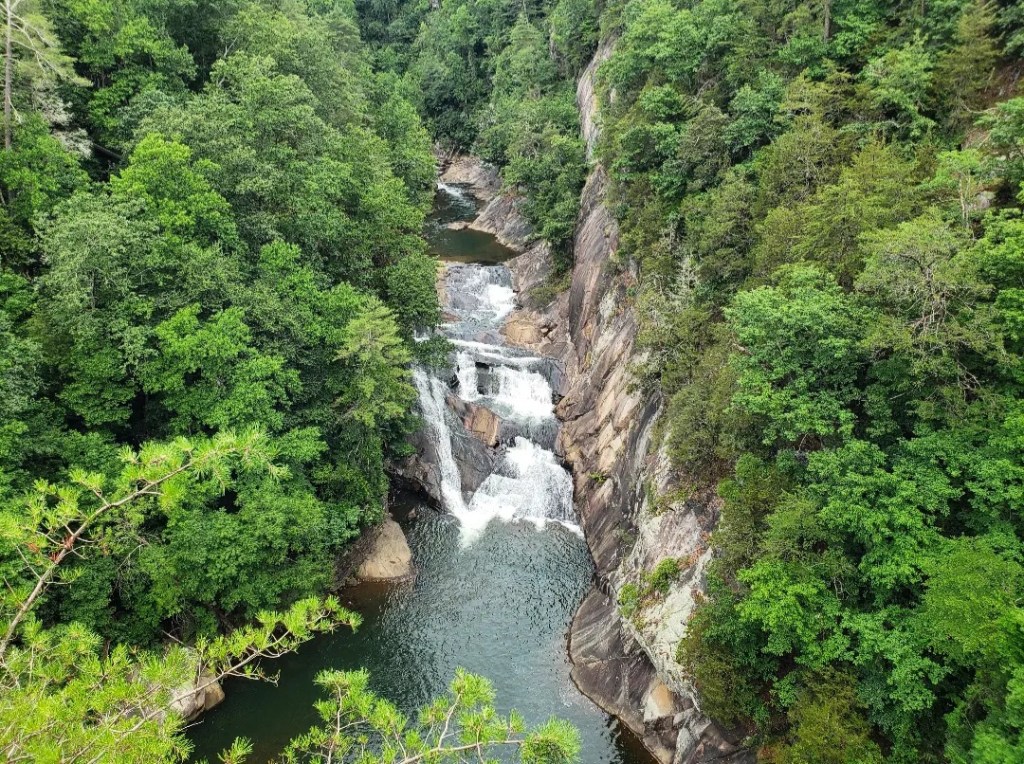
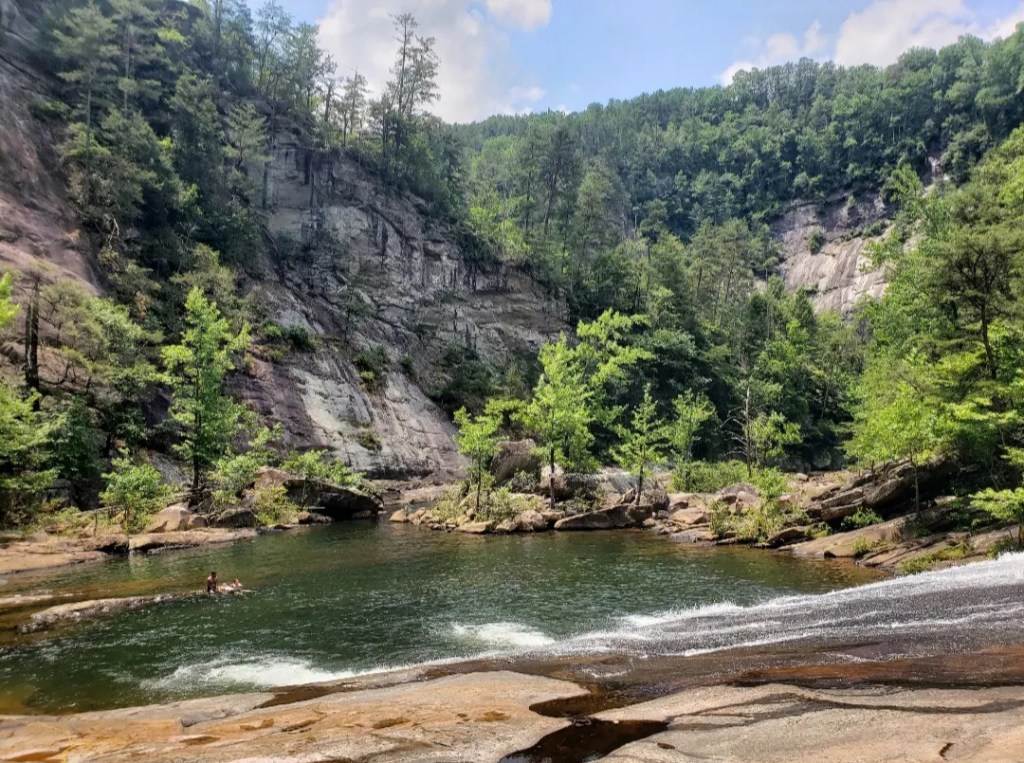
About a month later, I started to use the list of seven wonders as more of a checklist when deciding where to go on my weekend trips. I wanted to go back up to North Georgia, so Tallulah Gorge caught my attention. After researching the gorge, I found out that the best way to experience it is to hike down to the bottom, but you have to be one of the first 100 people there in order to secure a permit. I left very early in the morning to drive over a couple hours to the gorge, hoping to get there right as it opens. When I arrived, there were probably over 100 people waiting already, but the line wasn’t moving at all, so some people started backing out. The reason the line wasn’t moving was because it had rained the night before, creating some more dangerous conditions within the gorge. They were trying to determine whether or not they’d open up the canyon floor to visitors due to these less-than-ideal conditions. After waiting for over an hour and watching as many people ahead of me in line decided to leave, they finally made the decision to open it up and started handing out permits. I was in the first 100 and then had to sign a waiver before getting my permit. After getting the permit, I finally had a chance to see this gorge, and it was breathtaking! This two-mile-long canyon drops 1,000 feet to the bottom. From the top, I could see several of the gorge’s six waterfalls, and it is probably the most beautiful view you can find in the state of Georgia. I hiked down to the bottom, following the river and crossing it a few times. I slid down a waterfall and then sprained by elbow and needed help to get back out. I’ve already shared that story several times, so I won’t go into detail again (you can click here if you want to read about it in detail), but that aside, this is an amazing place that I’m glad I was able to visit. And I would still highly recommend hiking down to the bottom as it offers a unique perspective that you would never get from staying at the top: just be careful of the slippery rocks.

4. Providence Canyon
I didn’t have a chance to visit my next wonder of Georgia for several months, but as soon as I could make it work, I drove down to Providence Canyon, near the Alabama line. Providence Canyon is unique in that it was not formed naturally. It was caused by accidental erosion due to poor farming practices in the region. But it’s possibly the most beautiful environmental accident I’ve seen. The result is this over-1,000 acre group of 9 conjoined canyons that drops 500 feet. Unlike canyons in the West, this one is made of clay, giving it a distinct orange look to it. I started by hiking the loop trail along the rim. There are several areas along the trail that offer beautiful vantage points over the canyon, and I enjoyed looking down into its maze-like corridors below. I continued to hike the rim trail until I reached an opportunity to hike to the bottom. Once there, I noticed that the trails along the bottom are actually narrow riverbeds. They’re not completely dried up either as there’s still water trickling through them. But following these riverbeds is the only option for navigating the bottom of the canyon as you would get lost otherwise. I hiked up into each of the 9 canyons by following these riverbeds, and there were long stretches of time where I didn’t see another human, allowing me to feel like I had the entire place to myself. And each canyon offers some really cool views too. This was one of my favorite hiking experiences in Georgia as it was so unique!

5. Warm Springs
On my way back to McDonough from Providence Canyon, I made a stop in Warm Springs. This is a small town with historic significance. The town was built over some naturally warm springs and was originally known as Bullochville. It was founded as a spa town where visitors would come to soak in the warm springs and escape the yellow fever epidemic. But it gained even more prominence when Franklin Roosevelt, then governor of New York, came to the town in search of a cure for polio. He was impressed by the permanently 88° water which seemed to ease his pain when he would soak in it. After visiting many times, he eventually built his home in the town of Warm Springs so he could have regular access to these springs. This continued to be his home when he became president, and he would eventually die in his home in Warm Springs. He opened several public pools to help others like himself who were dealing with illness and eventually opened a rehabilitation institute which also utilizes the springs. After his death, the public pools and spas were shut down, so only those being treated in the rehabilitation institute can now access the warm water. Since I couldn’t see the springs themselves, I toured Roosevelt’s house, which remains exactly as it was when he died, and then I tried to visit one of the pools (which has since been drained), but it was closed due to a staffing shortage, so all I could really do was peek through the small cracks in the wall to get a brief glimpse of what the pool looked like.
6. Marble Vein in Longswamp Valley
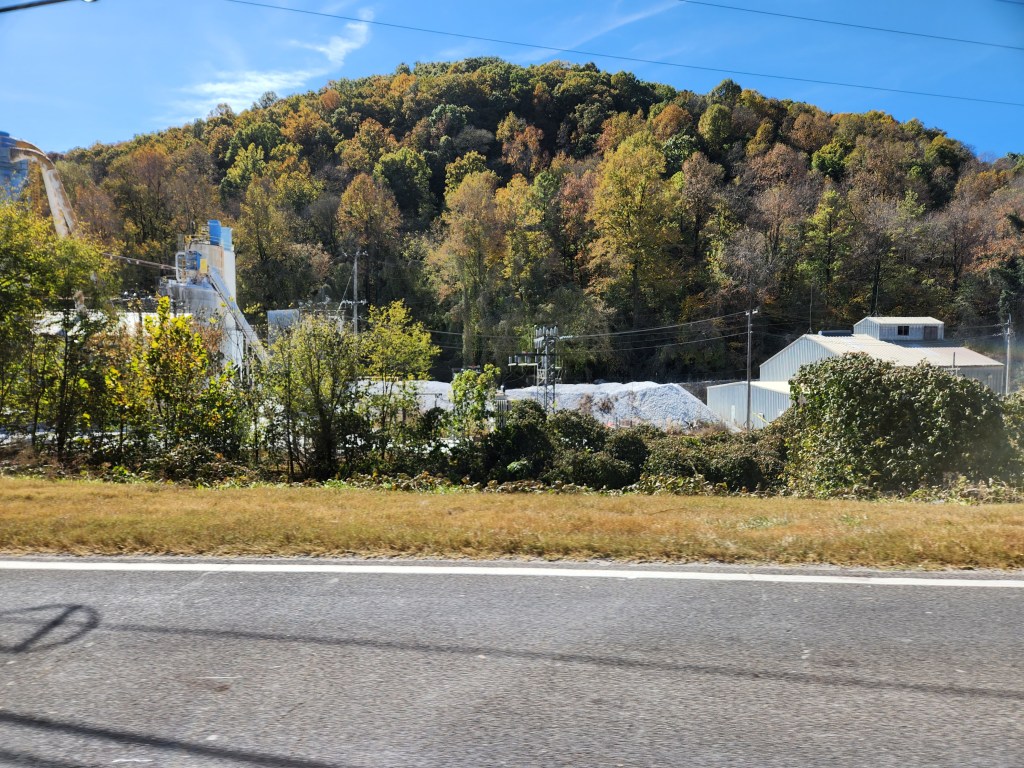
The next week, I drove up to Pickens County, where the small town of Tate is located. There’s a valley here, unofficially named “Longswamp Valley,” where one of the original wonders of Georgia is located. This area was once home to the largest vein of marble in the world, at 7 miles long, 2 miles wide, and 2,000 feet deep. This natural wonder was hidden in the forests here for years known only to the Native Americans who inhabited the region. It eventually was sold to Henry Fitzsimmons who later founded the Georgia Marble Company. The marble taken from this location has been used for many important monuments across the country, including the U.S. Capitol, New York Stock Exchange building, Lincoln Memorial, Supreme Court, and National Air and Space Museum, along with governmental buildings in DC, Minnesota, Ohio, Rhode Island, and Puerto Rico. Over time, most of the marble has been mined, meaning it’s only a fraction of its previous size, and as a result, was removed from the original list of Georgia’s seven wonders. When driving around this area, I witnessed many truckloads of marble coming in and out of the many processing plants throughout the valley. I couldn’t actually enter the quarry, as there were “No Trespassing” signs posted everywhere, so I drove down many narrow roads through the woods that don’t even show up on Google Earth, trying to get as close as I could. I did see some small pieces of marble along a creek bed, but that was it. If you want to tour what’s left of the quarry, there is only one day a year where it’s allowed: the first weekend of October. I was planning to go, but my truck was in the shop that weekend, so I guess it wasn’t meant to be.

7. Radium Springs
A week later, I drove down to Albany to visit Radium Springs. Unlike Warm Springs, visitors can actually see the spring water here, but they’re still not allowed to swim in it. Radium Springs is known to be the largest natural spring in Georgia, and it flows at an astonishing 70,000 gallons per minute. You wouldn’t know that from looking at it, as the majority of the spring is located underground in an extensive cave system. Cave divers have gone down to explore these caves; however, the maze-like network of narrow passageways would make it far too dangerous to allow visitors to explore it. And it gets its name from the high levels of radium found in its water. When visiting the springs, it was clear that swimming was once an activity that was allowed here. You wouldn’t want to swim in it now as the water is nasty, but it was once treated as a large swimming pool, complete with rusting ladders. In fact, this used to be the pool for the adjacent casino which was once a popular resort that people from all over the South would come to visit in the 1920s. At the time, they thought the high radium levels in the water had healing properties. However, the casino shut down during the Great Depression, and all that remains now are its ruins, which I was able to explore. There’s really not much left of its ruins as most of it was demolished in 2003. But it was still a cool stop to make.

8. Okefenokee Swamp
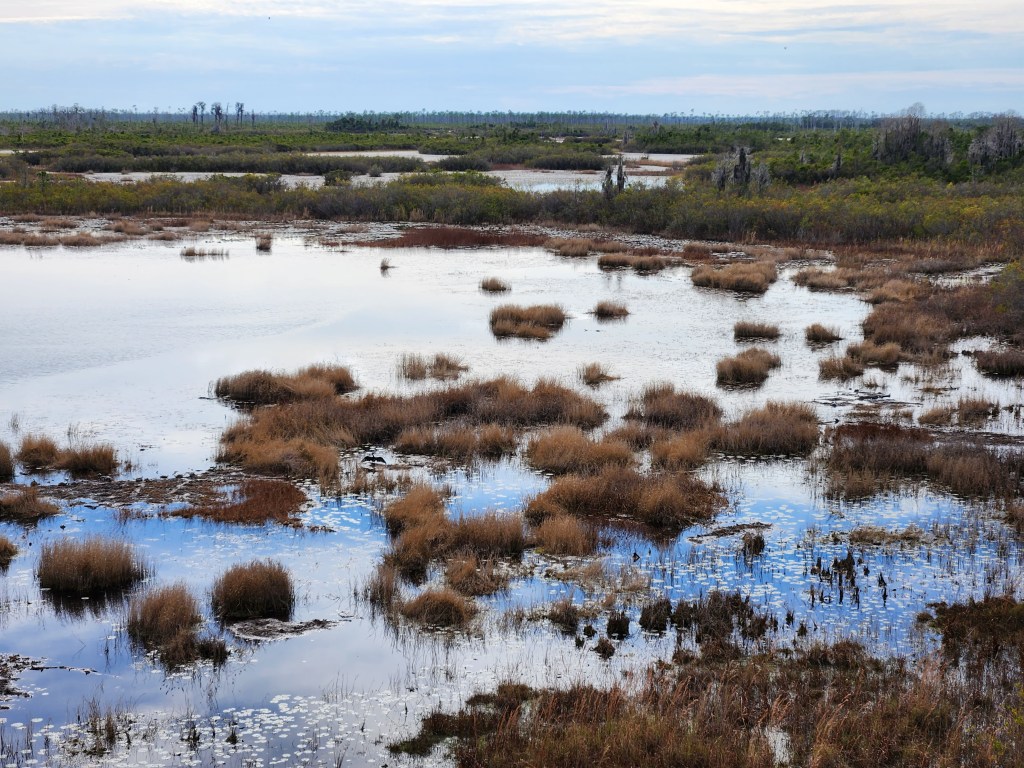
It took me a while to visit Okefenokee Swamp because it’s the farthest away from McDonough. This one couldn’t be a regular day trip like the others had been because it’s too far to drive. I waited until I had a long weekend so I could book a hotel in nearby Savannah and spend a few days in South Georgia. Okefenokee Swamp is the largest swamp in Georgia and the largest blackwater swamp in North America. It is 700 square miles and is so large that you could fit both the New York City and Chicago metro areas inside it. It straddles the line between Georgia and Florida; however, the majority of it is in Georgia, with only a narrow sliver being found south of the state line. When I finally arrived at the swamp, I was blown away by how beautiful it was. It’s such a peaceful environment with beautiful trees hanging overhead and Spanish moss draping off the branches. But under the water, it may not be so peaceful as the swamp is filled with alligators lurking just beneath the surface. The water here is so reflective that you can’t see what lies just underneath, allowing for the alligators to sit undetected. The water, which is actually all rain water, has a high acidity, which actually repels mosquitoes, making this a more enjoyable place to visit than most swamps. I took a boat tour along some canals that were likely originally alligator trails that the Seminoles later widened to allow for easier access into the swamp. After the boat tour, I drove over to a different access point for the swamp where I found a boardwalk trail leading to a tower overlooking a portion of Okefenokee Swamp. This was my favorite area, and the cool breeze plus the very sweet aroma in the air (likely a mix of pine and sap) made it an extremely pleasant visit.

9. Jekyll Island Forests
After leaving Okefenokee Swamp, I drove over to Jekyll Island, one of Georgia’s Golden Isles. The entire island is also a town, and it is all part of a state park. In order to visit the town, you actually have to pay an entrance fee to the state park for access to the island. Once on the island, I drove around this friendly town which still had Christmas decorations up lining the streets. I tried to specifically notice the forest here as that was the original reason for Jekyll Island’s inclusion on the list of seven wonders before being removed. It did get removed from the list due to the development happening throughout the island that forced much of the forest to be used up. But I noticed that a decent portion of forest still remains intact. Driving around, I eventually reached what is known as Driftwood Beach. The sun was starting to set as a thick fog moved over the area. I walked down a trail to the beach, not being able to see very far due to the fog. And when I reached the beach, I was shocked at what I saw. I was expecting to see some driftwood along the beach here and there, but what I actually saw was an ancient forest that had been taken over by the Atlantic Ocean. Many dead trees stand (or lay) on this beach as the tide comes in and swallows them. The fog, plus the lighting coming from the setting sun, gave this a very mythical atmosphere, and I felt as if I were visiting either another time or another world altogether. The silhouettes of these dead trees, now only driftwood, created an unforgettable backdrop in every direction I looked. I explored the beach until the sun set before driving off into town. This was definitely a welcome surprise!
And now, officially, I can say that I have visited the Seven Wonders of Georgia. I completed not only the current list but the original list too. This journey took me to parts of Georgia that I otherwise never would have visited, and I really enjoyed visiting each one. But if I were to create my own list of Georgia’s seven wonders, it might look a little different… Within the next few weeks or months, I do plan to review the current list and edit it to make my own list. Make sure to look out for that as I’ll be taking all the best parts of Georgia into consideration for my list. Thanks for reading and following along as I complete the Seven Wonders of Georgia!
 Tyler's Travels