
This is a continuation of my 3-part Senegal story. If you want to read parts 1 and 2, you can find them here and here.
After the first couple days in Senegal, it was finally time to start what we came here for: our medical clinics. We all gathered for breakfast in the hotel before going outside to crowd into a public bus and drive across the bridge to mainland Saint-Louis. As we arrived at the clinic site, we saw that a line of people was already forming outside the clinic doors. This line stretched down along both sides of the alley. On one side stood the church building (center) where we would hold our general medical clinic and physical therapy, along with our lab and pharmacy. And then right across the alley from that was the building that we would use for our optical and dental clinics, with dental being held on the second floor and optical on the roof. I would be helping in the optical clinic all week, so I headed straight for the roof.

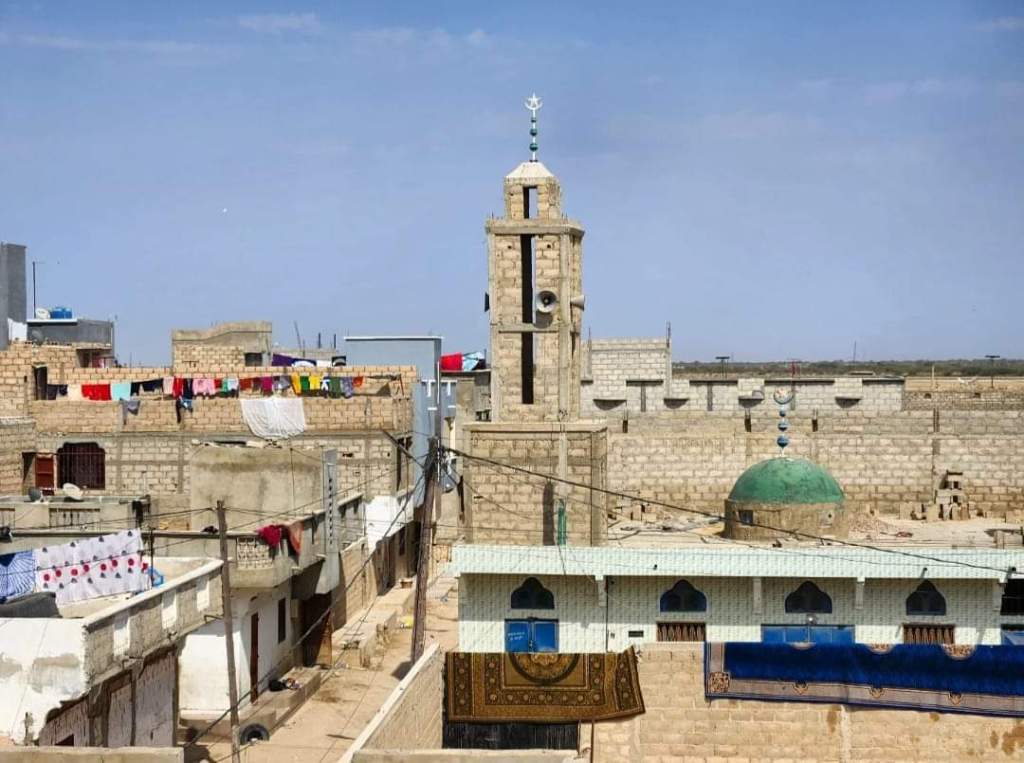
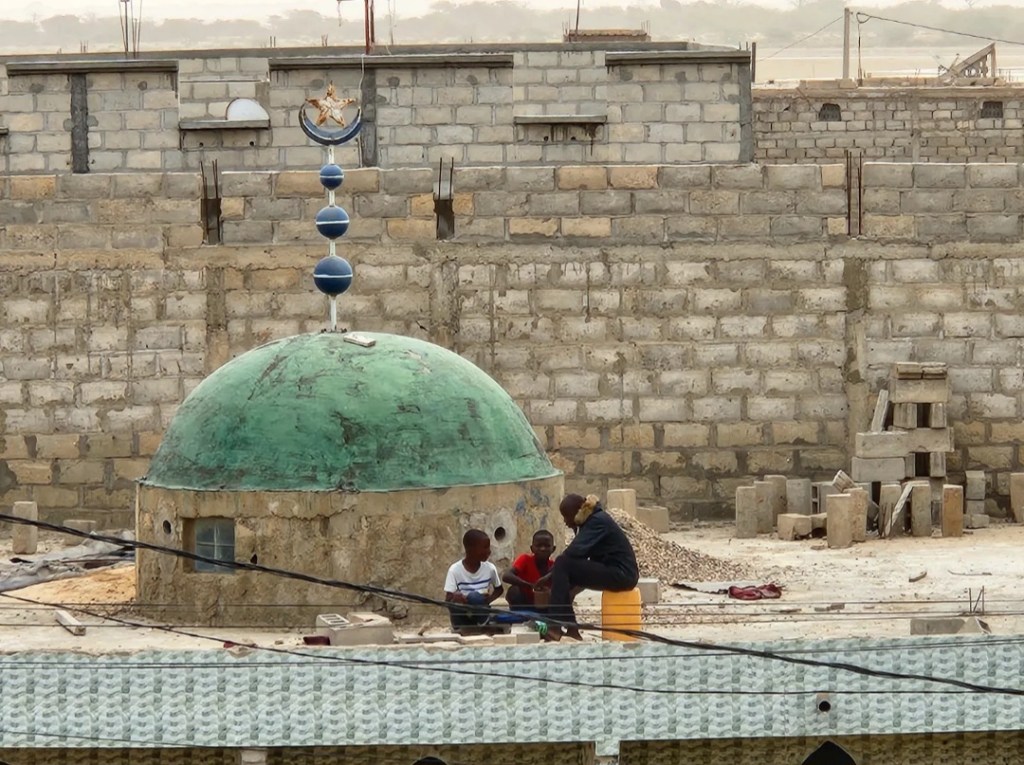
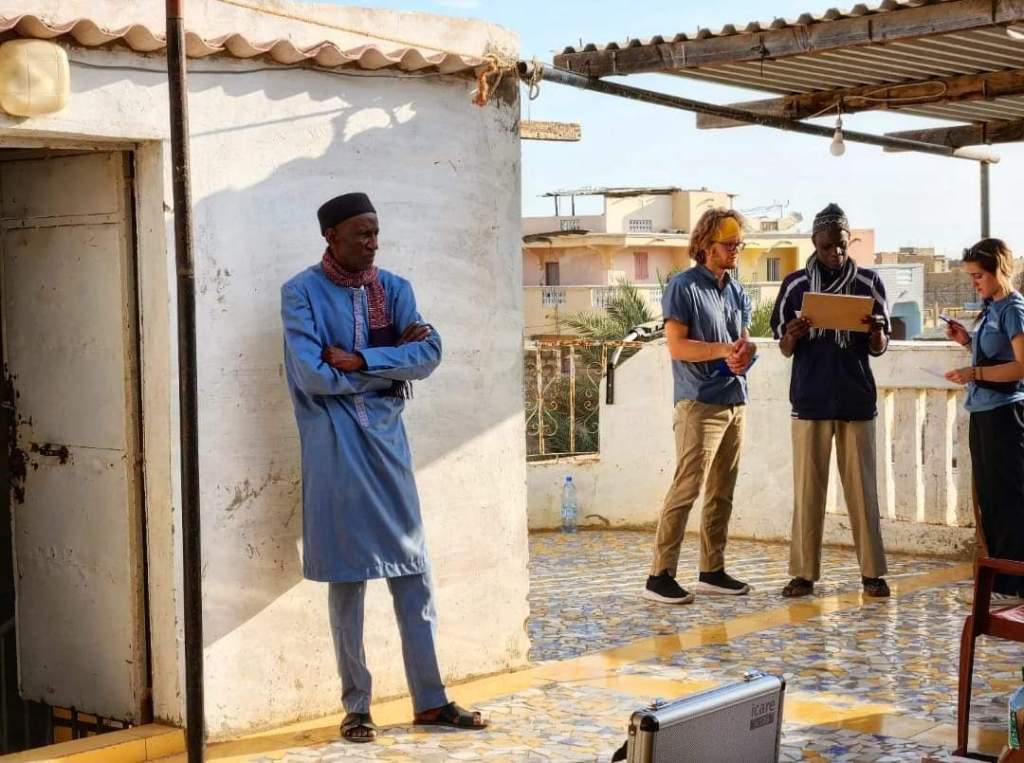
We got our clinic set up and divided up responsibilities, and then all we needed were some interpreters. Being an interpreter on one of these trips is no easy task! Not only do they need to be able to communicate fluently with us in English, but they also need to understand both French and Wolof, as there would be patients that only knew one or the other. We soon realized we were not alone on the roof: around one corner was a chicken coop, and the rooster liked to hear himself all hours of the day. As I stood on the edge of the roof to look out across the city, I noticed that roofs are important parts of the house in this culture. Many used their roof for laundry, where they would wash then hang their clothes up on a clothesline to dry. Some used it to store their animals, as I saw goats and chickens being kept on them. It also seems to be a popular hangout area- a place to get some fresh air without wandering into the crowded alleys below. The most prominent feature by far within view of the clinic was the nearby mosque, and its Call to Prayer faithfully sounded periodically throughout the day.
Our first optical patients finally started to arrive, and we started to learn how the process would work. First, they would have an initial vision test to see how good both their distance and close-up vision were. If it was determined that they needed glasses, they would then go get their eye pressure tested to screen for glaucoma. After that, they would either go to the reading glasses station to get fitted with readers, or if they needed distance glasses, they would come see me. I was in charge of using our autorefractor to get their eyes’ measurements. This is important in determining which specific prescription they need as it measures the sphere, cylinder, and axis of each eye, and also lists a spherical equivalent. From there, they would then go get fitted for glasses. We have boxes of thousands of donated glasses of many unique prescriptions. Those helping in this area then look for the correct prescription and allow the patient to try the glasses on to see which works best for their eyes.
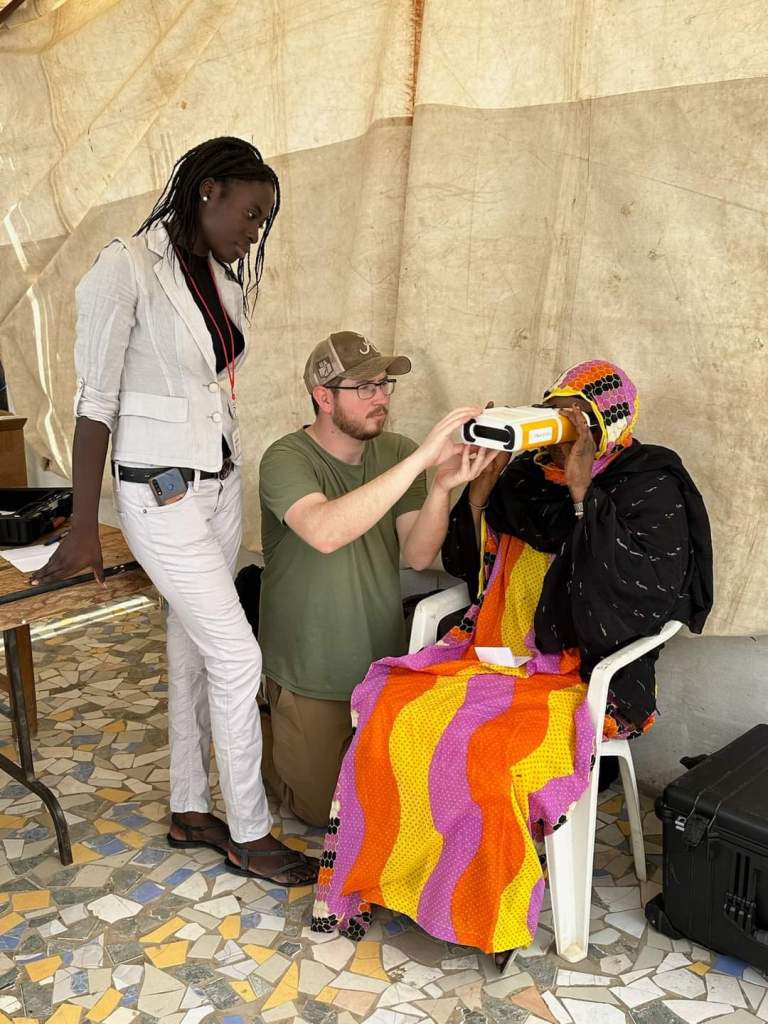
This can be a tiring process at times, but seeing the joy on patients’ faces when they find the right pair of glasses makes all the effort worth it! We continued to have a steady flow of patients come through throughout the day until the afternoon when everything suddenly seemed to stop. We took turns going to lunch, and as we came back, we were surprised to see that the clinic wasn’t really moving anymore. We soon found out that this is because many in Senegal take a break in the afternoon, similar to a “siesta.” While some patients did end up coming by later on, it never reached that same level we had before the slowdown. We soon shut down the clinic and headed back to N’Dar Island. Many of us decided to go for a walk around town that night, and once you get past the vendors crowding you near the hotel, walking around town is pretty enjoyable.

Unlike many cities I’ve been to around the world, Saint-Louis seems to be most active at night. I’m assuming this is because of the “siesta” in the afternoon and the intense heat of the day. Everyone is out walking around and shopping at local markets that are only open at night. Restaurants even refuse to open until around 8:00 PM. Between the chaos on the streets, the many unique sights, and the overwhelming sound of the Call to Prayer bellowing from the mosques, this town has a cool atmosphere that I really came to enjoy. A few of us then went to look for a local coffee shop and found one of those places that only locals seem to know about. This is a city that I could definitely spend more time in.
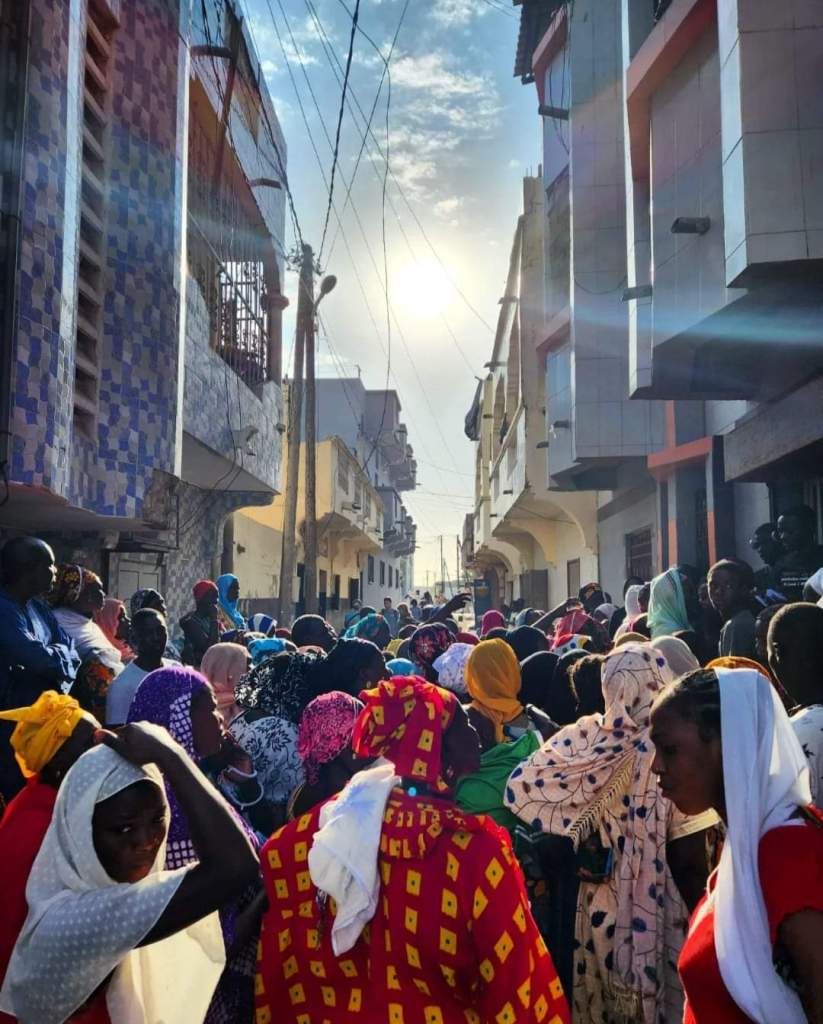
The next morning, I woke up to a beautiful sunrise and the sound of the Call to Prayer. It was time for day 2 of our clinics, and we were shocked as we arrived at that familiar alley to see a large mob of people waiting to be seen. We literally had to shove our way through this sea of people just to get to our own clinic, and after setting everything up, we got started. Our first patient of the day was the imam of the local mosque (the one right next to our clinic that interrupts us frequently throughout the day with its Call to Prayer). Joining him was a few other Islamic leaders in the community. While some may question why a Christian group would come to serve the Islamic leaders in the community, we gladly welcomed them! They are not and never will be our enemies: our goal when we come here is to share God’s love with everyone we come across. God’s love does not discriminate: He loves every person on this planet and desires for them to know Him.
Soon, we were busier than ever before. We had patient after patient coming through, and we were constantly busy. We expected the slowdown to come in the afternoon, but to our surprise, it never did. The line was consistently full, and the alley below remained a restless sea of people waiting to get in that we had to shove our way through anytime we needed to get into the other building. This day was significantly hotter than the previous day too, so when the day finally ended, we all needed a break from the sun. After dinner, we headed back to the island to get showers and rest. Some of our group wanted to see the beach, so I led a decent-sized group to the other side of the island to visit it. The fishing village was much more chaotic at night, and I loved it! There’s so much going on- many wouldn’t like it because of the sensory overload, but this is what I look for when I’m traveling to places like this! We finally reached the beach, and I found out that it seems much nicer after dark because you can’t see all the trash covering the beach.
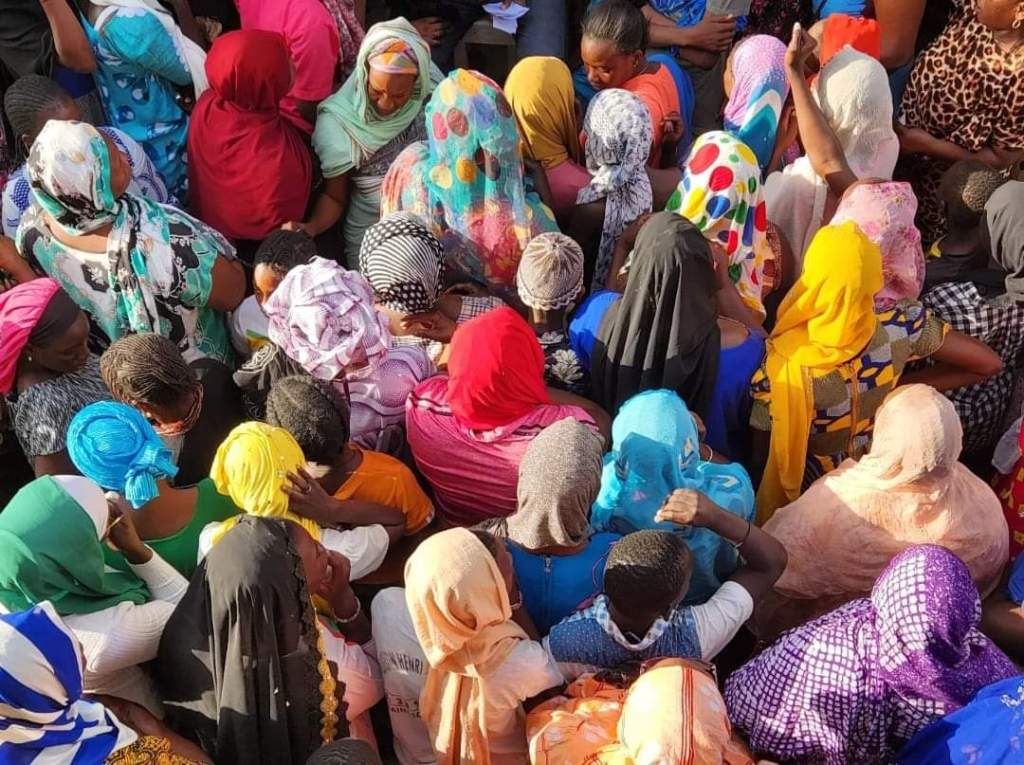
We all used the flashlights on our phones to reach the water without stepping in trash, and it was a relaxing time. After arriving back at the hotel, a group of us played Exploding Kittens before heading back to our rooms for the night. Day 3 of our clinics was very similar to the prior day, except it was even busier and even hotter. I was so busy I didn’t really have time to take many pictures. And at the middle of the day as the heat index reached 106° F., I started to struggle with dehydration and heat stroke. I was down for a while, trying to get my energy back, but I didn’t allow myself to be gone for too long as the line of people waiting didn’t seem to stop. It was a long, hard day, but it came to an end, and we headed back to the island. While I probably should’ve gone straight to bed, this was also our last night on N’Dar Island, so I wanted a chance to walk around one last time. I headed to the fishing village with a group and walked to a few sections of the city I had not explored yet before finally settling down for the night.

For our final day of clinics, a local medical clinic had requested that we operate from their location. This was seen as a good opportunity for the ministry to start a relationship with local medical professionals, so we went, but this time, it was just the optical clinic. So we all hopped on a local bus to head out to the clinic site. We drove down N’Dar Island a ways and then crossed the Pont Masseck Ndiaye Bridge onto the narrow strip of land called Langue de Barbarie where the fishing village and beach are located. But this time, we headed north toward the border with Mauritania. As we continued driving that direction, it became evident that this is a rougher part of town. Buildings were falling apart, poverty was more prominent, and city streets were nothing but dirt. This community is known as Goxu Mbaaj. While those in this area seem to live in poverty, I actually heard that many of them actually do have some wealth as they are successful fishermen. But due to local superstition, they choose to continue living in poverty in order to please the spirits. This isn’t everyone obviously, but I thought it was interesting.

We arrived at the clinic, and it definitely doesn’t meet the standards of a medical institute in the United States. But I loved being in this community, and the local medical professionals seemed really excited to host us while we were there and each greeted us with a huge smile. Their main facility is on street level, but there’s an upstairs portion which we used as our optical clinic, and after getting set up, a line of patients started to form downstairs. While downstairs, there was a mat spread out for those in line to sit and wait before coming upstairs to be seen. While this clinic location felt a little cramped due to a lack of space, it was definitely a better fit for an optional clinic as the sun wasn’t shining in everyone’s faces while they’re trying to read letters. It also helped being under a roof because our autorefractor wasn’t overheating constantly like it was on the roof at our other location. We only spent half a day here before heading back to the hotel to pack up.

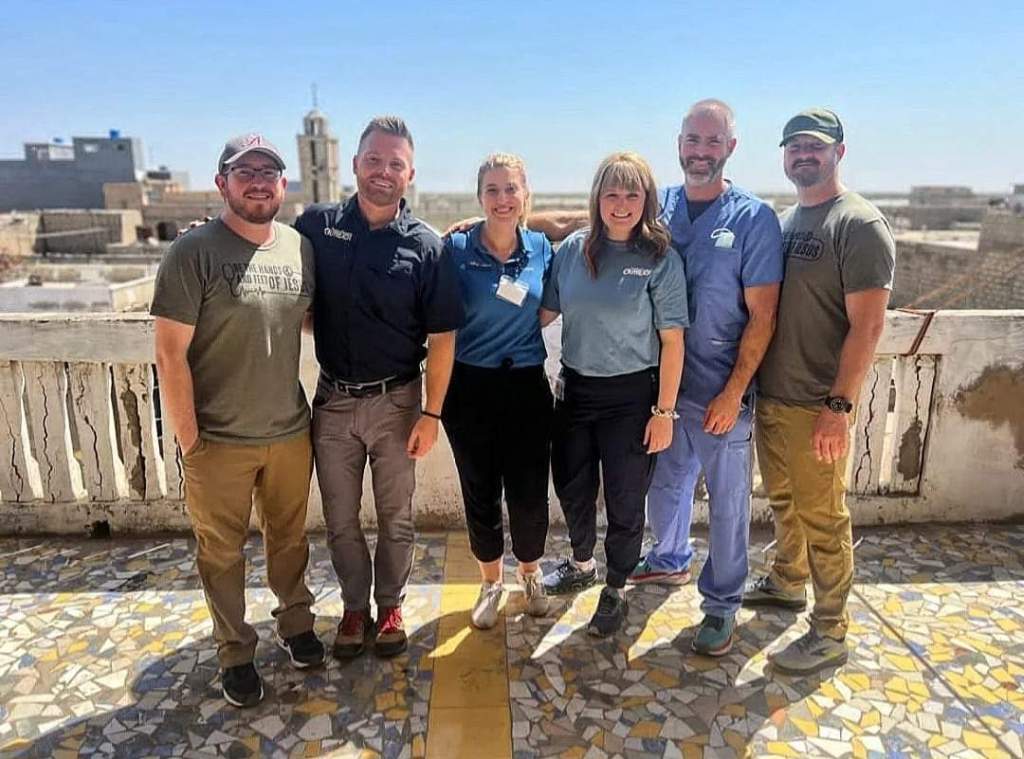
After spending the afternoon packing and playing a few more rounds of Exploding Kittens, it was time to head back to Dakar to fly home. I really enjoyed this trip and could’ve spent more time there. It was a great group to work with and an awesome community that we were able to serve. Overall, we saw 1303 patients come through our clinic where we offered medical, optical, dental, and physical therapy. Each person that came through heard the gospel and was given resources to access the church’s online ministry. I can’t wait until I have a chance to participate in another trip with Medical Missions Outreach. Thanks for reading!
 Tyler's Travels