


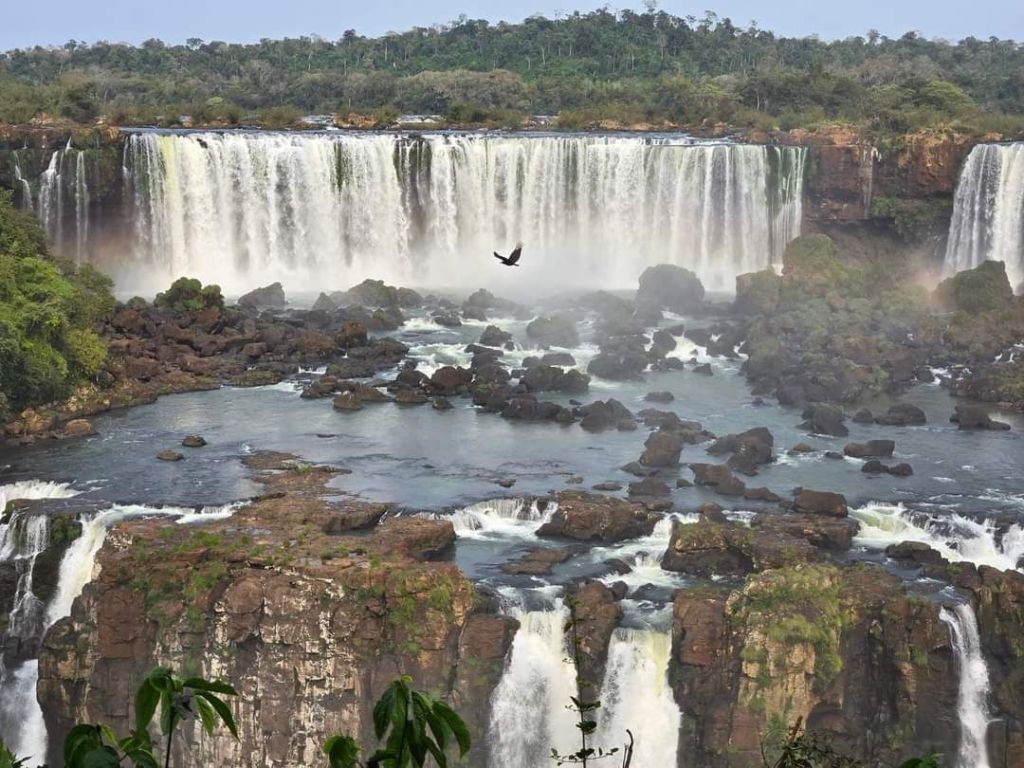
Iguazu Falls is the largest waterfall system in the world. It gets a lot of comparisons to Niagara Falls and for good reason: both are shaped like a horseshoe, and both are found on the border between two different countries. But Iguazu Falls is taller, wider and longer than Niagara Falls by quite a bit! The entire Iguazu Falls system contains 275 individual waterfalls within a 3 km stretch of river with Brazil on one side and Argentina on the other. In addition, it’s located in what’s known as the “Triple Frontier” where Brazil and Argentina meet Paraguay, making this a very unique region of the world. But while Iguazu Falls has many similarities with Niagara Falls, visiting it can be much more complicated. After visiting it for myself, I decided I needed to create a full travel guide for Iguazu Falls to help you plan your trip should you decide to go. So, here’s everything you need to know to have a successful trip to this natural wonder of the world!
Getting There
For being one of the natural wonders of the world and most popular destinations in all of South America, you’d think it’d be easier to get to. Unfortunately though, you won’t find many direct flights to the area, so reaching it can take a lot of time. There are two airports located near Iguazu Falls: Foz do Iguaçu International Airport in Brazil (IGU) and Cataratas del Iguazú International Airport in Argentina (IGR). In my research leading up to the trip, I noticed it was difficult finding decent flights to either one. Getting to Foz do Iguaçu almost always includes a layover in São Paulo, while getting to Puerto Iguazú almost always includes a layover in Buenos Aires. These layovers can be long too! Prices can be much different depending on which one you look at, so I’d recommend looking into both as they’re both conveniently located near the falls. If prices are similar, you can then book your flight based on which city you’d prefer to stay in. I would personally recommend staying in Puerto Iguazú (Argentina) over Foz do Iguaçu because it’s a much nicer city overall. But I’ll get into this a little more in the next section:
Where to Stay
Determining where to stay for Iguazu Falls can often depend on when and where you’re arriving. I stayed in Foz do Iguaçu because that’s the airport I flew into, and my flight arrived around midnight. As I mentioned above, if you have a choice between the two cities, my recommendation is Puerto Iguazú. It’s much more geared toward tourism and has nice restaurants, parks, etc., while Foz do Iguaçu has much less to offer and doesn’t seem as tourist-friendly. Both cities are safe to visit, if that’s what you’re concerned about. When deciding which hotel to stay in, you’ll likely see ads for resorts within the two parks themselves. These are decent options, and I’ll go ahead and list out the pros and cons for you…
Pros: Airport shuttle rides and off-hours access to falls
Cons: Much more expensive!
The price for hotels within the parks are very expensive, though there are definitely benefits to staying there. Airport shuttle service is definitely a perk, though you’ll see later on why that’s not as important as you may think. The biggest benefit in my opinion is having access to the falls during off-hours. Due to the popularity of Iguazu Falls, the parks are almost always crowded. It’s often called the South American Disneyland because of the insane volume of tourists visiting at any given time. But you can avoid these crowds if you visit when the park is closed, and staying in an on-site resort is really the only way to do that. However, if you’re traveling on a budget, the hotels elsewhere are considerably cheaper! In fact, my 4.5-star hotel only cost me $30 a night, and that wasn’t even one of the cheapest options I saw!
Getting Around
If you’re staying in one of the park’s resorts, transportation won’t be much of a problem for you unless you plan to leave the park. But for those not staying on-site, it’s definitely a necessity. There are regularly scheduled busses that go all over the city and even to the parks and across the borders. This is the cheapest way to get around. If you’re having trouble finding information about the bus schedules, just talk to the receptionist at your hotel, and they will be glad to help you out. It’s important to note that on Sundays, there are fewer busses in operation, so they show up less frequently. I personally found the bus situation too complicated to figure out as it’s much more of a local’s transportation method than a tourist’s. The next best option is Uber. I have used Ubers all over the world, and it’s just so convenient and affordable! Plus there are a lot of safety measures you can add to your Uber account to ensure you have a safe ride. I am often shocked by how cheap Uber rides are in other counties. When taking an Uber from the airport to my hotel in Foz do Iguaçu, which is a 30-minute drive, I paid only $8! Taxis are also very common here, though they will cost you much more, with that same route costing me around $30 by taxi. This is one of several reasons why I’d always recommend choosing Uber over taxis. The one downside to Uber is that they stop operating within the city center late at night, meaning if you’re staying there and need to leave for the airport at 4 AM, taxis are your only option. When taking a taxi, I’d recommend that you ALWAYS negotiate a price before the ride begins. Otherwise, they could charge you whatever they want after you arrive, and this is a common tourist scam seen all over the world. There’s one other downside to Uber which I’ll get to in the next section.
Crossing Borders
When visiting Iguazu Falls, you will likely want to visit both sides of the falls. (And that’s the only correct way to visit if you ask me). But doing so requires you to cross the international border. If you’ve been to both sides of Niagara Falls before, don’t expect this process to be even remotely similar! The border crossing is about 30 minutes away from the park on both sides, so you won’t be crossing over quickly. It also takes time to cross the border because you need to stop on both sides to alert the customs officials that you are leaving/coming. There are tour companies that can arrange your transportation for you, but these are often pricy and include guided tours of the parks, meaning you can’t necessarily visit it at your own pace. Arranging your own transportation is both cheaper and not too complicated to figure out, once you understand how this system works. Unfortunately, Uber drivers are not allowed to take passengers across international borders, so this is one area where taxis are the better option. Busses also cross the border, but because locals of either country do not need to stop through customs, the busses don’t stop either unless you specifically ask. (Once dropping you off, they will leave you, meaning you will have to wait on the next bus that comes by… at BOTH stations). When I first tried to cross, I thought I could take an Uber to the Brazil station, walk to the Argentina station, and then grab an Uber on the other side; however, that was not an option as there is no walking path leading between the two. You are only able to cross by vehicle! Taxi drivers have forms for you to fill out, which they then pass on to the border agents along with your passport when crossing, which does simplify the whole process. You should also know that the lines to get through the border can be very long, so plan accordingly if you have to be somewhere by a certain time!
Visiting the Falls
I briefly mentioned the operating hours earlier, but make sure to look online for the hours each day you plan to visit. You can buy tickets at the park entrance on both sides, but with the large crowds of people visiting, I would recommend trying to avoid this. You can purchase tickets online ahead of time and choose your entrance time to ensure that you’re not stuck getting a later entrance time the day of. Unfortunately, the websites don’t really translate to English very well, so it can be a little difficult trying to purchase the tickets if you don’t know a little Portuguese and Spanish. (Obviously, the website for the Brazilian park is in Portuguese, while the website for the Argentine side is in Spanish). From there, the two parks are very different experiences, so I’ll go over each of them separately.
Brazil:
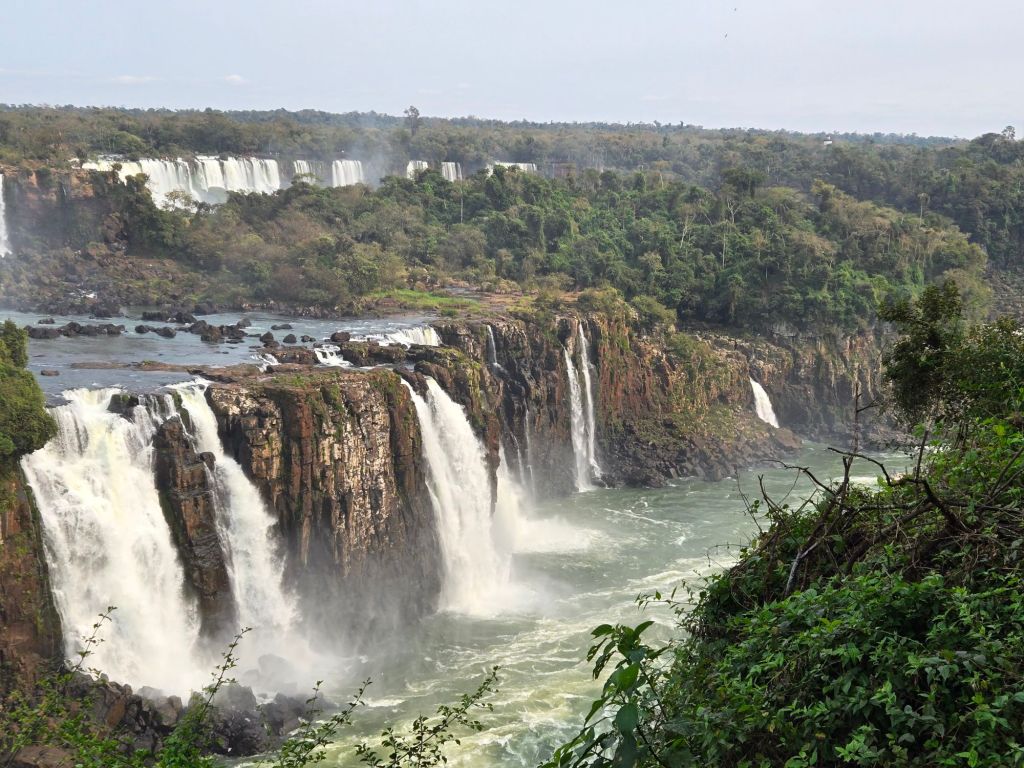
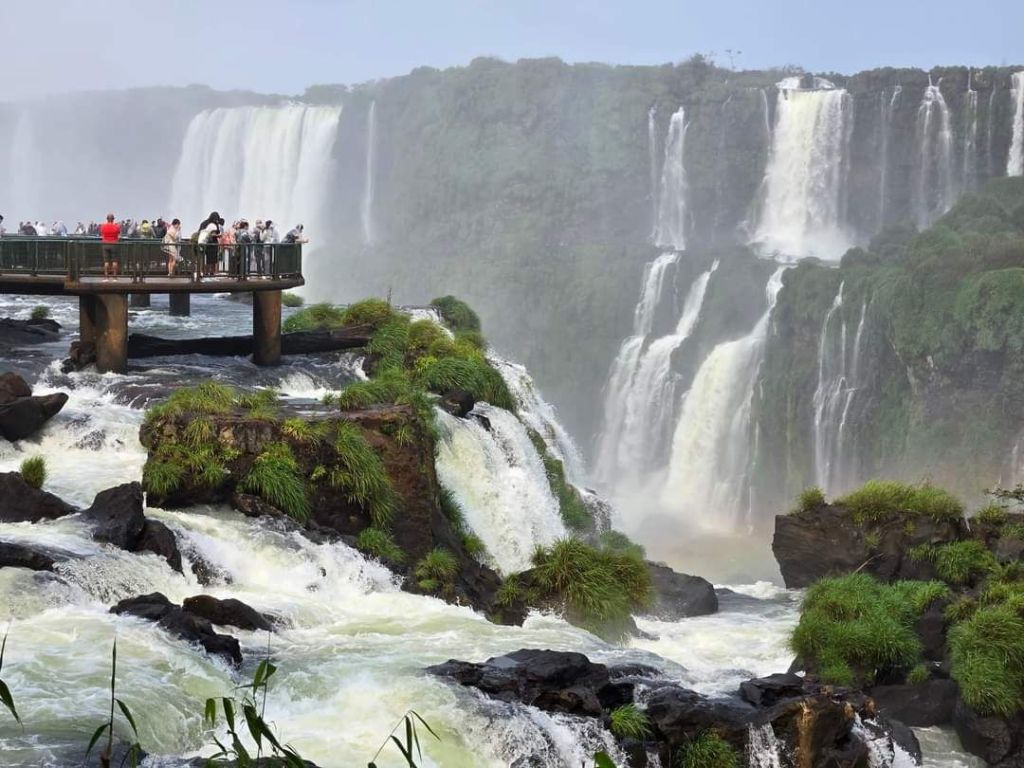
Once you enter the park and show them your ticket, you have to board a shuttle that takes you deeper into the park. There are several stops along the way, and you will want to pay attention to the announcements to know when to get off at your desired location. These announcements are in Portuguese, Spanish, and English, so just wait for your preferred language to come around. But if you’re still confused, there’s one stop where the majority of the crowd gets off at: that’s the one you want! From here, the park is really a one-mile trail following the river that includes some of the most breathtaking views imaginable! Iguazu Falls is 80% in Argentina and 20% in Brazil, and because you’re looking at the Argentine side while in Brazil, you’re getting unobstructed views of that 80%! This is where you come to get the dramatic pictures that often come to mind when thinking about Iguazu Falls. The trail is relatively easy, though there are portions with stairs, so it’s not always handicap accessible. There are also large crowds along the entire trail. At the end of the trail, there’s a boardwalk that goes out into the water, giving 360° views of that famous horseshoe-shaped area known as Garganta del Diablo (Devil’s Throat). This is where the largest crowds will be gathered but also where some of the greatest views can be found. And then from there, there’s a staircase and elevator that takes you up to a higher area where you can find shops and restaurants before taking the shuttle back to the entrance of the park. Overall, you need 2-3 hours to visit the full park.
Argentina:
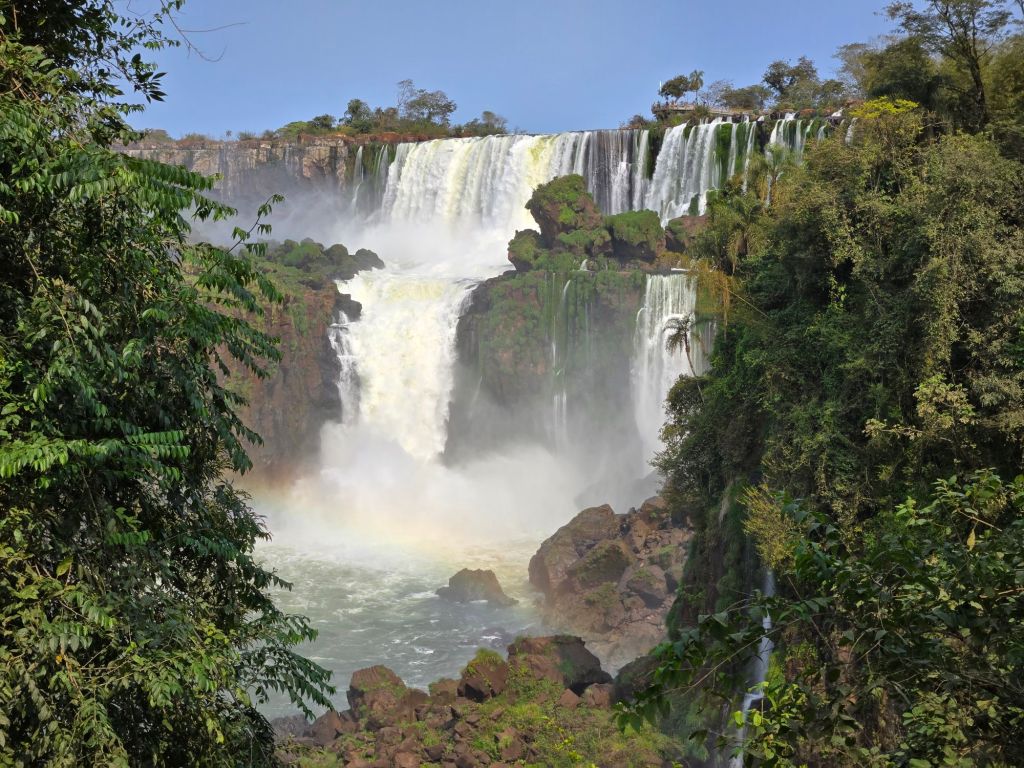
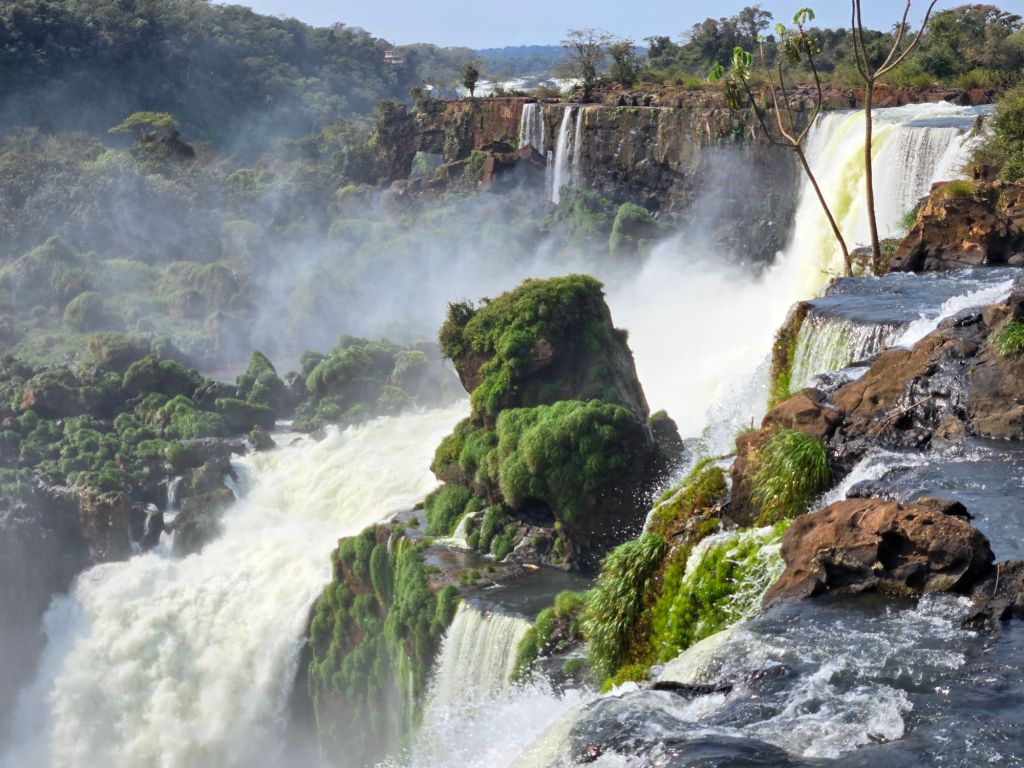
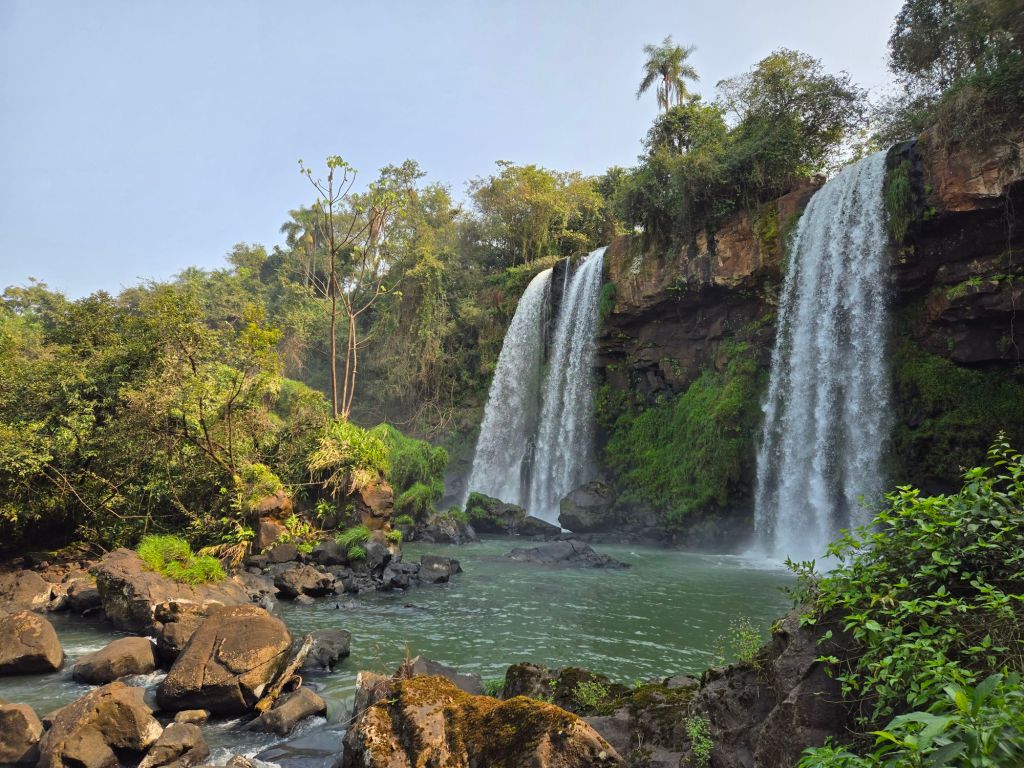
Once you enter the park and show your ticket, you have an option to either hop on the train or hike the Green Trail. The Green Trail has some pretty views, but it’s not a must-see, so either option would be good. The trail is also closed during certain times of the day, leaving the train as your only option. You must have a ticket to ride the train! The ticket is free, but you still have to get one. This is a way for the park staff to try to control the crowds. After taking the train or hiking, you will arrive at the central area of the park. Here, you’ll find a couple restaurants and a convenience store. This is also where you’ll enter two of the main trails within the park. There’s the Superior (Upper) Trail and the Inferior (Lower) Trail. Both are worth hiking, and neither one is handicap-accessible. Stairs are required on both. The Superior (Upper) Trail travels along an elevated walkway above the river and falls and offers a unique perspective. There are several overlooks that take you right above some of the largest waterfalls, and the views from the top are pretty spectacular! While this is a beautiful trail, it’s also, in my opinion, the least exciting of the three main trails. I’d definitely recommend doing it, but I think the views from the other two are much better overall. The Inferior (Lower) Trail travels a similar route to the Upper Trail, except at mid-height. I was blown away by some of the views I had from this trail! If the Upper Trail was my least favorite, I’d say this one was my favorite of the 3. But the most popular trail is the one to Garganta del Diablo. To get there, you must take the train the rest of the way. Again, tickets are free but required to ride the train, and you can pick them up right by the train’s loading dock in the central area of the park. The train drops you off at the trailhead for Garganta del Diablo, and your ticket should indicate your return time, so make sure to take note of that. The trail to Garganta del Diablo is handicap-accessible and is an amazing hike! The ending is one of the greatest finales to a trail that I’ve ever witnessed as it brings you up close and personal with Garganta del Diablo itself, offering a view that you can’t find anywhere else in the world! This trail is also really popular with tropical birds and butterflies, both of which you will likely see everywhere.
Both of these parks offer additional activities including boat tours and even helicopter rides! You can find information about these online or in person at the entrance to the parks. It’s important to note that reservations are not given on the day of your tour, so you will want to ensure you do that before. Prices for both of these are expensive, but from what I’ve heard, they are worth it. I was planning to take a boat tour, but due to a lack of time and poor planning, it didn’t work out. Overall, without any additional tours, my visit to all three trails took up the whole day.
Comparing the Parks
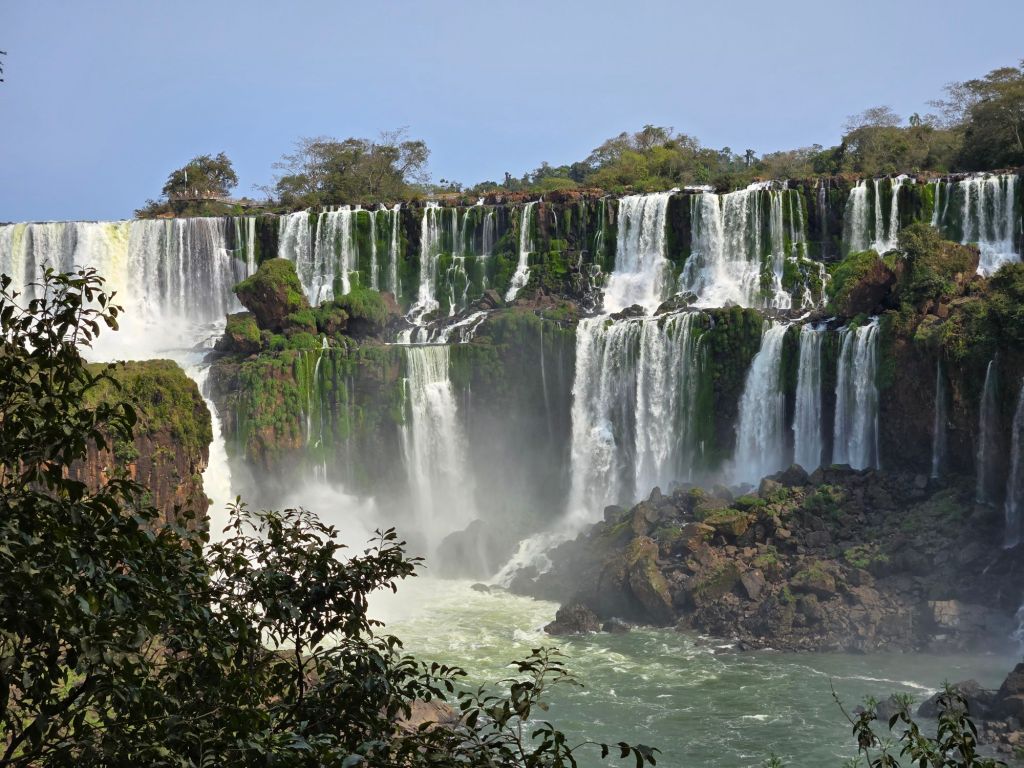
You may be asking which of the parks is better, and that answer entirely depends on who you’re asking. I watched countless YouTube videos leading up to my visit, and they were pretty evenly split. The one you prefer depends on what you’re looking for when you visit, and I will break it down here. The Brazil side, as mentioned previously, has those photo-opportunities you expect and gives a wider (though from a distance) views of the falls. For your entire visit, you’re staring at the majority of the cascades that make up Iguazu Falls. The Brazil side also contains more “touristy” things like gift shops and restaurants. It’s much more geared toward a laid back, relaxing visit, and it doesn’t take up too much of your day to thoroughly visit it. But the crowds here do affect the overall experience as you’re all crowded into a smaller area. The Argentina side, on the contrary, does take up a majority of your day. You’re constantly moving, whether that’s through hiking or riding the train, though that doesn’t mean there aren’t plenty of places to stop and relax. And while the number of visitors is similar, you don’t feel as crowded because everyone is spread out throughout the different areas of the park. One thing that did surprise me about the Argentina side is the lack of gift shops and restaurants. They have some, but not nearly as much as you experience on the Brazilian side! And I did try to buy a souvenir from a local’s souvenir stand on the Argentina side, but they weren’t able to accept credit card. That’s not a problem you’d run into on the Brazil side. Overall, I think the full experience in Argentina is better. You do get the dramatic views, and there’s a ton of hiking and nature. The wildlife is more abundant here as well! So if you only had time to visit one side, I’d recommend Argentina. However, I also think that visiting BOTH sides is necessary to fully experience Iguazu Falls as both offer things that the other can’t.

Additional Details
1. When I visited, neither country was requiring visas for US citizens. This is going to change soon as Brazil will start requiring a tourist visa in April 2025. Make sure to look into visa requirements before booking your flight as these can change frequently.
2. While some English is understood here, the vast majority of people don’t know any English. So I would highly recommend you learn some basic Spanish and Portuguese before coming. If you know some of one or the other, you should be fine as most people will be able to understand you.
3. There’s a lot of wildlife in both parks, with coatis and monkeys being the most popular. Keep a safe distance, and don’t try to feed them! They look nice, but they do get aggressive.
4. Visiting either side does require some patience. You likely won’t be able to get anywhere quickly, so if you want to enjoy your stay, just accept that it takes time to visit.
5. If you have any extra time, you can easily get into Ciudad del Este, Paraguay, by crossing the bridge from Foz do Iguaçu. It’s a safe city, though it’s recommended you leave before sunset. There are a lot of shopping malls here that sell duty free goods at affordable prices.

In the end, though it can be a little complicated to visit Iguazu Falls, I believe it’s certainly worth the effort as it’s one of the most beautiful places I’ve ever been! If you’re a fan of nature, then this is one of the best places in the world to visit for pure nature at its best, and it’s difficult to put into words how incredible this place is. I hope this guide was helpful if you’re planning to visit Iguazu Falls yourself. Or if nothing more, hopefully it gave you a better appreciation for this unique part of the world. Thanks for reading!
 Tyler's Travels