
Coming into 2021, the world had been fractured. Covid had changed everything about our lives throughout 2020, leading many to be without jobs, homes, and even loved ones. The entire world’s economy had been shut down, making international travel almost unattainable. My Zambia plans had been postponed to November, though I wondered whether it could happen at all. Here in the United States, we were more divided than ever, as we had just held elections that seemed to have more inconsistencies and ignored policies than we could count, leading many to question its validity. We were all cautiously optimistic that the world could change but questioned if it was possible, and we all wondered what this “new normal” would look like. I knew I needed to move on from 2020, so I booked a plane ticket on January 1st, planning to start traveling right away.
On January 6, after the electoral votes were confirmed, officially declaring Biden the elected president, crowds of Trump supporters stormed the Capitol building in DC, forcing a lockdown. After this incident, censorship of conservative views became excessive with many well-known conservatives getting banned from social media platforms altogether, including the president of the United States. Facebook “fact checkers” soon controlled the narrative being told for every situation, and they would flag anything they didn’t agree with. It became clear that anyone who opposed the liberal agenda would be “canceled.” It seemed that the world became divided more and more each day with social media at the center of it all.
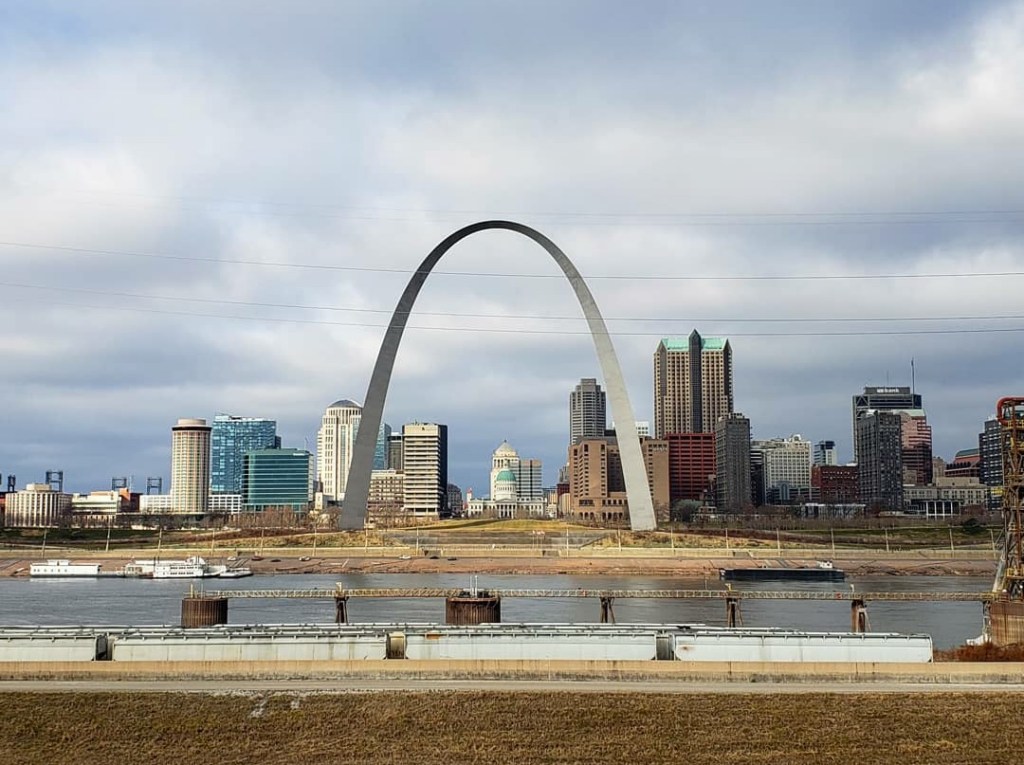
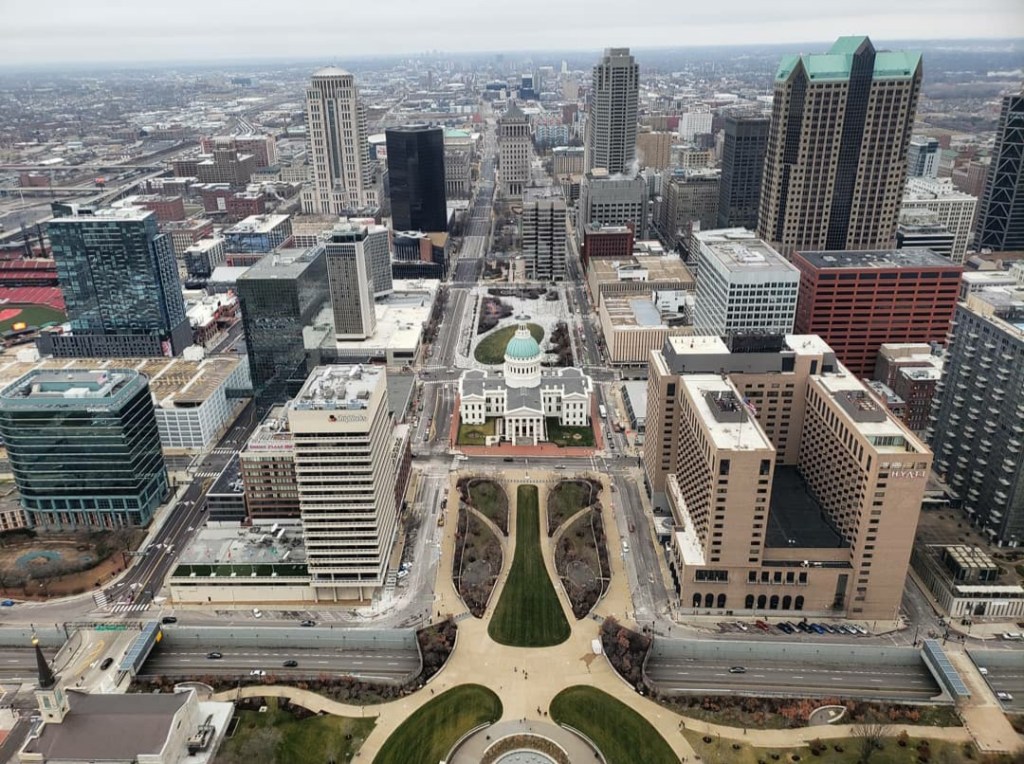
I needed a break from politics and started to look forward to my trip to St Louis. Dad decided to come with me since we had never really been able to travel together before. It was a nice weekend in St Louis where I visited my 9th national park, Gateway Arch, and 13th UNESCO site, Cahokia Mounds, while also visiting my 35th state, Missouri. The Gateway Arch is very impressive as it’s the tallest monument in the United States and second tallest in the world after the Eiffel Tower. The best thing about the arch is riding to the top to see the amazing views. And Cahokia Mounds is impressive in its own way as it’s the largest ancient Native American city in the US. The other highlight of this trip was the very weird and random City Museum that is more of a giant playground than it is a museum.
On January 20, Biden officially swore in as the country’s 46th and oldest president, and Kamala Harris became the first female vice president. Within his first few hours in office, Biden signed an unprecedented number of executive orders and then was immediately seen breaking his own executive orders the same day. One of the orders that was praised by the media was the order that all airports and airlines in the US require masks, but anyone that has traveled within the last year knows this was the most pointless order ever as masks were already mandatory in literally every airport and airline. Travel was about to become much more expensive as well because the Keystone Pipeline was shut down forcing gas prices to skyrocket to levels we hadn’t seen in years.
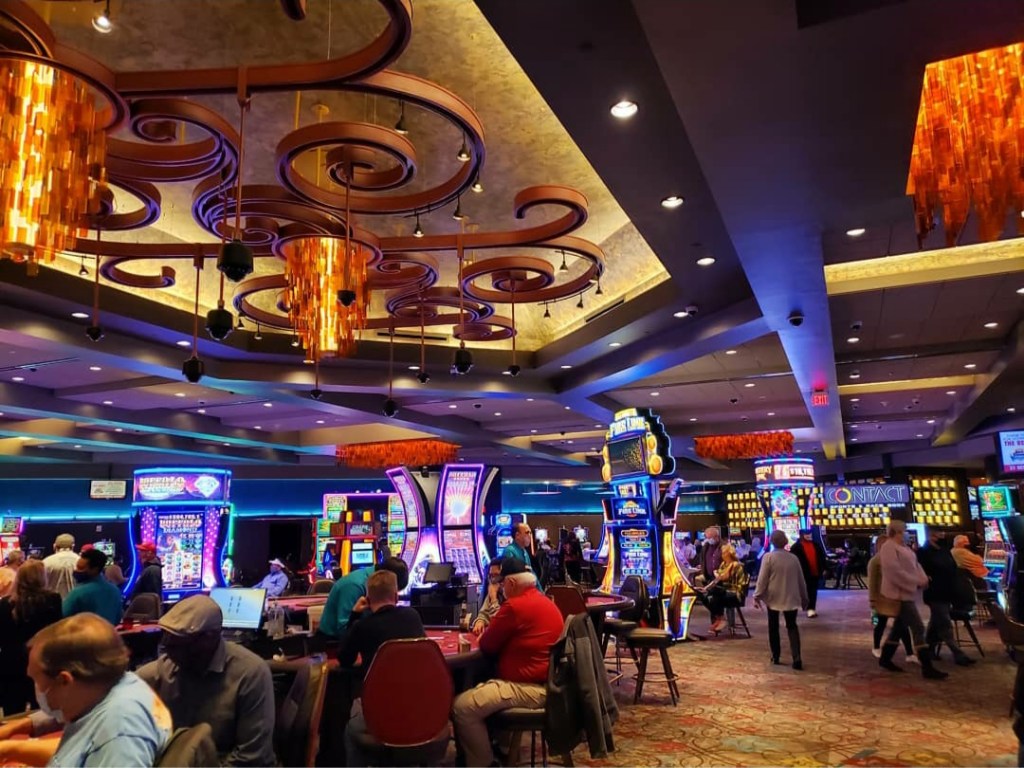
President’s Day weekend came, marking one year since I last visited another country, and I was obviously upset that international travel had largely been shut down for the average person. I decided to take a day trip over to Biloxi, Mississippi, since I hadn’t ever visited before. It’s a nice area that I’ll probably revisit. I like exploring casinos even though I don’t gamble, so I enjoyed Biloxi. The Beau Rivage is beautiful, but the overwhelming smoke smell really made it difficult for me to stay too long. But the Palace Casino Resort is smoke free, so I enjoyed it a lot more. Biloxi also has the longest manmade beach in the world, so that’s cool. Right after that, a once-in-a-century winter storm swept through the South, mostly affecting Texas and knocking out the power grid leaving many without power, heat, or running water. Luckily, the weather never got too bad in Pensacola, but it was cold enough for me to start preparing for my upcoming trip to Minnesota.
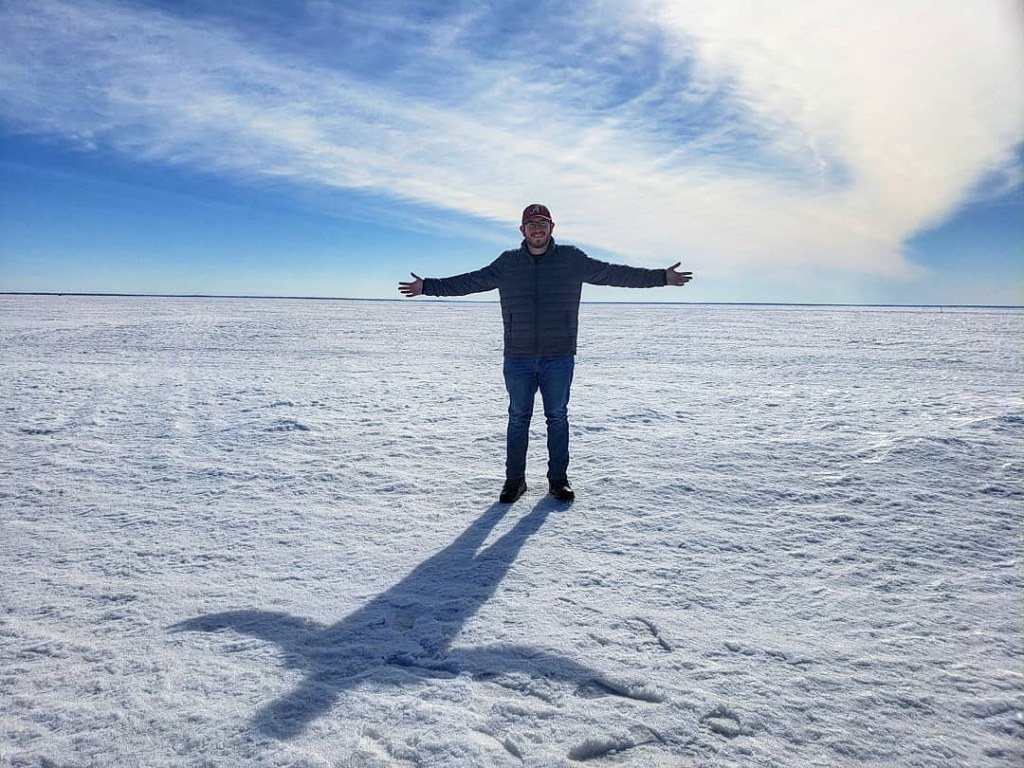
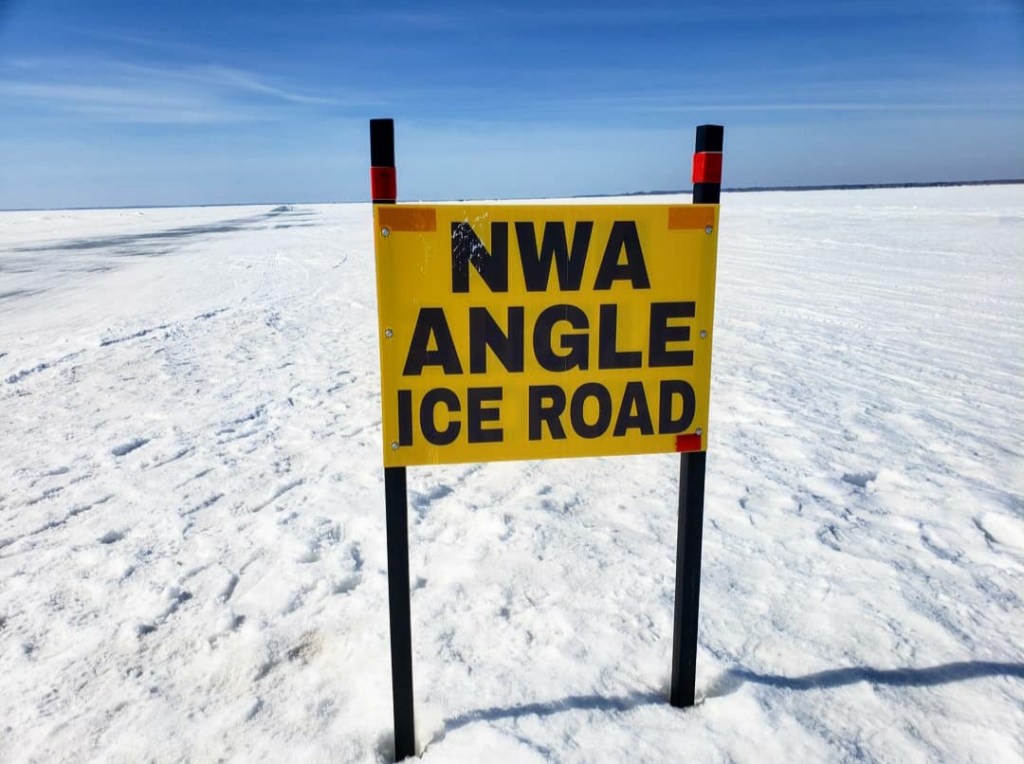
Due to the pandemic, many areas of the world have been hurting, and one of those that has been affected the most is the town of Angle Inlet in the Northwest Angle of Minnesota. It’s the northernmost point of the contiguous United States but completely surrounded by Canada. When Canada shut their borders to US citizens in the early days of the pandemic, this town became cut off from its own country, and because it has always relied so heavily on tourism, almost every source of income was taken away. When Canada repeatedly kept pushing back the opening of the border, the business owners of the town got together to create an ice road for Americans to use to access the town without having to pass through Canada.
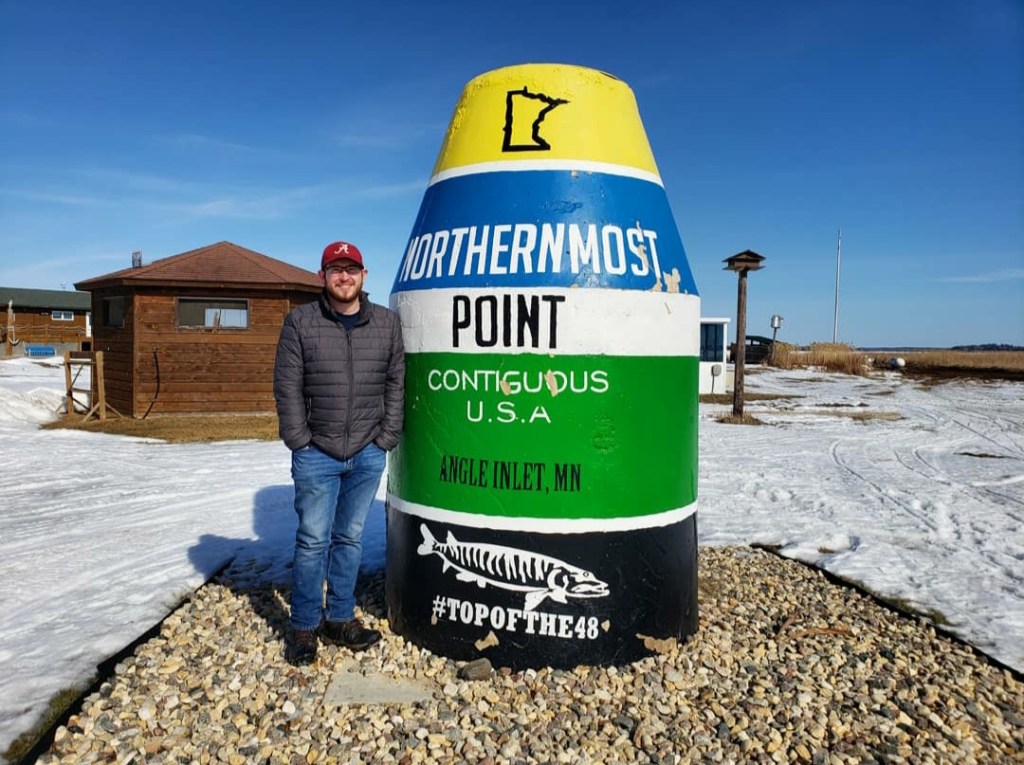
I had to see this for myself, so I booked a flight to Minneapolis on March 5th. My friend Sarah joined me, and we drove 22 miles across a frozen lake to reach the Angle. I was nervous knowing I was miles from land in every direction with over 200 feet of water below me, but it only added to the excitement of reaching the northernmost point in the contiguous United States. This was one of the coolest road trips I’ve ever taken, so I was glad I came up. Immediately after that, I had the opportunity to briefly visit my 10th national park, Voyageurs, though I didn’t spend much time there. The next day, we headed over to Duluth, a city on Lake Superior, which is the largest lake in the US. And then we crossed into Wisconsin, which became my 36th state. After returning from Minnesota, the ice road was closed just a few days later because of the rising temperatures in the area. It seems that I booked my flights for the perfect weekend because the weekend before I visited was too windy to drive on the lake and then it was permanently closed due to melting ice the weekend after.
While I was starting to plan for the Miami trip later in the year, I didn’t have any immediate travel plans, so my focus shifted to house hunting. And I quickly found out that it was bad timing. The housing market made it very difficult for a first-time home buyer to find anything. Rates were low, but prices were very high. It became a seller’s market, and I couldn’t find anything in my price range. Every house I became interested in already had a contract by the time I contacted the realtor. It seemed to come to an end though when Dad found some property for sale and started communicating regularly with the owner. We got a verbal agreement to buy the property, so I started looking at construction companies and planned to build a house on it. But sometimes things seem too good to be true. The man contacted Dad to tell him he changed his mind about the property and didn’t want to sell it anymore because he was 90 years old (actual excuse). So that didn’t last long, and I was back to watching realtor.com every morning only to be disappointed that houses were under contract before I had a chance to show any interest in them. This, along with several other things going on, led me to be stressed out throughout most of April and into May.
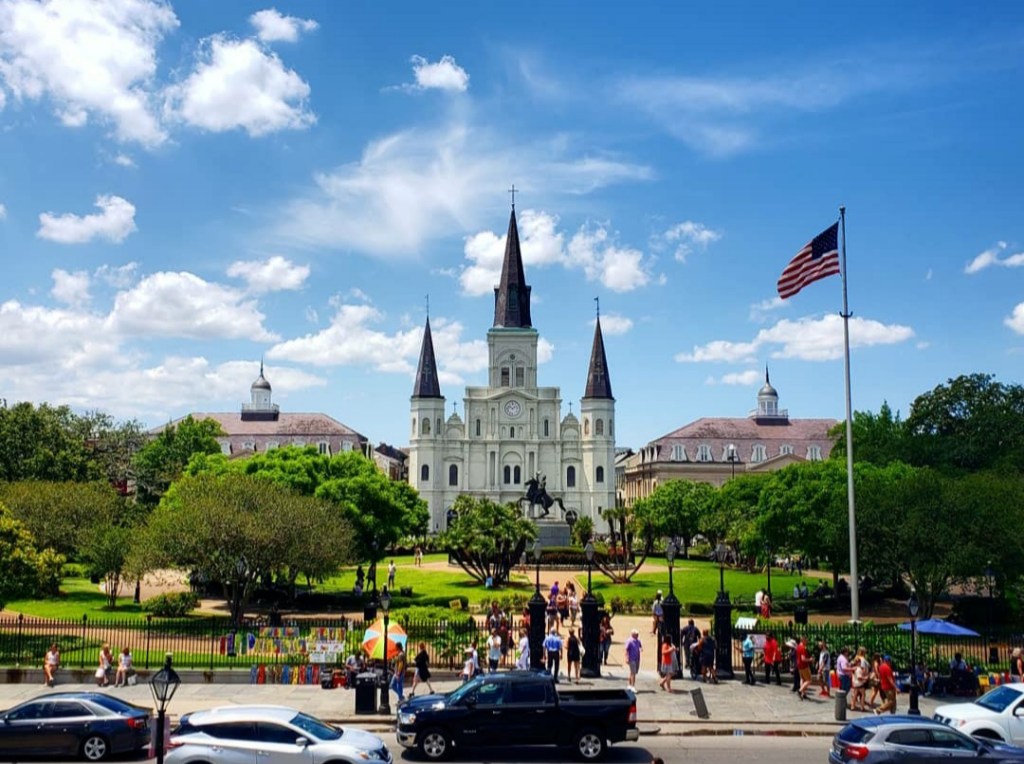
As my birthday neared, I decided I needed a break from everything going on and took a quick trip over to New Orleans. I was able to visit the French Quarter and Barataria Preserve, a couple of my favorite places, while also checking out a couple new locations. These included City Park and the Pontchartrain Lakeshore area which has the longest bridge in the world over water and the famous levees. My aunt and uncle came with me, and it was honestly what I needed to de-stress for the first time in a couple months. I always knew that travel was a form of relaxation for me, but this really showed me how much it helps me mentally just to go somewhere. And with this in mind, I decided to spontaneously book a last-minute flight on Memorial Day weekend since it was my last long weekend until September. I chose to fly to Colorado, the place where I spent my high school senior trip, with the goal of visiting Rocky Mountain National Park (RMNP for short), which would become my 11th national park.
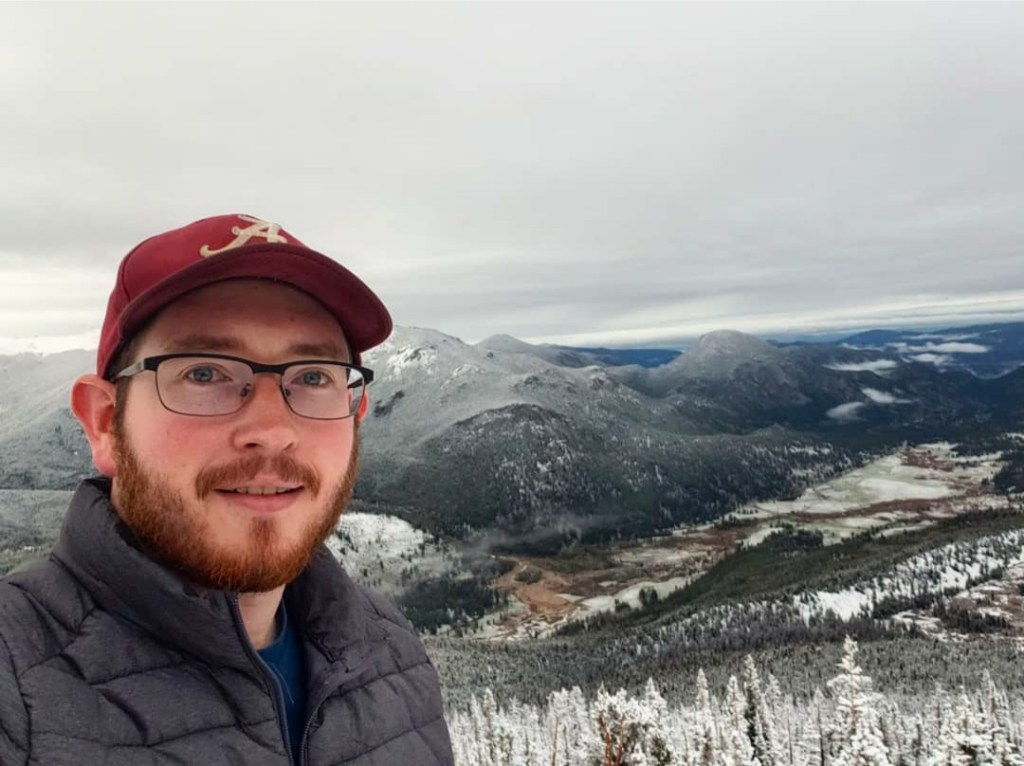
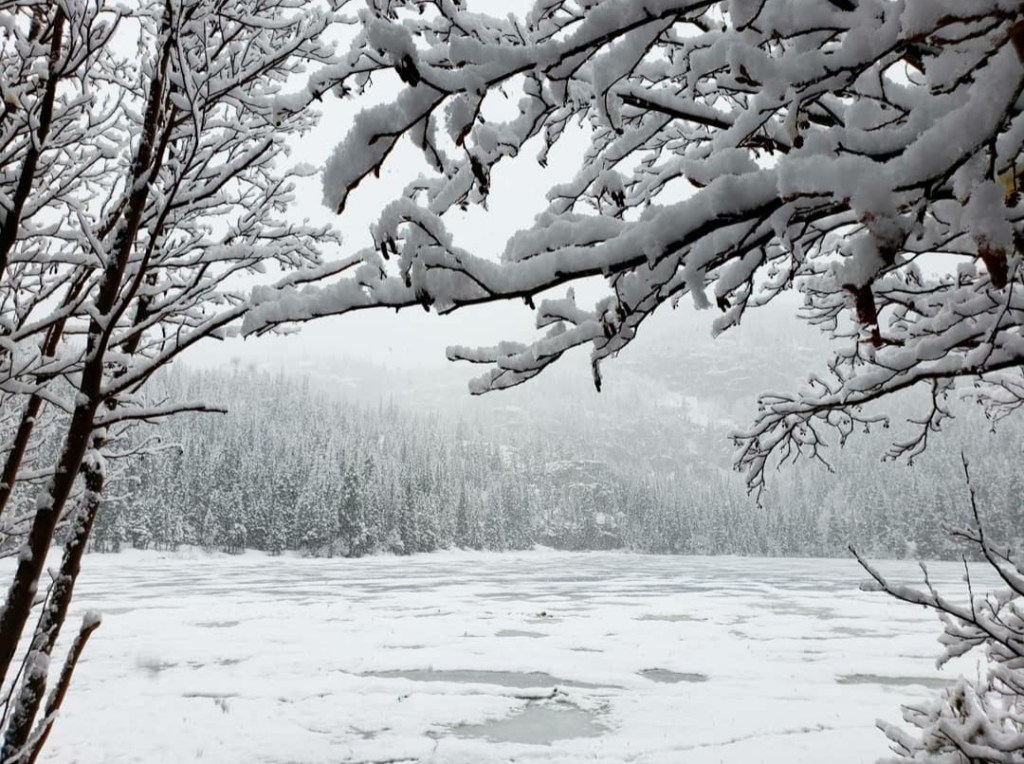
I spent some time walking around Denver and then had to change my plans when I couldn’t secure a reservation for RMNP. I decided to head up to Boulder while waiting for an opportunity to get into the park and was able to visit Eldorado Canyon and Boulder Falls while there. I finally got into RMNP and was blown away by how beautiful it was, especially after I found myself stuck in the middle of a snow storm. It looked like it came straight out of a Christmas movie! I had never attempted driving in snow before, so for my first time trying it I drove on the highest fully-paved road in the United States and reached my highest elevation yet, just under 11,000 feet where I had amazing views of the Rocky Mountains. I would have driven the entire Trail Ridge Road, except they had it closed off at Rainbow Curve Overlook due to the snow storm. After that I visited Bear Lake, which was one of the most beautiful sites I’ve ever visited.
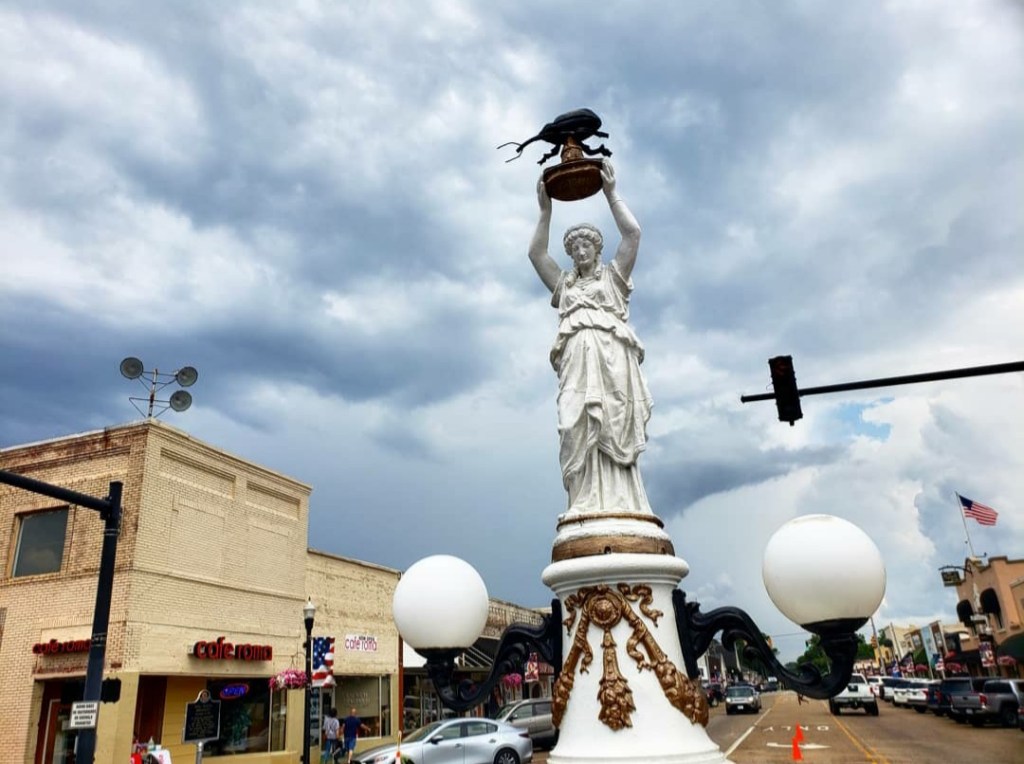
After returning from Colorado, I received a promotion at work, and after a couple weeks of training for my new position, I was already needing another travel break. So I randomly woke up one Saturday and decided to take a small day trip up to the Florida/Alabama line. While there, I visited the highest point in Florida, which is actually the lowest highest point of the 50 states. Then I headed over to Enterprise, a town I had just found out about that morning. What’s significant about this town is the fact that they have the only monument to a pest in the world. The Boll Weevil Monument stands in the center of town honoring the boll weevil which destroyed the cotton industry in the South. But instead of losing all their income, this town decided to start farming peanuts instead. This move ended up making them even more successful than before, and the credit for their success goes to the boll weevil for forcing them to consider other options. I like this town’s optimistic approach to a generally terrible situation, and it makes me consider all the positives that have come from the past couple years.
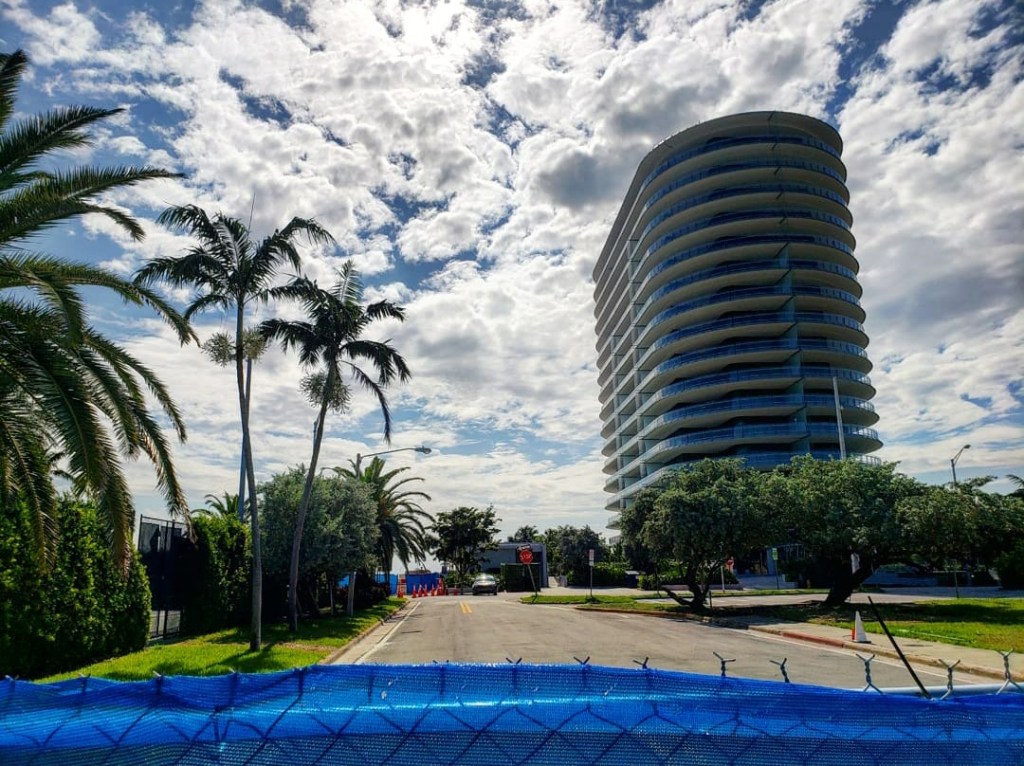
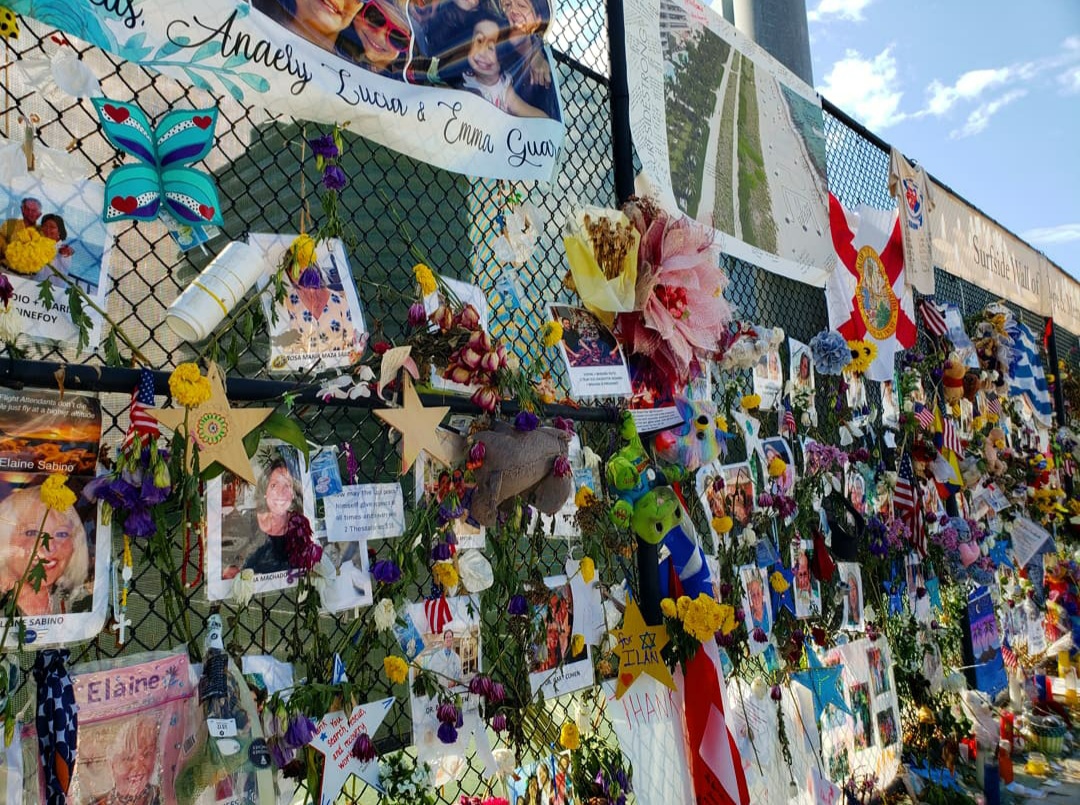
On June 24, we were all shocked as the Champlain Towers South Condo collapsed in Surfside, Florida, near Miami Beach, resulting in many unexpected deaths. This was especially shocking for me as it was exactly one month from my family’s planned trip to Miami. Rescue crews from the US, Israel, and Mexico worked tirelessly for weeks trying to find survivors, with no luck. I can’t imagine being a family member of one of the victims as this happened so sudden. Following this incident, building inspections were taken much more seriously, and several other condos around Miami were evacuated for safety concerns.
Toward the end of June, I started noticing that it hurt to walk. This pain only worsened coming into July, and after researching what could possibly be wrong I realized I had a plantar wart. It only grew worse, and the pain at times made it unbearable to walk. The pain was excruciating, and I told myself I would never walk anywhere barefoot again because that’s how I got it to begin with. And speaking of contagious diseases, the Delta variant of Covid started spreading, and that’s all that the media would talk about. Some states and the National Park Service started enforcing mask mandates again, and several countries went back under full lockdown.
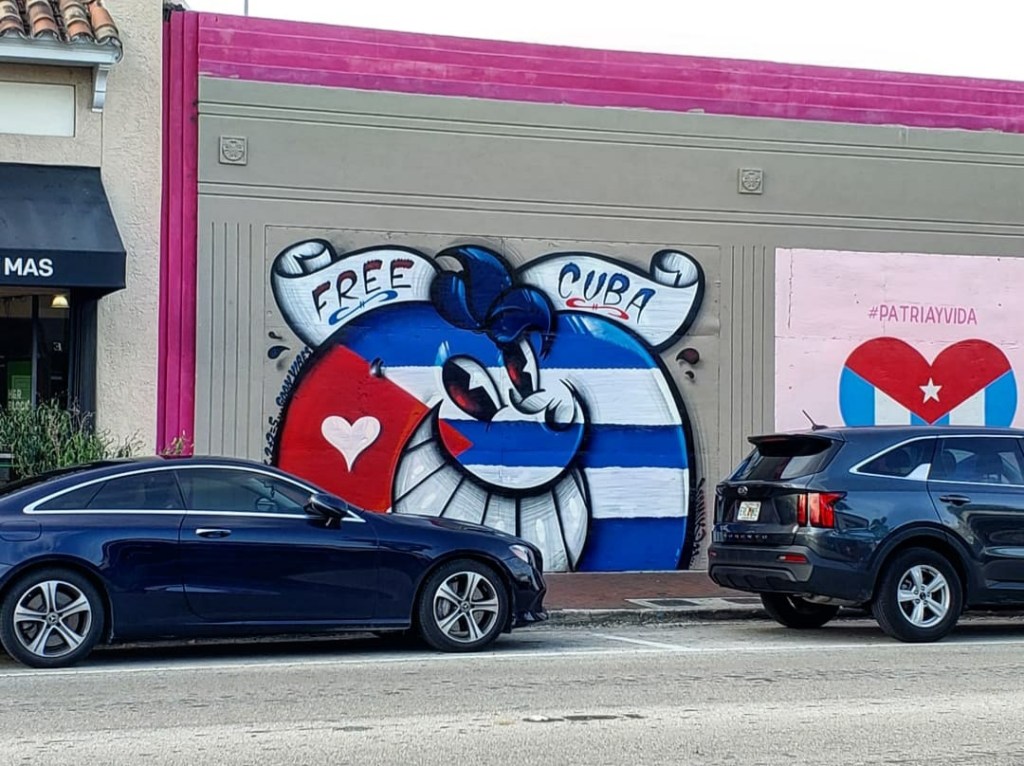
Then Cuba became a focus of attention as many started protesting the Cuban government. Following Covid shutdowns, the entire country was facing food and power outages, and poverty was at an all-time high. In an attempt to end the protests, the Cuban government cut internet access and phone service and then broke into homes to detain, and in some cases execute those they thought were involved in the protests. These protests then started taking place in Miami, hoping to get the US government involved in the situation. This was an interesting time to go to Miami, between the Cuban protests, my plantar wart, and the condo collapse/building evacuations, but soon my family was driving down to Miami in the middle of all of this.
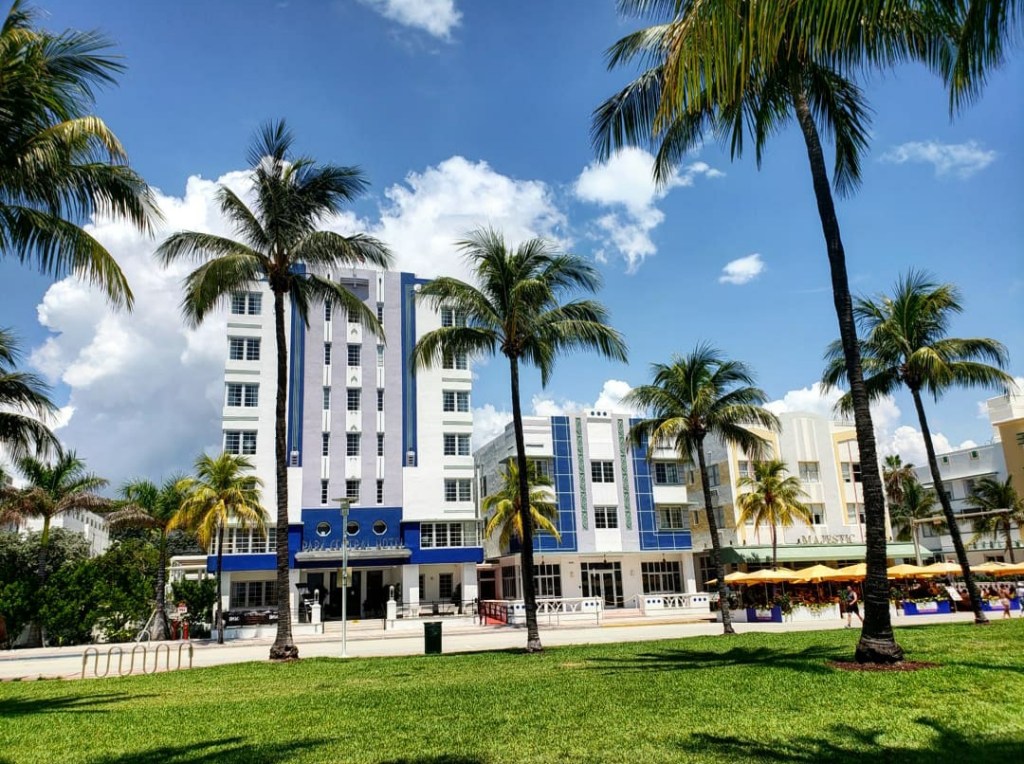
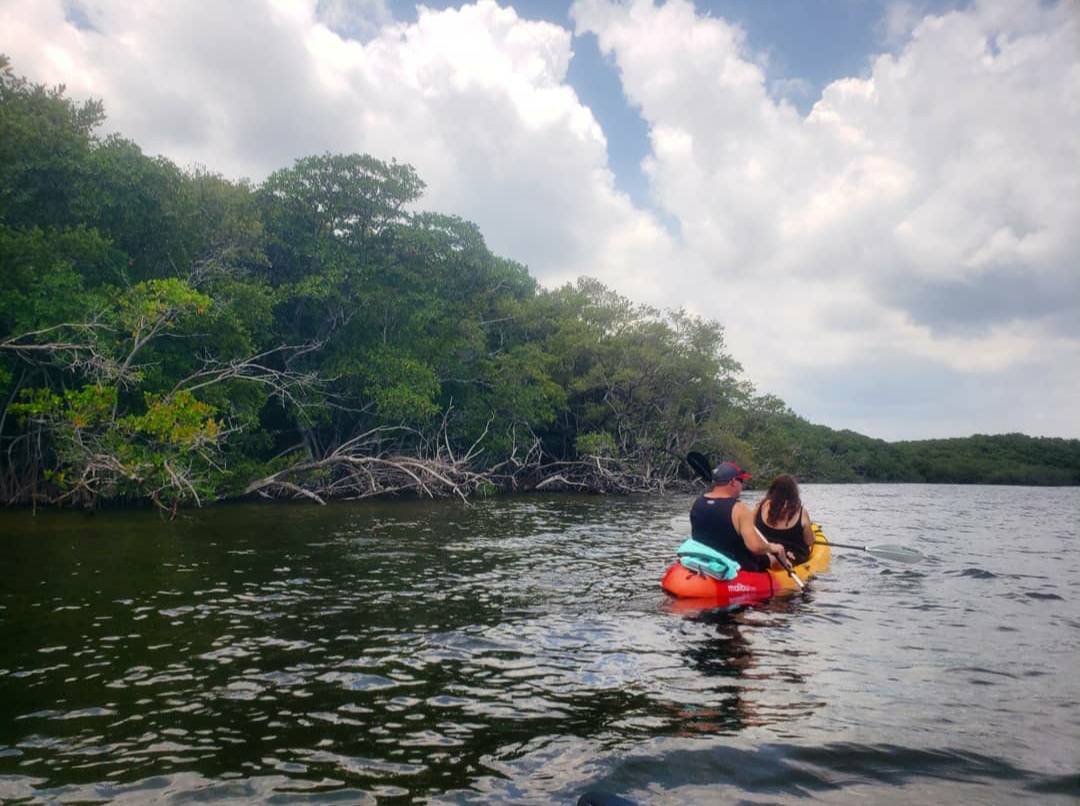
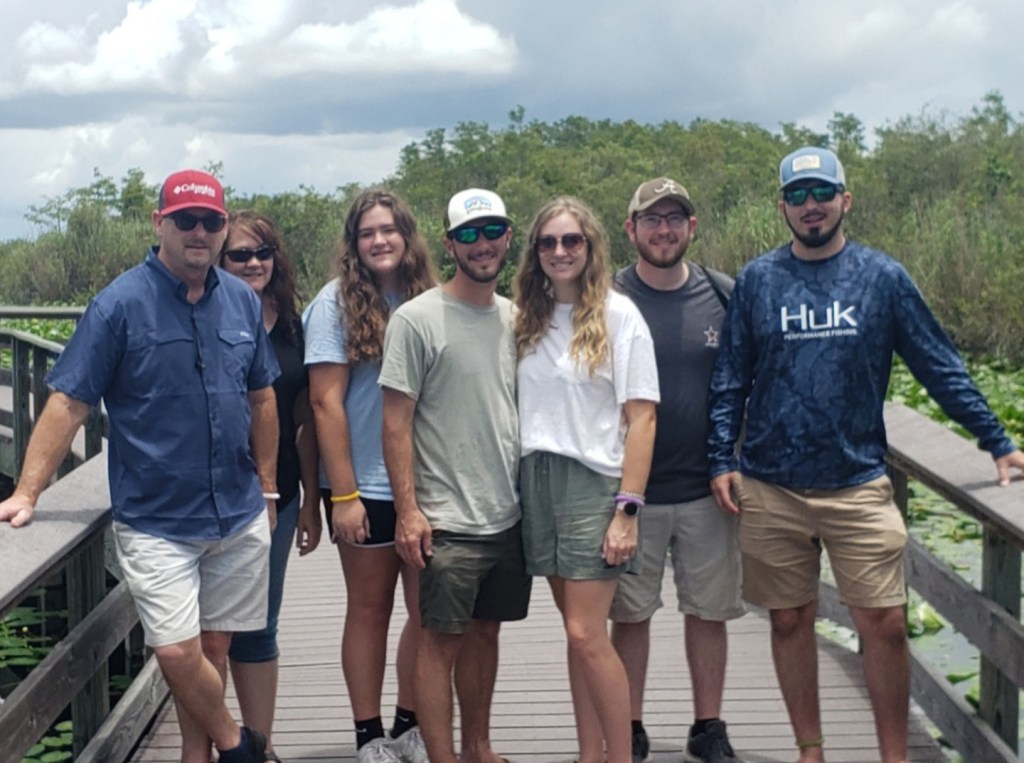
We spent a day exploring Miami and visiting the most popular spots, including South Beach and Little Havana. While I really enjoyed seeing each of these places, the horrible traffic in Miami did affect the overall experience in a negative way. From there, we visited the Everglades, my 12th national park and 14th UNESCO site. The Everglades is one of the most iconic locations in the world as it’s the largest subtropical wilderness in the United States and houses many unique types of plants and animals. Here, we took an airboat tour of the Everglades before driving to a different part to hike. Later that day, we picked up an RV and drove the Overseas Highway down to Big Pine Key where we would stay the rest of the week. We then visited Biscayne, which became my 13th national park, where we kayaked the mangroves and came across some wild manatees.
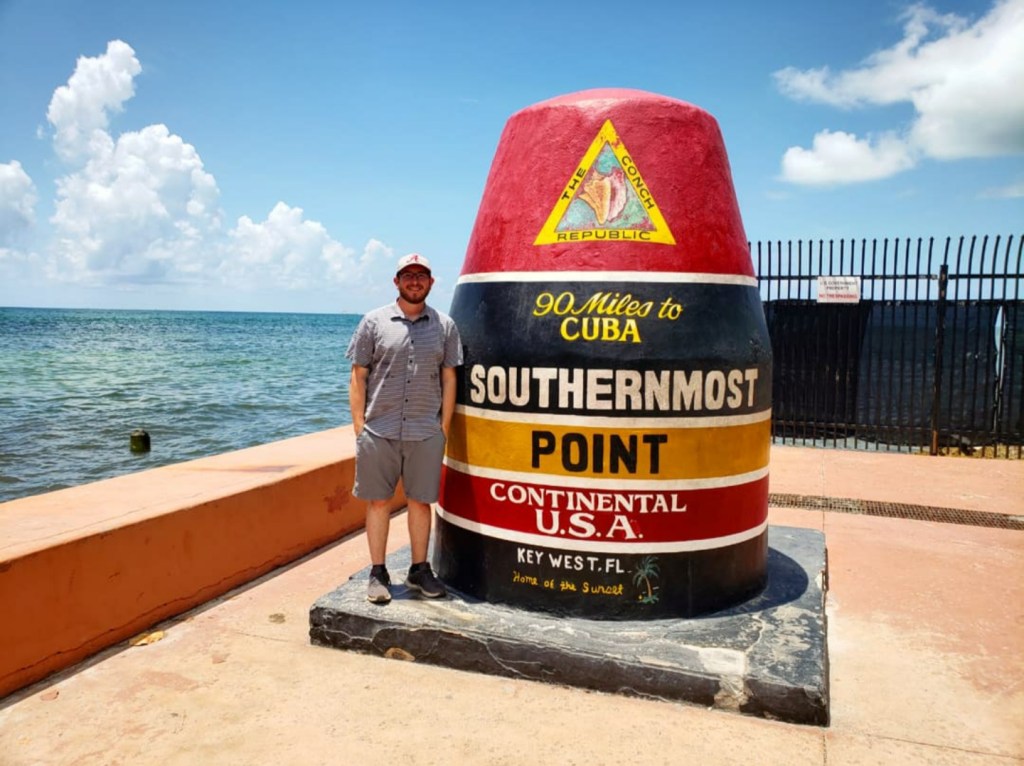
The next day we took a deep sea fishing charter out 30-40 miles from Key West in 1700 feet of water and caught a decent number of mahi. And after that we took a day to explore Key West, with a stop at the iconic Southernmost Point buoy, one of the four corners of the US. Though I had been here before, this time was a little more special because it meant that I had visited both the Northernmost and Southernmost points of the contiguous US in the same year. Though I wasn’t planning to visit either coming into the year, it’s still really cool that it worked out for me to visit both.
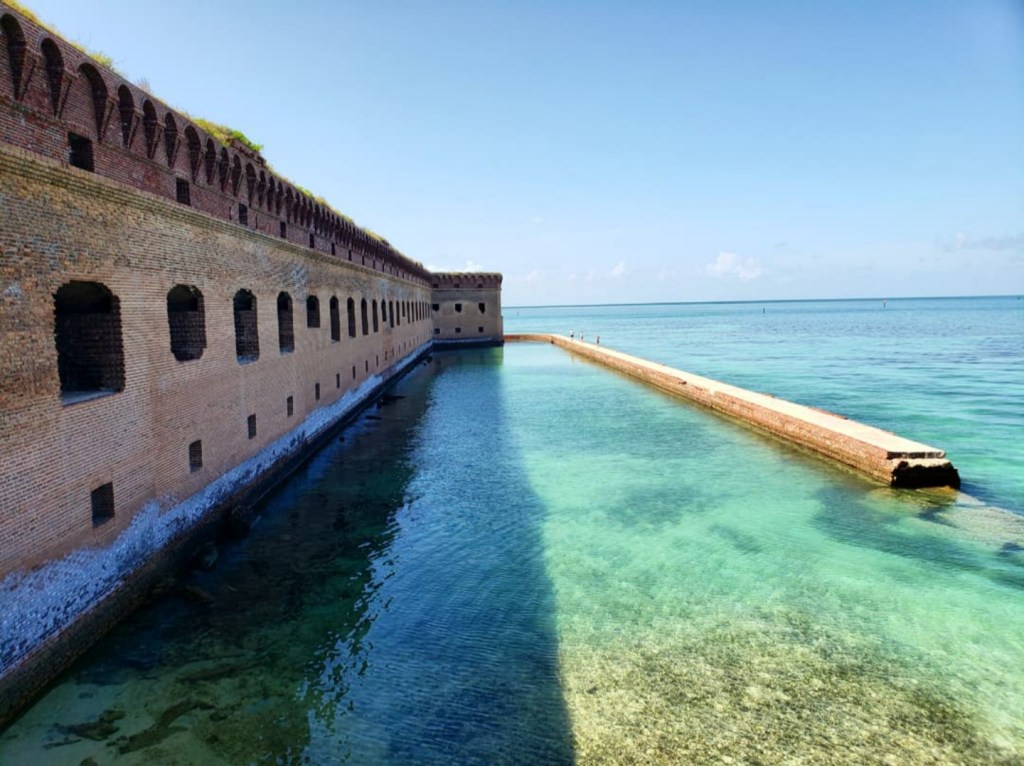
Then the rest of the family headed back home while I stayed behind in Key West in order to visit my 14th and most remote national park, Dry Tortugas. I took the Yankee Freedom III ferry 70 miles from Key West to the remote Dry Tortugas and spent the day exploring Fort Jefferson which has a very interesting history surrounding it with strong ties to my hometown of Pensacola. At the time construction of this fort started, it would have been the most advanced military structure in the world, but by the time it was eventually abandoned following setbacks from the Civil War, technology had advanced so much that it would not have been able to defend itself. It was more known for being a horrible prison where a yellow fever outbreak killed most of its inhabitants than it is known for being an advanced fort.
The US soon became the enemy of the world when Biden suddenly announced that US troops would be leaving Afghanistan without alerting the Afghan government. The Taliban quickly started moving throughout the country and eventually took over Kabul and the entire country. The US military left behind all of our high-tech equipment, weapons, drones, and tanks, meaning US taxpayers literally funded the Taliban and Afghanistan’s destruction. As the Taliban moved through Afghanistan, they went door to door forcing young girls into sex trafficking and erased the county’s progressions on women’s rights altogether, not to mention enforcing ethnic and religious genocide. Many US personnel were also abandoned by the government and left to find their own way out. Though Covid was a terrible problem to be dealing with, our issues in the US were minor compared to what those around the world were having to deal with. I’m not saying that the US should’ve stayed in Afghanistan forever, but pulling out the way we did was wrong in many ways.
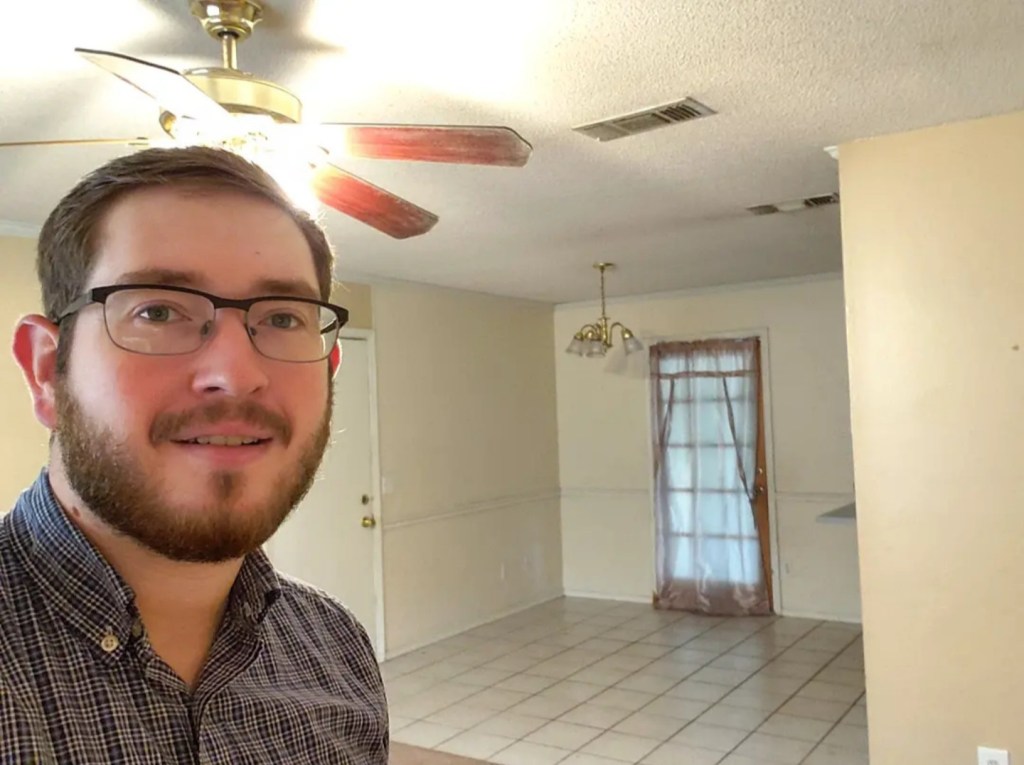
Mid-August, I finally came across a house that I was interested in. I toured it and gave the owners an offer, which they accepted, and my struggles with house hunting finally came to an end! But it was also clear that there was a lot of work to do on the house before I could move in. And while the rest of the world was trying to find Brian Laundrie after the murder of Gabby Petito, I started to get excited about my upcoming Zambia trip because it actually started to look like the trip would work out. That’s when I suddenly realized that I needed a new passport as mine was about to expire. I started to panic when I realized that getting a passport renewed usually takes 18 weeks, and my trip was 10 weeks away. I then looked into expediting it, but they say that takes up to 12 weeks. So I paid a ton of money to expedite it, paid even more for 2-day shipping on the way back, and paid more on top of all that to get the fastest next-day delivery from USPS, while also paying the trip off without knowing whether I’d be able to go. I just kept praying that it would arrive before my trip with enough time to also apply for a visa.
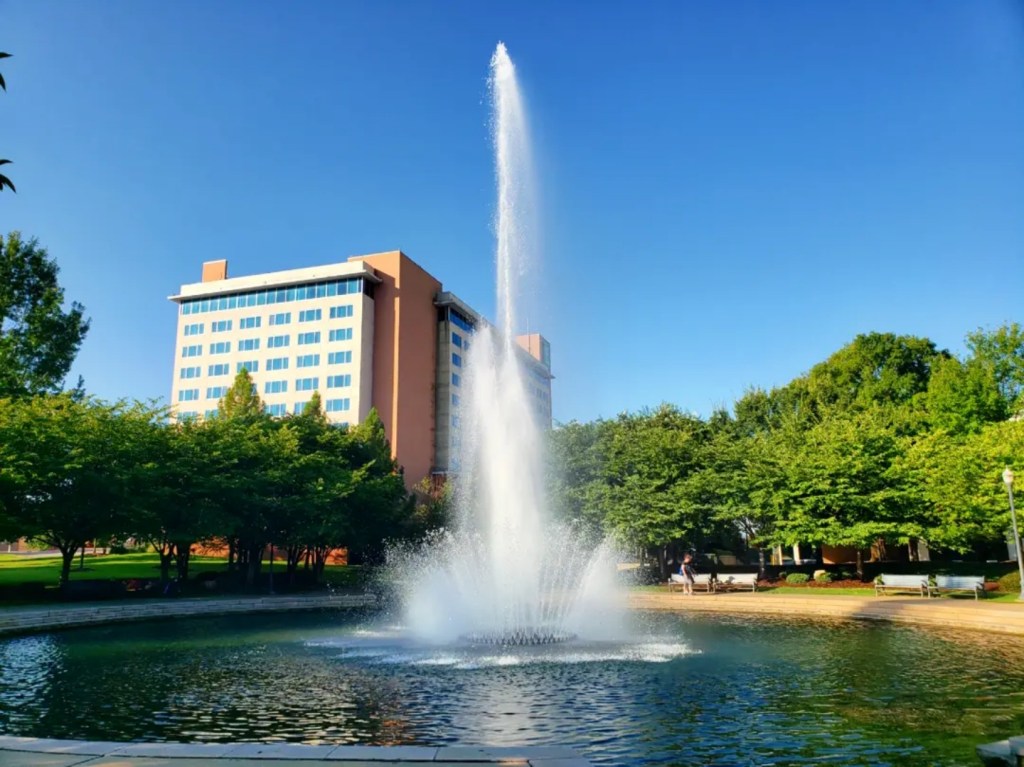
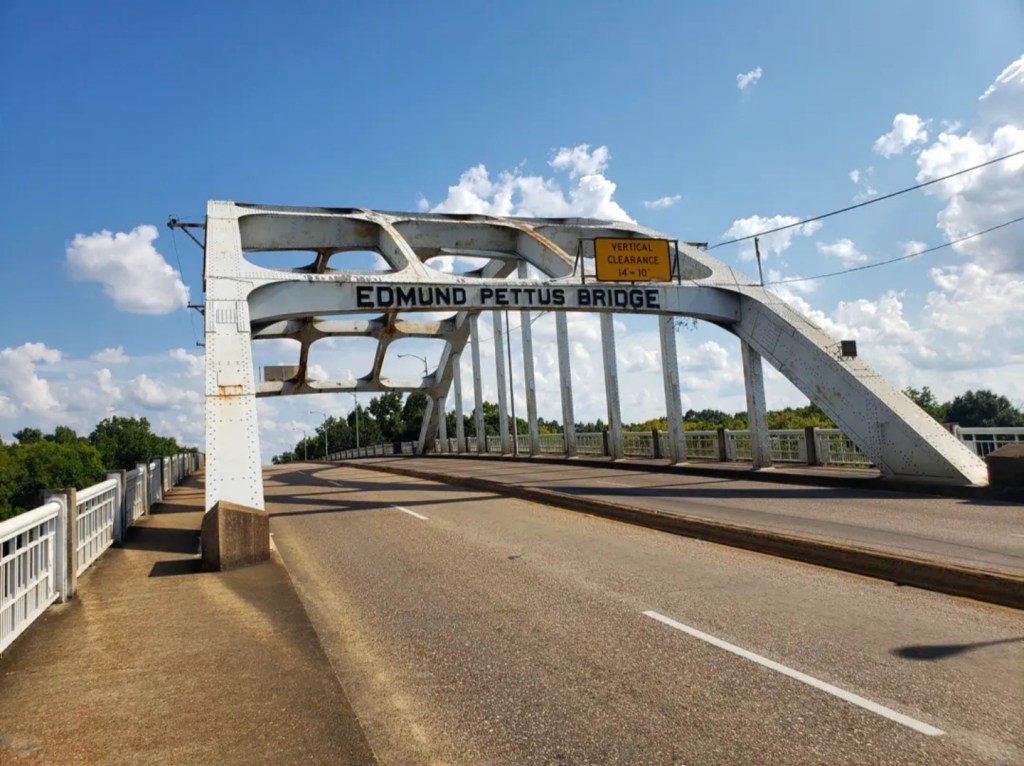
While I was stressing out over my passport, Audrey had a volleyball tournament in Huntsville, Alabama, at the beginning of September, so I decided to use this as an excuse to explore the state’s 3 largest cities. My favorite part of Huntsville was the Big Spring International Park which is a very beautiful urban park in the middle of the city. After Audrey’s games, I headed down to Birmingham where the highlight was visiting the observation deck at the top of the Vulcan Statue, which is actually the world’s largest cast iron statue. And then I went down to Montgomery, Alabama’s capital, which is known for its strong Civil Rights history. Here, I got to visit the bus stop where Rosa Parks refused to give up her seat and the church that Martin Luther King, Jr pastored. I then drove out to Selma, Alabama, where the Edmund Pettus Bridge is found, as it was the site of the violent Bloody Sunday event in 1965 and the start of the Selma to Montgomery Trail. When the government tried to mandate who could vote and who couldn’t (in this case, based on skin color), this protest was planned as a way to fight for voter rights. It was on this bridge that Alabama troopers were ordered to attack and beat the group of African Americans who were peacefully protesting for their right to vote. Though it’s a sad story, it led to the passing of the Voting Rights Act of 1965 outlawing discriminatory voting requirements.
Following new mandates, many Americans started leaving their jobs, leading to a massive worker shortage across the country, a trend that became known as the Great Resignation. There were hospitals that had to stop delivering babies because they didn’t have enough nurses, and the airline industry was hit hard, with airlines like American and Southwest having to cancel thousands of flights each day due to a shortage of pilots. Sports stadiums across the country were echoing with chants of “Let’s go Brandon” and the more vulgar alternative, reflecting Biden’s all-time low approval rating. And as my new passport arrived much quicker than expected, I started to worry about how all these shortages could affect my upcoming Zambia trip.
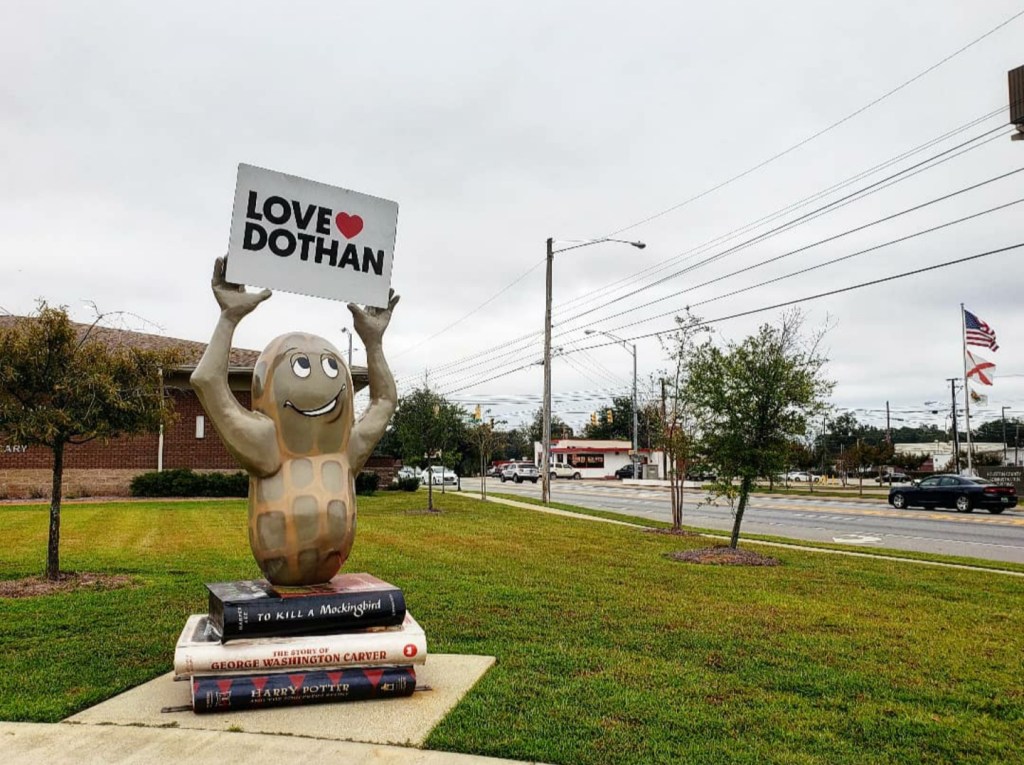
When Audrey had another volleyball tournament in Alabama, I took a day trip to explore the area. I revisited Enterprise (the boll weevil city) on the way to Dothan, where the tournament was held. Dothan is known as the Peanut Capital of the World, as 50% of the world’s peanuts are grown within a 100-mile radius of it. I then drove around looking for some of the 67 fiberglass peanuts scattered across the city before making a quick stop in Blakely, Georgia, to make it to my 10th state of the year. My last stop was in Wausau, Florida, the Possum Capital of the World.
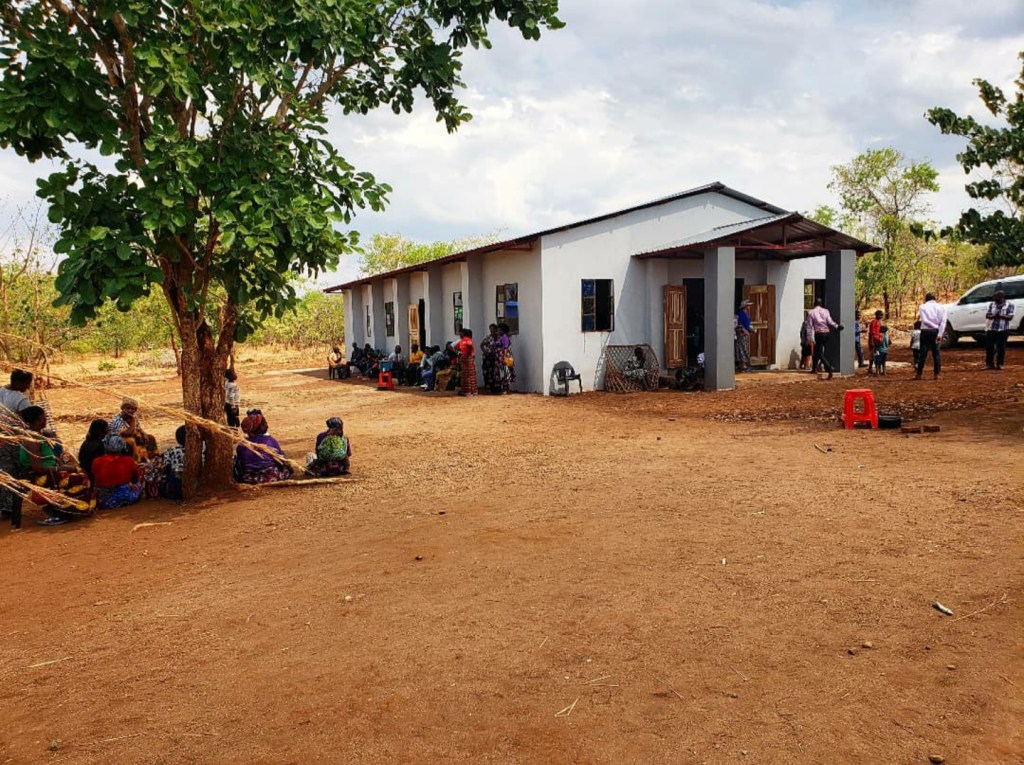
November finally came, and I should have been excited about my Zambia trip as I had been waiting 877 days for it, but I soon received the news that my aunt and uncle had both tested positive while in Wyoming. My aunt Jen especially had it rough and was rushed to a hospital in Colorado. She seemed to keep getting bad news, and I considered canceling my Zambia trip at the last minute in case I needed to head to Colorado instead. I prayed about it, and after receiving a negative PCR test myself, I felt peace about the decision to go to Zambia, my 15th county, with Medical Missions Outreach. God had allowed me to overcome so many obstacles to get to this point, so I knew that He wanted me to be a part of this trip, even though it was over 2 years after I initially signed up for it.
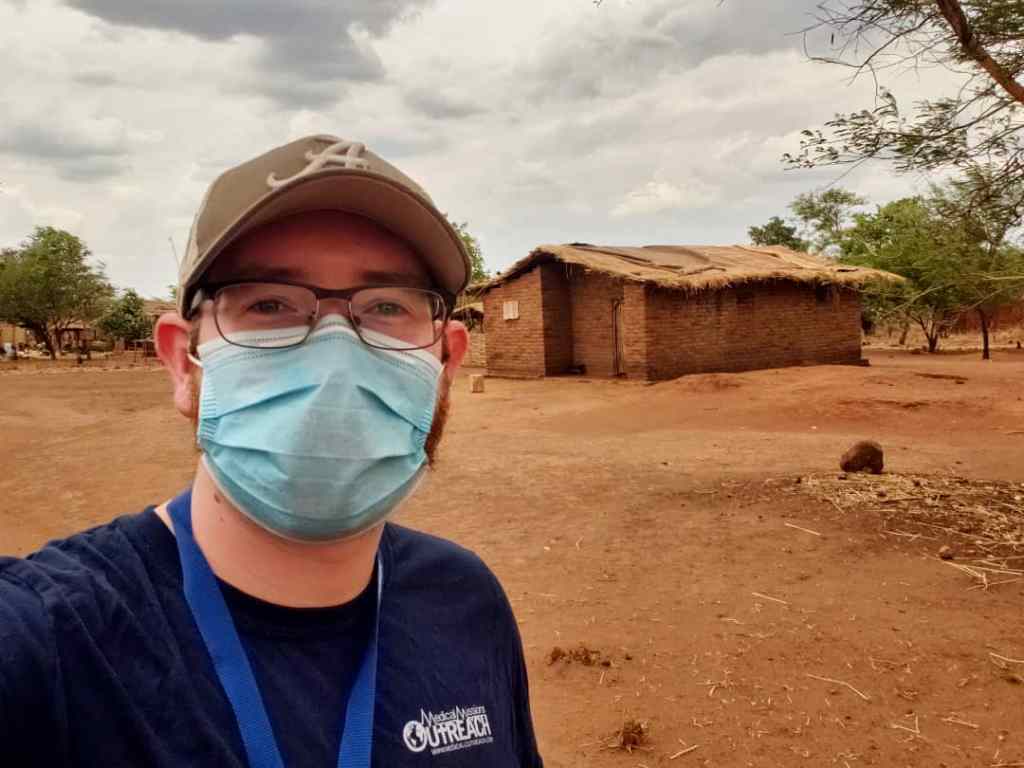
Our plan was to head to Chipata, Zambia, to hold free medical clinics for those in a nearby village. I traveled for about 48 hours to reach Zambia and then had another 12-hour drive on terrible roads to reach Chipata. After arriving in Lusaka, all of our equipment was confiscated at the airport, making it difficult to hold clinics. I was supposed to be working in the optical clinic this trip, but without glasses to give out, we couldn’t hold an optical clinic at all, meaning I would be helping in any way possible. We just determined to do what we could and trust God that His way is best. We headed out to a remote village called Muma for the week and held clinics there while repeatedly having to tell patients to come back the next day to see if our medicine had arrived yet. And each day was the same story with the airport refusing to release it.
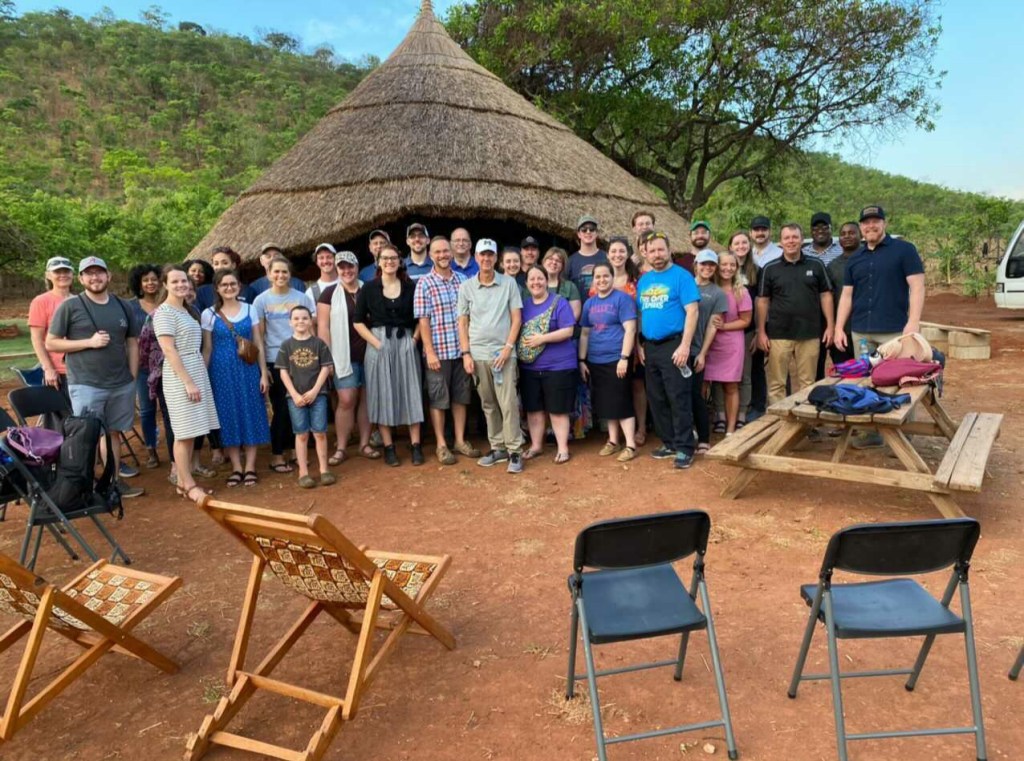
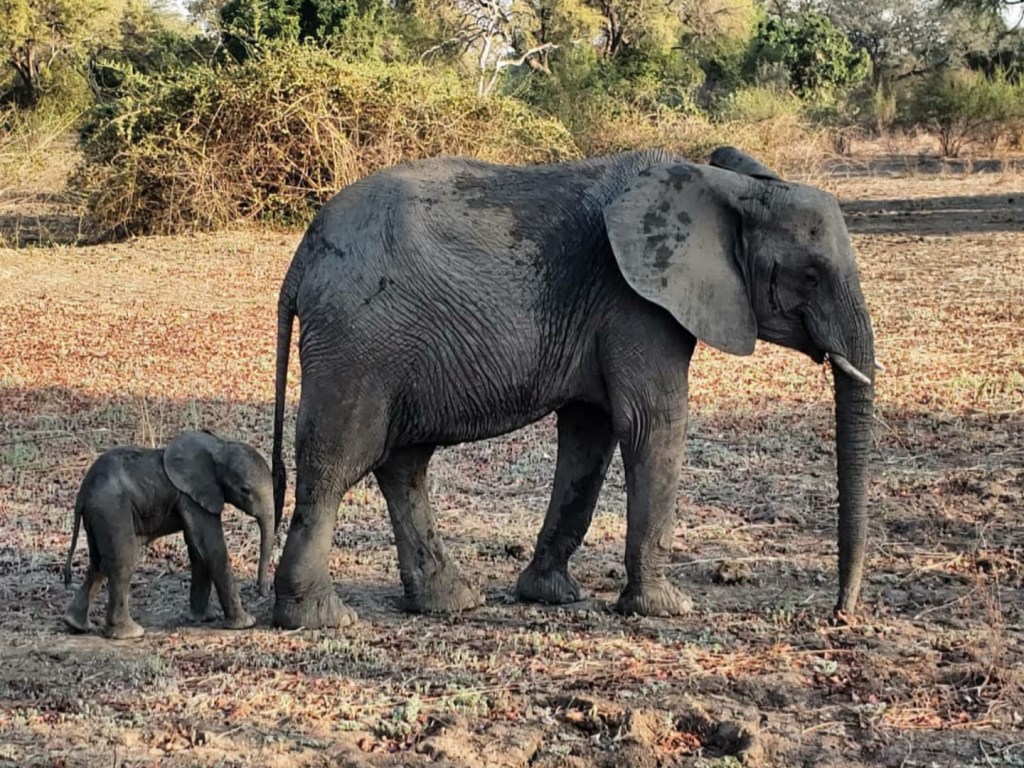
We kept praying that God would allow our equipment to be released, but day after day was the same result. At the end of the trip, we found out about some suitcases that had been left behind by a previous team and decided to look into that to see what was available. To our surprise, we had a full pharmacy! We were able to provide the necessary medication to everyone we had seen throughout the week, and it just proved to us that God knows what He is doing, even when we can’t see it. What started out as a stressful week became one of the most rewarding experiences of the year as we watched God provide in ways we never expected. We ended the trip in South Luangwa National Park, which is one of the most beautiful places in all of Africa. This park has one of the highest concentrations and most diverse populations of wild animals anywhere in the world, and it’s where we took both an evening safari and a morning safari where I got to see four of the Big Five. This was also a monumental trip for me personally because I finally took my 100th flight, something I had been working on since 2008!
Following my trip to Zambia, the media became obsessed with this new Omicron variant of Covid which originated in southern Africa. Fortunately, Zambia was not one of the originally-affected countries, and I tested negative when leaving. But many governments took this as an excuse to shut everything down again. Uncertainty is everywhere between Omicron and government responses to it or the Russia-Ukraine situation and how other countries may react. I have no idea how this will all affect travel in the near future because it’s difficult to keep track of all the restrictions as they keep changing. The only thing I’m certain about is that I have nothing to fear because I know the One Who’s in control. I have seen God moving in my life this year, and I’m going to continue to trust Him each step of the way.
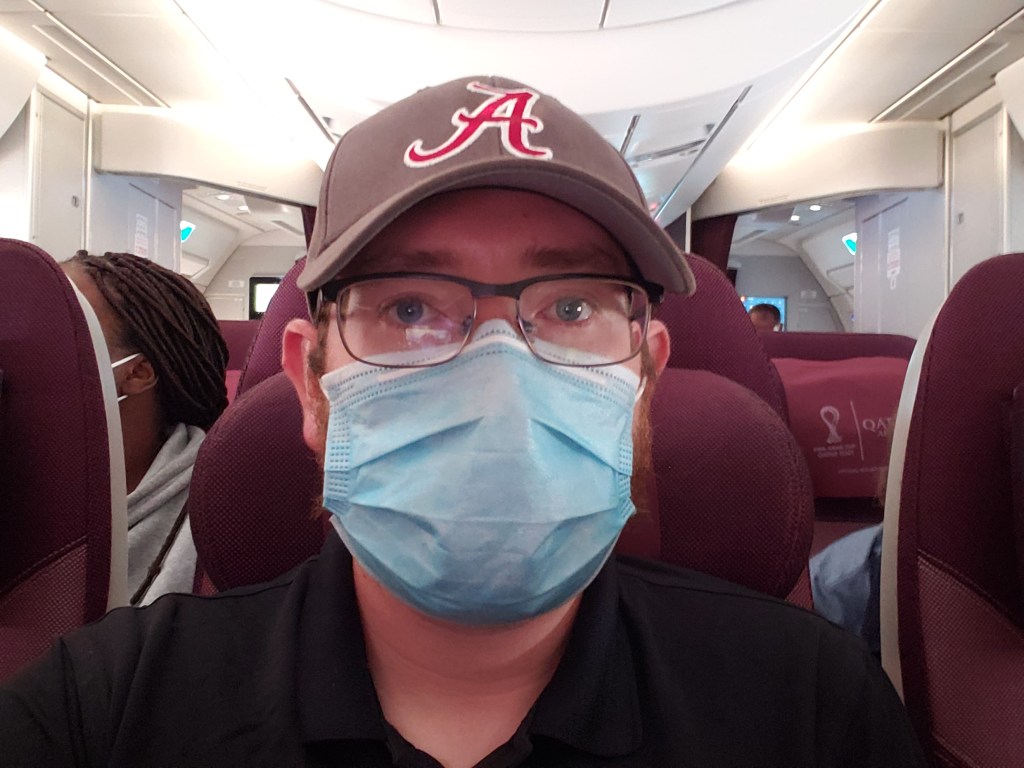
Overall, 2021 was an interesting year. It started out being referred to as 2020 Part 2, and in many ways that was true. There were natural disasters, like the Kentucky tornadoes and Haiti earthquake, and political disasters, such as what happened in Ethiopia and the Hamas terrorist attacks in Israel. Covid is still a major problem around the world, and many people are struggling both financially and mentally following the shutdowns. There have been some improvements to travel since last year, but a lot of issues from 2020 are still sticking around. While many countries have opened up for travel, it’s difficult to know what the current travel requirements for each country are as they seem to change daily. Throughout the year, I mostly focused on traveling within the United States because I didn’t want to deal with all the back and forth. I visited 10 states, 6 national parks, 2 UNESCO sites, and both the northernmost and southernmost points of the contiguous US. I also technically stepped foot in Canada and spent about a week in Zambia, my 15th country. I’m looking forward to 2022 and have some interesting travel plans. God has still been good these past couple years, and I’m thankful that He has been with me through it all. Thanks for reading, and Happy New Year!
 Tyler's Travels